

This week on our Get to Know LiveLike interview series, we chatted with our talented SVP of Global Sales, Chelsey Rushworth. Chelsey is a crucial member of LiveLike, and brings amazing sales experience to the team. We’re happy to introduce you to Chelsey and give you a chance to hear about her journey into sales, her typical workday at LiveLike, and her top tips for career success for those aspiring to work in a sales role. We’re proud to have someone like Chelsey on our team, and excited to get to share a bit about her!
Tell us a little bit about your career path. How did you get into sales?
My first sales job was right out of college with the Phoenix Suns. I started in their Inside Sales Program with other recent college graduates and we sold season ticket packages for the Suns, the Mercury and their minor league hockey team the Roadrunners. It gave me the foundation and core sales skills that still apply today.
From there I moved into digital advertising where I spent over a decade working for amazing companies like AOL, Yahoo and Verizon Media. It’s such a dynamic industry and I was there during a time where you could see the evolution of content and advertising colliding as well as social becoming more prominent. And most recently prior to LiveLive I was the CRO for InPlayer, a video monetization and subscription management platform. There I saw the value of content owners monetizing directly to consumers.
Can you describe what an SVP of Global Sales does and what your typical workday looks like?
The SVP of Sales is responsible for creating the company’s sales strategy, driving new revenue, growing existing revenue and fostering new relationships with partners and clients.
My typical workday entails me telling my dogs to be quiet during calls, lots of meetings with prospective clients, current clients and working internally with different departments such as marketing and product to make sure our company goals are aligned and we’re in a position to drive revenue.
Did you always want to work in a lead sales role?
It’s funny because growing up I wanted to be a lawyer, but I grew up playing competitive soccer and loving sports, so when I got to college and learned I could major in Sports Management, I quickly pivoted away from the idea of law school and decided I wanted to work in the sports industry.
Due to that, I was fortunate enough to be accepted into the NBA job fair my senior year of college where I interviewed with a bunch of NBA teams and ended up being hired by the Phoenix Suns for their inside sales program. From there, sales became my career. I feel in love with chasing a quota, working to exceed it and building strong client relationships.
What have you learned about LiveLike (as both a business and a team) since you joined?
Where do I begin? I have learned so much. Our product is incredible. Every day I am learning something new that our CMS can do and how agile and easy-to-use our platform really is.
As for the team, I am blown away. Everyone is super smart, hardworking and driven. The talent pool is so impressive and on top of that everyone is super nice and friendly. I feel very lucky to have joined such a stellar team.
Is there anything else you’d want to share with those aspiring to work in sales?
Love this question. You’ve gotta believe in the product you’re selling. If you love what you’re selling you’ll never feel like you’re actually “selling” it. You’ll enjoy getting out there and sharing your product with prospects and that makes it fun.
Oh and have a good sense of humor. Nothing a good laugh can’t cure.
Thank you, Chelsey!

If you’ve seen our website, social media posts, or our widget animations, you might be wondering: How do we get our platform to look so good? Two words: Design Team. And this week on our Get to Know LiveLike interview series, we sat down with one of our design team members, UX / IU Designer Rehyan Chamayil. We’re so excited to introduce you to Rehyan and invite you to read on to learn about his career path, his experience working on LiveLike’s design team, and his top tips for career success. We’re proud to have someone like Rehyan on our team, and excited to get to share a bit about him!
Tell us a little bit about your career path. How did you get into UX / UI design?
I have always loved spending time looking at beautiful interfaces and fun UI animations on the web. I tried to learn UI design and development by watching tons of online tutorials and it worked well, inspiring me to obtain a UI / UX Design degree. After graduating from college, I started my career as a UI Developer & WordPress Backend Developer. I was very good at creating HTML, CSS, and UI interactions, but I always wanted to be part of the design process with development.
Later, I had the opportunity to focus on the design process and make designs for web and mobile applications, but I found it boring to design on my own again. Starting to look at the UX was a turning point in my career, and I was interested in working with developers, managers, and others. I enjoyed processing designs and having the chance to make good design decisions from it. Since I have never felt bored in my career as a designer, I believe it was definitely the more suitable choice for me as opposed to being a UI developer. I’m proud to be the kind of person who makes design decisions that are going to positively impact many people and users each day.
Can you describe what a UX / UI Designer does and what your typical workday looks like?
The main goal of a UI / UX designer is to give users an efficient, enjoyable digital experience. Not only does this improve the user experience, it also helps a company to build a good business. Overall, my goal is always to start by researching the users and getting more familiar with the main business objectives. I begin my day by conducting research for 30 minutes to an hour, searching through web materials to update myself on the latest trends in the market. Then, I talk to the team and set goals for the day and week based on the task priorities at hand.
All in all, I work to bring a new experience to the product by consulting with the team, making design decisions, following the design process and creating interactive prototypes for the team and clients. I also spend some of my time learning and testing out new approaches to improve my design techniques and to achieve my goals for the day and week.
Did you always want to work in a design team role?
Yes, I always wanted to be in the tech industry as a teenager, and over time my ambition to become a designer grew stronger and stronger. I trained for the first time following my design degree completion and tried to create my own designs, and it was an extraordinarily happy moment in my life. Since then, I knew that I needed to work in a design role for the rest of my career.
What have you learned about LiveLike (as both a business and a team) since you joined?
Since I work with different teams, I’ve learned a lot from the marketing and business development teams about the best opportunities for those using our tool. The society we live in is moving more and more towards digital experiences and businesses everyday. I can see this opening up many new verticals for our product and team in the future. I also get to work with the best teams at LiveLike; everyone is always doing their best to help our product and we are growing and improving each day.
Is there anything else you’d want to share with aspiring UX / UI designers?
To my fellow designers or to those who would love to become one, I want you to keep one thing in mind: Never pursue designs or user experiences that you like and personally want to see. Instead, you must pursue those that will best benefit your users and business goals.
Thank you, Rehyan!
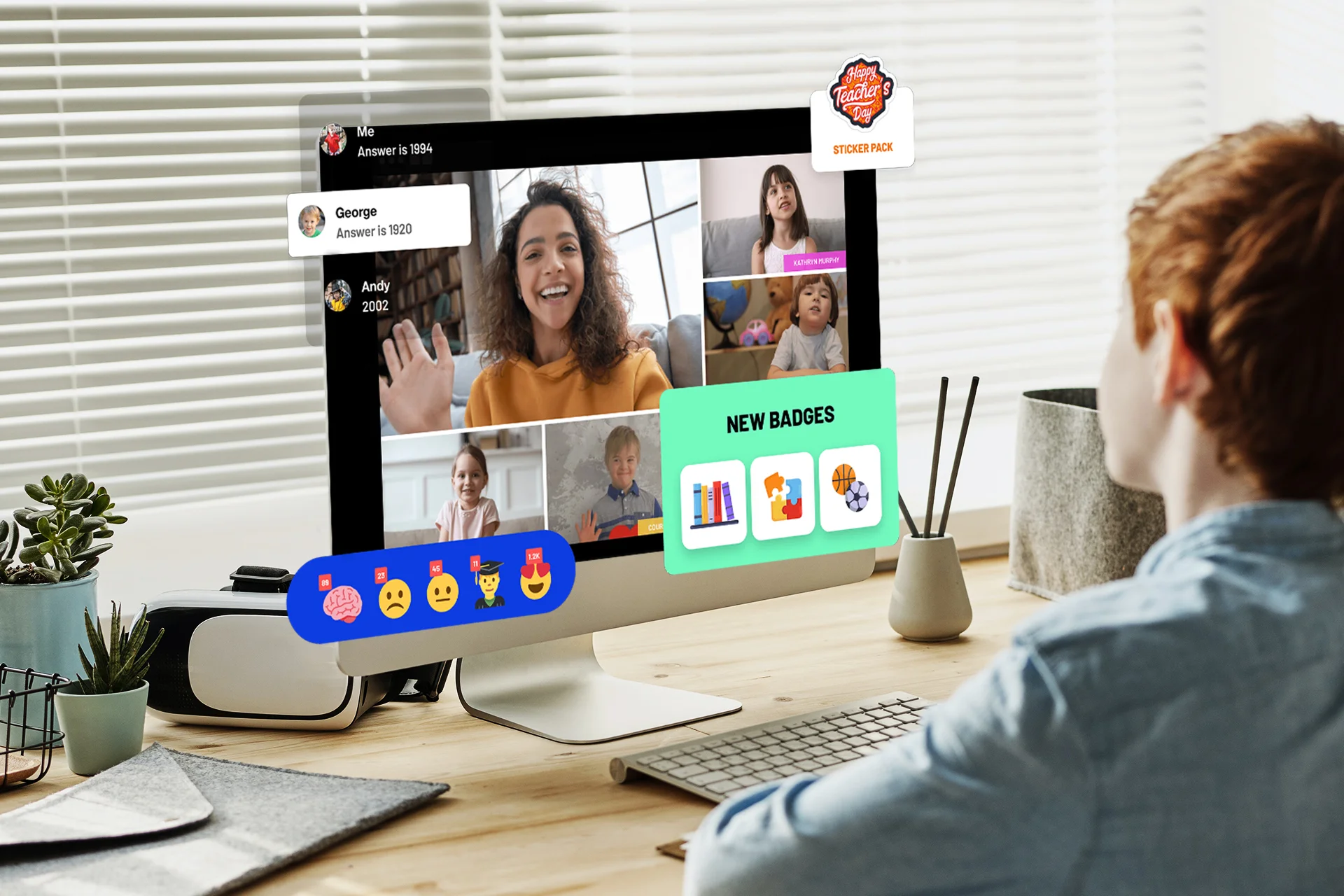
Over the past several years, industries across the board have evolved to incorporate at least some form of virtual accessibility. From the way we shop, dine, and play to the way we learn, work and socialize, almost every part of our lives has shifted to exist in an increasingly virtual world. And while some in-person experiences simply can’t be replicated, others have benefited from moving online and have introduced innovative methods that are likely here to stay.
With the shift of education from in school to online, educators have sought out ways to engage their students and introduce more interactivity to their virtual classrooms—proving, at times, to be even more effective in capturing their students’ attention than traditionally in-person lesson plans.
In this article, we’ll be breaking down the five major benefits of interactive online learning.
To Increase Brand Exposure and Engagement Rates
Interactive learning modules have become a powerful tool in the industry of e-learning, utilizing features that not only capture the attention of students but also actively involve them in course content. It’s no secret that a student’s attention span can be generally quite short, especially younger students. Traditional teaching methods of independent reading, quiet study time, or passive lecture sessions, can cause students to zone out or become uninterested in the lessons at hand.
With interactive digital classrooms, teachers can take advantage of all of the amazing features that online learning platforms now have to offer. While in the classroom they may be limited to the physical materials they have access to, moving online allows teachers to introduce a wide range of engaging tools like animated trivia quizzes, student polls, and colorful leaderboards that grab and hold their students’ attention.
What’s more, since students typically associate being online with leisurely activities—playing video games, watching tv, socializing—they are more likely to take an interest in your lesson plans, and start affiliating e-learning with something exciting that they look forward to each day. Keeping lessons interactive online works to increase student engagement rates, avoid distraction, and entertain and educate at the same time.
To Capture Customer Feedback and User Data
Not every student is an auditory learner; but despite this, traditional in-person classrooms often lean on spoken presentations or reading aloud from textbooks to get information across to students. By moving online and introducing interactive e-learning, the virtual classroom introduces lesson plans that adhere to many different types of learning styles—whether it’s auditory, visual or hands-on.
For example, an auditory learner may love the format of a watch party where they can take part in a discussion and share their thoughts aloud; a visual learner may be excited by image sliders that give them a visual representation of their quiz answer options; and a hands-on learner may love testing their knowledge with polls or cheer meters that require a kind of physical interaction.
With a wide range of tools that cater to every type of learner, online students are more likely to stay involved and interested in the learning process, and in turn more likely to retain the information they’re being given. As well as increasing retention, interactive online learning also works to boost student motivation, since they are more likely to feel engaged and excited about the lessons. This is great for introducing new, challenging topics that they may otherwise not have been willing to learn or to simplify complex information.
To Empower Stronger Brand Loyalty
What better way to keep your students engaged and excited about learning than to introduce fun, colorful, interactive features to your virtual classroom. Using fun, interactive tools such as polls, quizzes, live chats, and leaderboards, you’ll create an environment where your students feel energized and inspired, despite not being in the same physical space.
What’s more, by adding interactive elements that can be customized to reflect your school colors, class subject or even each individual student, you’ll add a sense of personalization and community to your classroom. Teachers are often limited by the tools available in a traditional classroom, often working with blackboards, whiteboards, and textbooks, not to mention a typically low budget for creative materials.
By moving to a virtual space, teachers are no longer limited by outdated technology or budget cuts and instead can use their imagination to make their classrooms as colorful and creative as possible.
To Empower Stronger Brand Loyalty
Probably one of the biggest benefits of interactive online learning is its ability to give every student in the classroom an opportunity to get involved. In a traditional learning environment, where the louder, more confident students are more likely to dominate the room, students that are quieter may never get the chance to ask questions, express concerns, or even share their unique opinions with their classmates.
By being given the security of being in their own space where they may be more comfortable, and removing the system of raising hands to contribute, these students get much more out of the learning experience. With options to ask their questions through anonymous AMAs, test their knowledge with fun trivia quizzes, and engage with their peers through polls, shyer students can participate more meaningfully and perhaps gain more confidence than they would in the in-person classroom.
To Empower Stronger Brand Loyalty
Moving to a virtual classroom involves embracing technology; and in such a digital world, learning how to use digital tools effectively is becoming more and more crucial every day. But despite the technology being a permanent fixture in most kids’ lives, very rarely are they given the chance to learn how to use it effectively, responsibly, and productively. And because of this, students need to be taught important digital literacy skills in their formative years that take them beyond using technology as simply a means of entertainment.
Almost every industry, whether it’s sports, finance, education, or entertainment, now requires some level of digital literacy or technological know-how. By moving to the virtual classroom and introducing exciting new digital learning tools, teachers not only create a fun, interactive online environment, they also empower their students by providing them with the skills they will need to succeed in the digital world.
The virtual classroom is the perfect opportunity to teach students how to navigate various digital platforms effectively and responsibly, and expose them to lessons on digital etiquette and e-safety.
While the past few years have seen sectors like education majorly adapt to a new online environment, it has proven to not always be for the worst. Interactive e-learning can be more inclusive, effective and even more engaging for students than traditional learning. All in all, with such major benefits of interactive online learning as those listed above, it’s safe to say that e-learning isn’t going anywhere anytime soon.
Want to learn more about how interactive features can enhance your virtual learning experience? Check out our student engagement tools now.
Get in touch today to learn more about how LiveLike can enhance your EdTech platform.
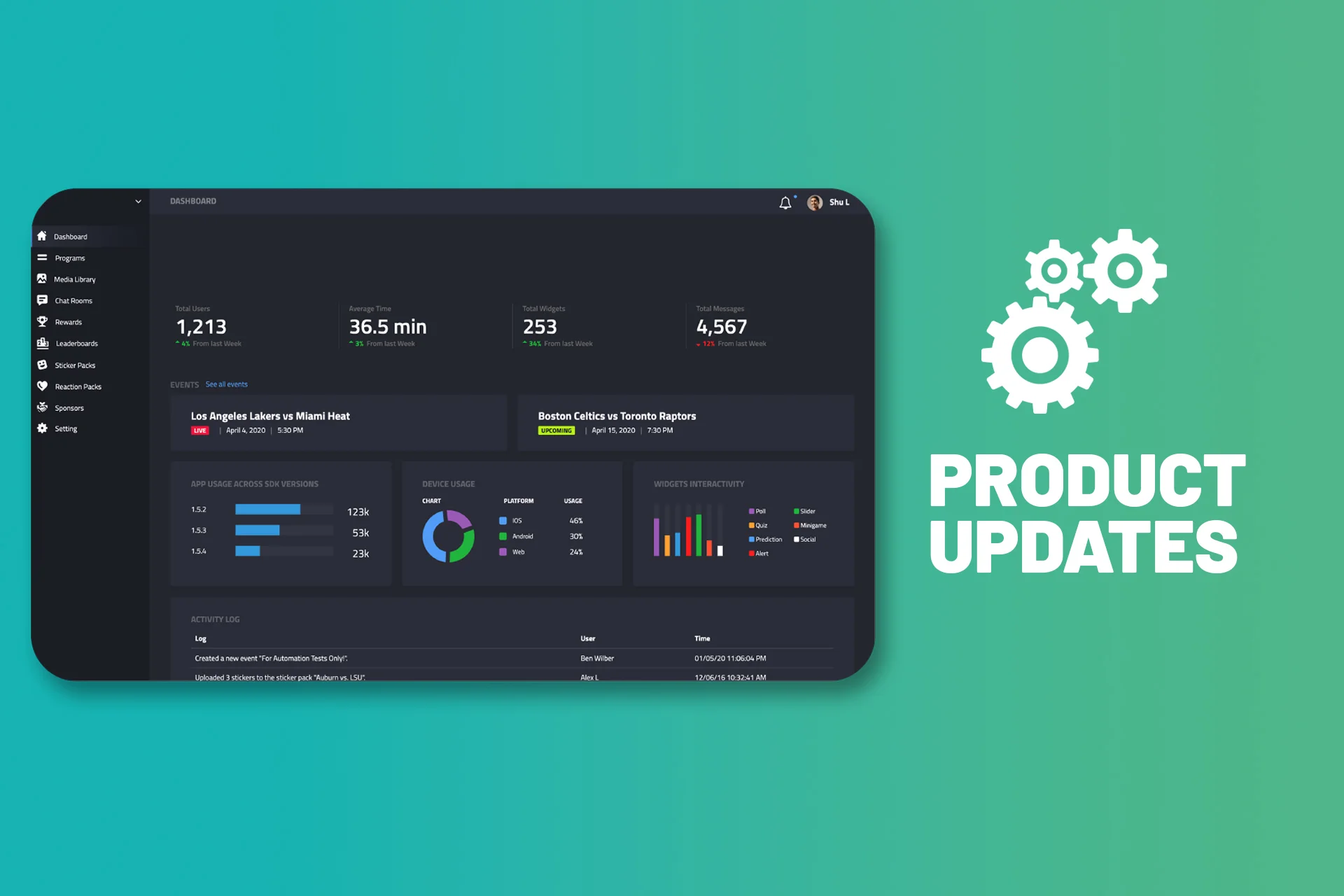
At LiveLike, we strive to offer our clients the strongest possible solution to fan engagement. And to do this, we make sure our product is always evolving by constantly implementing new features and enhancing the use of our backend/CMS.
This month, we focused on improving the integration of custom links and keys within our CMS, enabling more customization capabilities for our clients and their partners. We also worked to enhance one of our core features: Interactive widgets! Check out our monthly update to learn more about the changes we’ve made with our clients and their users in mind.
Update #1: Single-use redeemable keys
If you are not yet using this feature, a redemption key is an object that is created on our Producer Suite, that allows end users to be redeemed in first-party or third-party systems. As an integrator, you can now create and distribute redemption keys to users that they can redeem for goods only once. Goods can be distributed to users through your own fulfillment processes and you can also build screens where users scan or enter codes to access goods.
Update #2: Attach registered links to profile badges
A registered link is a link that exists within the LiveLike ecosystem that can be managed by producers through the CMS. You can, for example, register your links from affiliates, vendors, sponsors, etc. Once a link has been created, you can then associate it with other LiveLike resources. Our latest update allows you to display your registered links as click-through URLs on badges. There will be more ways to use registered links in the future.
Update #3: Customize widgets with custom attributes
Last month, we updated Rewards Items with custom attributes; this month, we did the same but for our interactive widgets! Now, when creating your widget on our Producer Suite, you will be able to add custom attributes. Attributes are arbitrary key-value pairs that you can use to specify your widget. In the example below, we have created two attributes: “question” and “category”. Each attribute needs a value to be filled, allowing you to better personalize the end-user experience.
We hope you enjoy these new updates, and please do not hesitate to contact us if you have any questions. If you are not yet using LiveLike but are interested in integrating our solution, you can also reach out and book a demo with our sales team.
Integrating the LiveLike software development kit (SDK) into your apps and websites allows you to start driving user engagement and building a strong sense of community quickly. The LiveLike SDK consists of software libraries, developer tools, documentation, and API access, and contains everything your team will need to get started integrating from day one.
In this article, we’re outlining the four major reasons your team will love using the LiveLike SDK, from our focus on developer empowerment to our familiarity with the importance of integration efficiency.
Quickly Iterate on iOS, Android and Web Apps
A basic integration can be done the day the LiveLike SDK is added to your project. There are a lot of features included, but most of them work independently, and allow you to pick and choose the ones that are most important to you, integrate those, and save the rest for later. So if, for example, you care most about building community first, you can focus on integrating those community-building features up front.
Later on, you can layer in gamification features like points and leaderboards to reinforce the user behaviors that are taking shape in the growing community. This approach enables you to launch sooner, gather feedback from users faster, and iterate more quickly.
Extend a Strong Capability Base
The LiveLike SDK provides a rich collection of functionalities that you can use as a baseline to build your own unique experiences on top of. Your vision probably relies on some essential capabilities and assumptions, such as the ability for users to weigh in with their opinions, or that users should earn rewards for participating in certain activities. You can take those abilities for granted in your products and expand upon them, so that you can focus on the end goals instead of the basics.
In that way, LiveLike is providing a head start rather than a limit. Building with LiveLike allows you to avoid spending resources creating and maintaining basic requirements, giving you more room to execute on your roadmap and experiment with new use cases.
Benefit From Product Innovation
LiveLike is constantly launching new features and discovering new use cases as we work with others across different industries and regions. Teams that work with us can take advantage of new features as we launch them, as well as the best practices we develop and the insights that we can gain from our visibility into product launches around the world. New versions of the SDKs are released frequently, and many new features are only an upgrade away.
Maintain a Developer-First Approach
Our SDKs are intended to empower developers, and we ensure that by designing them to be customizable. The SDK comes with some useful presets, but those can be torn down or rearranged into something more custom for advanced integrations. We understand that developers need to be able to take our features, and remix and extend them in order to achieve the pixel-perfect results they’re looking for.
To support that, we have lots of documentation and a growing library of sample code. We maintain libraries for all major platforms, including iOS, Android, and Web, with more to come in the future. We also provide full access via REST APIs for server-side integrations.
If you’re considering integrating an SDK into your platform, the LiveLike SDK is an optimal choice, and will allow your team to iterate quickly, on top of a reliable platform, all while benefiting from our continuous research and innovation. Your team will enjoy using the SDK because it empowers them to customize it, so that they can get the results they’re looking for without compromising their structure.
If you’re interested in integrating the LiveLike SDK or want to know more about our solution, feel free to get in touch!
At Livelike, one of the greatest strengths of our product is its ability to evolve and be shaped to adhere to any platform. Every month, we strive to improve our product by implementing new features and enhancing the use of our backend/CMS, so that our clients can make the most of our solution and further engage their fans, users, and consumers.
We are always trying to push the boundaries of what’s possible in the digital world. This year is already off to a great start and we can’t wait to show you what we have in store!
This month, we focused on improving our loyalty and reward features, enabling more customization capabilities for our clients and their partners. We also worked to enhance one of our most used widgets!
Update #1: More than four options in polls and predictions
It’s finally here! Now, when creating Polls or Predictions, you will be able to increase the number of answer options your users have to choose from. For example, if you are asking your users to vote on the ‘Man of the Match’, you will be able to build polls that have a response option for every member of a team.
Providing your users with more response options will enable you to gather more specific feedback and create polls that are more tailored to your audience.
Update #2: Organize reward items with custom attributes
We have officially implemented custom attributes for Reward Items! These attributes are arbitrary key-value pairs that you can specify within our CMS.
Example: “a rarity: legendary” or “equipment: jersey”.
This update will also allow you to filter and organize your reward items by these attributes if you have created a lot of different ones.
Update #3: Upload your own images for reward items
In addition to custom attributes, you can now attach images to your Reward Items, directly from the CMS. Attaching a dedicated image to your Reward Item will enable you to have more appealing, engaging and customized experiences, without any extra development effort. If you maintain images for your rewards on your own backend, you can implement these easy image attachments directly from the CMS and start saving valuable time!
Update #4: Sponsors can have brand colors configured
If you are using our solution with one of your partners, you now have the option to customize its brand colors, in addition to adding its logo image. Brand colors can be used by integrations to theme a user interface based on the sponsor. Of course, sponsors can also be attached to programs, widgets, chats, and other LiveLike features!
We hope you enjoy these new updates, and please do not hesitate to contact us if you have any questions. If you are not yet using LiveLike but are interested in integrating our solution, you can also reach out and book a demo with our sales team.
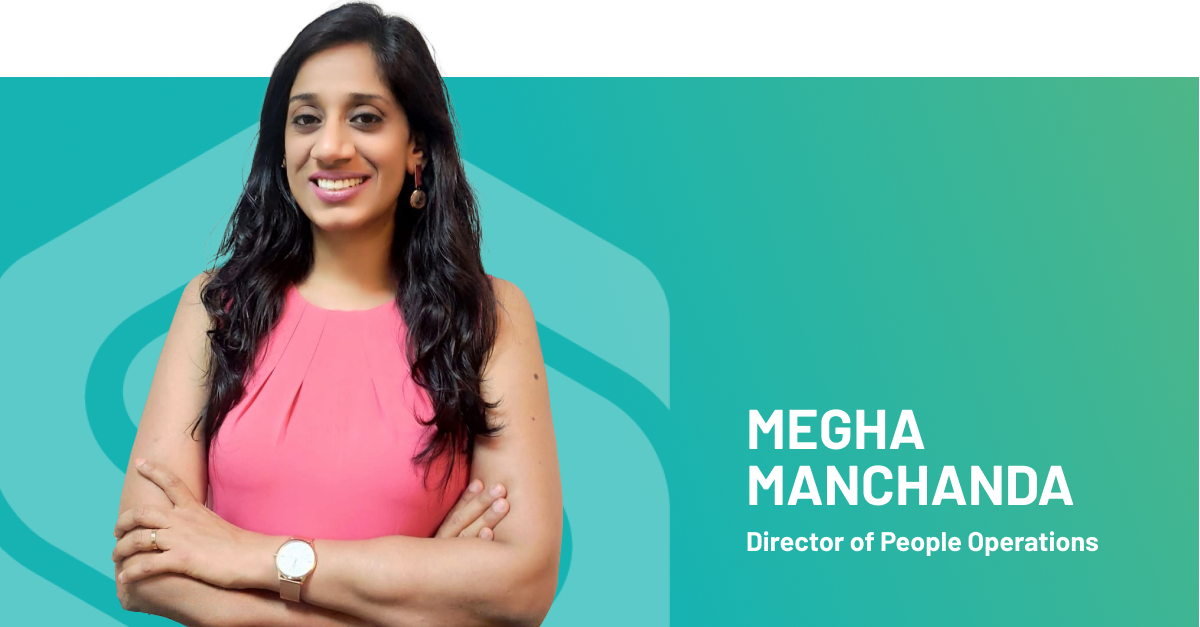
We’re back with another Q&A from Get to Know LiveLike, an interview series where we sit down with some of the amazing employees that make up our LiveLike team. This week, we’re chatting to the one, the only, Director of People Operations Megha Manchanda. Megha has grown so much in her role since joining the team back in 2017, and we’re excited to share a little bit about how she came to LiveLike and what her journey has looked like ever since. We’re proud to have someone like Megha on our team!
Tell us a little bit about your career path. How did you get into HR/People Ops?
Ever since my college days, I’ve been passionate about interacting with people, getting to know their profiles, skills, areas of expertise, and somewhere along the way I realized that was what sparked my desire to get into an HR role. I believe HR isn’t just about resource planning or cultural events; it plays a vital role in bringing change to a company.
I started my HR journey in 2006 working with a recruiting firm that was mainly focused on technical hirings. Within a year and a half, I got the opportunity to work with one of the major Indian startups called Novatium solutions, where I worked in various functional areas like talent management, administration, compliance, compensation, and performance. I later grew to an analyst role from an associate level position after joining a product company called Reval India in 2014. It was a complete roller coaster journey there, but I learned a lot of new skills under the guidance of my mentors and started taking the lead on setting up our teams, structures, and processes.
When I was at Reval, I could foresee myself growing to a higher level of HR where my contributions would be more directed towards strategic directions, market research, compensation benchmarking, setting up the performance metrics and so on. And in 2017, I was hired by LiveLike Sports Technologies, which ended up being a major breakthrough in my career since I got the chance to take ownership of many challenging areas while wearing multiple hats.
Can you describe what a director of people operations does and what your typical workday looks like?
The director of people operations is essentially responsible for building a company culture and showcasing the organization’s values. It’s a really vital role in terms of creating scalable and people-first processes for hiring, training, retention, employee development, etc.
As for my typical workday, it’s definitely not limited to strictly people operations tasks here; as I said, the best thing about LiveLike is you get the chance to wear multiple hats if you want to. When I joined the company, I used to solely look after people operations in India, but in 4 years, I’ve grown to now run our people operations on a global scale, bringing change to the organization and creating a company culture that is people first across all locations.
Did you always want to work in an HR role?
Not really. I actually graduated with a degree in computer engineering to become a software developer, so basically a dot net coder, but destiny took me to the role of HR.
I even got my first placement as a software developer intern. Once during my internship days, I got to assist my manager in an interview process while hiring software developers, and during it, I realized that I just didn’t want to be a coder. I quit my job and got placed into an MBA program to complete a human resources and information technology degree and finally got into the career path I was really passionate about.
How has LiveLike grown/evolved since you joined the team in 2017?
We have definitely become a more mature organization since I joined. Not just in numbers or size, but we’ve also evolved into having a much more organized and aligned level of processes with a more strategically defined mission and vision.
With focused directions, the Company has walked through the path of different challenges and opportunities. We’ve defined a roadmap, an expansion plan, strategic revenue directions, scalable teams, and an organized and engaged platform. I’m sure there is a succession plan at every step that will help LiveLike become a part of the Fortune 500 companies list in the future.
What have you learned about LiveLike (as both a business and a team) over the past two years?
I believe the past two years have not been easy for any organization, and LiveLike has definitely gone through the common experience of facing some enormous changes—but some of those changes have also brought up a lot of opportunities.
The pandemic has evolved the era of digitalization for all of us and, as a business, LiveLike’s product has grown with its features and engagement tools and has actually become really beneficial in helping users and companies adapt to all of the changes happening around us.
Even with our teams, we’ve come up with a scalable structure, expanding into two new regions; Canada and Macedonia. Along with enhancing our scrum teams, agile processes, and sprints over these two years, we’ve definitely proved ourselves successful by running the defined release cycles and catering to our clients with a competitive product.
Is there anything else you’d want to share with those aspiring to work in human resources/people operations?
If you would describe yourself as a “people person”, HR is probably a great potential role for you. And if you’re already in an HR position but looking to improve, I would say in addition to performing your HR academic duties, learn to become a strategic thinker; Make sure you’re an excellent communicator; Don’t look for shortcuts in a spreadsheet, instead, be thorough and intentional with numbers and reviews; Understand that you’re representing the product and in turn, you’re often considered the face of the company.
Most importantly, work to create and foster an environment for your organization that people are excited about and proud to be a part of.
Thank you, Megha!
This week on our Get to Know LiveLike interview series, we put our very own Chief Executive Officer Lawrence Chan in the hot seat! Lawrence has been a crucial member of LiveLike since his first day on the team over 6 years ago in 2015. We’re so excited to introduce you to Lawrence and invite you to read on to learn about his unexpected journey into the finance world, his experience running a bar in New York City, and his top tips for career success. We’re proud to have someone like Lawrence on our team, and excited to get to share a bit about him!
Tell us a little bit about your career path. How did you find yourself in a financial leadership position?
I started my career on a fairly typical New Yorker finance path, working in corporate finance for a Big 4 and in M&A advisory for an investment bank. During that time, I became an owner of a bar called the Manchester Pub in New York City. From that experience, I realized I was much happier being an operator than an advisor and that I prefer to work within organizations and help them grow. I also get to use a much broader set of my skills, which keeps my job here at LiveLike interesting.
I was lucky enough to be connected with LiveLike in 2015, when the company was a part of Techstars NYC, and happy to join on full time when LiveLike was ready to make its first finance hire.
Can you describe what a CFO does and what your typical workday looks like?
The CFO position has evolved significantly over the years. It was traditionally a role that mainly focused on financial operation and support, but CFOs nowadays also need to be strategic partners for their organization by identifying opportunities for growth.
Which means there isn’t really a typical workday for me. All in all, I need to address the priorities of any given day, while being mindful of continuously progressing towards our corporate mission and goals.
Did you always want to work in a financial role?
No, I actually wanted to be in the NBA and play for the Knicks—so basically Jeremy Lin lived out my dream. Now that I think about it, Jeremy actually had my Pub’s food as well, at the peak of his Linsanity popularity. Or, I thought about pitching for the Mets—John Maine lived out my dream on that one.
Are there any similarities between being an owner of a pub and being a CFO for LiveLike?
Both businesses crest with the big sporting events, such as the FIFA World Cup, so the work we need to do leading up to those events, and the excitement as you go into execution, is similar. That also means we face a similar challenge: How do we find more business outside of those events? We’ve been continuously taking this on here at LiveLike, as we shifted from a VR offering to our current Audience Engagement platform, and as we’re now expanding our use cases beyond live sporting events.
Being customer-centric is another similarity. With a huge credit to my team for creating this environment, customers often noted that the bar had a familial feel that most bars in midtown NYC lacked. Here at LiveLike, we’ve similarly found success by going above and beyond to address our customers’ needs in a way.
How has LiveLike grown/evolved since you joined the team in 2015?
We have definitely matured as an organization, and part of that is due to better knowing who we are and what we do best. And because of this, we have better alignment across the company.
It doesn’t hurt that we’ve all individually grown up as well. When I joined in 2015, only one team member had children and now, it’s a fun sight to frequently see our various kids popping in and out of video calls.
What have you learned about LiveLike (as both a business and a team) over the past two years?
We are resilient. These last two years have been extremely difficult for all of us as is, and on top of it, we experienced massive changes. We navigated remote work, focused our company on this audience engagement platform, and experienced the uncertainty surrounding sports and entertainment through the pandemic. It definitely wasn’t easy, but we faced these and other challenges, and have come out stronger two years later.
Is there anything else you’d want to share with those aspiring to work in a financial leadership position?
This is a collaborative and cross-functional role. For you to be successful, you need insight and contributions from across the entire organization. For me, I aspire to be a good listener in an effort to be as empathetic as possible to our team member’s positions. If I’m successful at this, it helps me identify winning solutions for our company as a whole.
Thank you, Lawrence!
In this day and age, you’ve probably had a hard time avoiding conversations about ‘gamification’, whether you understood what it meant or not. Since the world’s creation by programmer Nick Pelling in 2002, gamification has grown to be one of the most popular buzzwords of the 21st century, and more and more businesses in 2021 are starting to prioritize gamifying different aspects of their work.
But what actually is gamification and why does it matter?
In this article, we’re breaking down gamification, going over what it is, why it’s important, and what examples of it exist in the real world.
So… What is Gamification?
The issue with the term gamification is that it conjures up a wide range of ideas that tend to vary from person to person; some think it has strict ties to the video gaming industry, while others see it in its literal sense as being about actually playing games. If you’re one of these people, don’t be too hard on yourself—these aren’t the exact definitions but they’re not completely far-fetched either.
In its simplest terms, gamification makes work, and everyday activities, more fun. Gamification describes the process of applying typical game-like components—like point systems, rewards, problem-solving, and competition—to non-game activities in order to keep people motivated and participating in the task at hand. Across education, business, sports, marketing, and even finance, elements of gamification are being used to guide users in an enhanced brand, app or service experience that aims to entertain them and keep them coming back for more.
Overall, the aim of gamification is not to transform your event or platform into a game, but to instead make use of game-like elements to increase user engagement and enhance your user experience. The goal is to first understand what drives people to play games in the first place—the feeling of accomplishment, competition, excitement, or pleasure—and apply these factors to your platform to encourage certain behaviors, then reinforce those behaviors with rewards, allowing your users to feel a sense of achievement that supports their initial motivations. This roundabout gamification chain is called the ‘Engagement Loop’, and it can mean the difference between the failure and success of your platform.
Real-World Use Cases for Gamification
The amazing thing about gamification is that, contrary to popular belief, it isn’t limited to elearning, marketing, or any one industry for that matter. Think about the gamified experiences that motivate you or someone you know everyday: Going on a morning run to close Apple Watch activity rings; grabbing a Starbucks coffee to earn more loyalty points; listening to a book on Audible to get to the Gold Level badges before your friends.
Even the US Army has started to incorporate gaming mechanics to increase traffic and engage recruits on their site, taking inspiration from popular army-centred video games to enhance their site experience. Visitors to the website are greeted with an invite to the game, and follow along to learn about missions, weapons, possible army career paths, and more.
By gamifying their experiences, these brands and organizations allow their users to complete fun challenges, play games, compete with their friends, and earn exciting rewards that in turn encourage them to stay interested and loyal to the app, product, or service they’re using.
Gamification Techniques
By integrating gaming elements like quizzes, rewards, scoreboards, and progress displays, brands can draw in new users and engage their existing audiences, keeping them coming back to their platform for more. And while all this talk of trivia and badges may sound like a thing for kids, gamification has been proven to increase engagement and lead conversion, unlock new monetization opportunities, and boost brand loyalty in users, no matter their age, interests, or skill level. So what are the major gamification techniques?
1. Incentivizing Your Users
Incentivizing your users by offering points systems and rewards is one of the most common techniques for gamifying apps and experiences. By offering task achievement incentives like badges, points, or stars in return for completing specific actions, brands can encourage greater levels of interaction, drive customer loyalty and nudge their users towards certain behaviours on their platform.
Points and badges become even stronger gamification tools when paired with exciting rewards that can be offered in return. For example, points can be used as virtual currency, and traded in by users for virtual or physical goods, the chance to meet their favourite celebrity, exclusive access to exciting events and experiences, and so much more.
A famous example of this type of gamification technique in the real world can be seen with an experiment in Stockholm called the Speed Camera Lottery. The experiment involved the installation of a speed camera that fined drivers going over the speed limit, and entered those who kept to the speed limit into a draw to win cash prizes.
This type of social gamification worked to nudge people towards driving more safely on the roads, but in a way that also incentivized them with the chance to receive fun, exciting rewards. All of a sudden, through gamifying the speed-camera system, good behaviours were seen as much more desirable.
Brands can take this method of incentivizing their users to the next level, by monetizing their rewards processes through a tiered system. By offering additional content or better rewards in return for subscribing to a premium membership, users are encouraged to pay annual or seasonal charges to unlock these special rewards. This gamification technique not only incentivizes users to spend more time on your platform, but also to invest in getting an exclusive user experience.
2. Creating a Sense of Competition
Chances are, you’ll have customers and clients that are greatly motivated by a challenge. In the outcome of most games, there are clear winners and losers; and as harsh as that may sound, it’s this element of games that often makes them worth playing. Players are motivated by the fear of losing and the potential victory of winning, whether they’re intrinsically or extrinsically motivated.
Applying gamification tactics with interactive features—like polls, quizzes, and predictions—that will test them and create a sense of competition is an amazing strategy to encourage user interaction. For users who are naturally competitive and crave a challenge or a sense of rivalry, displaying the results of these features on a visual leaderboard or score tracker will drive this engagement even further.
Real-world examples of this type of gamification technique can commonly be found within the health and fitness industry, on platforms like that of Peloton. Peloton uses gamification to engage users and promote physical activity and the use of their app and equipment, through leaderboards, badges, and even live interactions between users.
Within its leaderboard feature, Peloton allows users to see a live view of their progress relative to others, and relative to their personal best. Users can filter the leaderboard by age, gender and location, to get an even closer sense of who they’re up against.
By allowing your users to see their progress and that of the competition on a leaderboard, activity ring, or points bar, it works to keep them motivated, excited to use your platform, and maybe even eager to share their results with friends and family.
Should Your Business Use Gamification?
As a brand, integrating gamification elements like point scoring, competition and rewards into your business model can mean the difference between keeping your audience on your platform, and losing them to the competition. In our digital-first world, users have grown accustomed to online experiences that will hold their attention, connect them to their friends and likeminded users, offer them something in return for their time and participation, and turn mundane tasks into fun, rewarding activities.
If integrated wisely, gamification not only has the power to encourage people to engage with your user experience at an individual level, but it may also work to build a sense of kinship within your greater community.
By offering the use of group leaderboards, competitive quizzes and team trivia games, users are given the opportunity to interact with one another, share their unique ideas and passions, and even show off their competitive side through fun, collaborative contests. Fostering a sense of community on your platform gives your users a place where they feel like they belong, and in turn, want to stay loyal to.
Introducing gamification poses no real risks to your business, and instead presents endless opportunities to entertain, educate, and engage your customers, all while gaining access to crucial user data that will help improve your platform. Brands that want to stay on top of these demands will work to introduce gaming elements to their user experience and start unlocking the potential of their platforms.
At LiveLike, we bring gamification to our clients’ platforms in just minutes, taking into account their industries, brand identities, and the unique needs of their users. Our audience engagement suite allows brands to seamlessly integrate points systems, rewards, virtual currency capabilities, and more, in order to boost brand loyalty, increase fan engagement, and gamify their user experience.
Still not sure if gamification can be applied to your business platform? Get in touch today to learn more about how gaming elements can enhance your user experience.
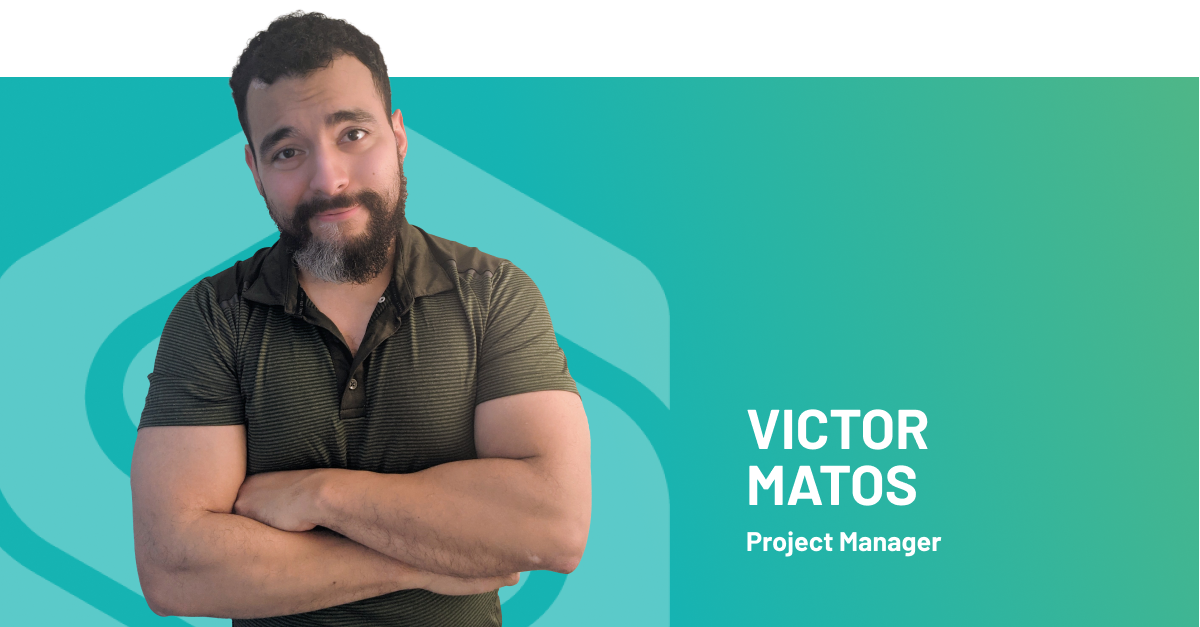
This week on Get to Know LiveLike, we’re excited to be spotlighting the employee that keeps us all on track, Scrum Master Victor Matos. Victor has been with LiveLike for almost 2 years now, and he continues to be a crucial member of our team. Check out our interview with Victor to hear about his experience in project management, what a typical day at LiveLike looks like for him, and advice he would offer to aspiring scrum masters. We’re proud to have someone like Victor on our team, and excited to have the opportunity to share a little bit about him!
Tell us a little bit about your career path. How did you get into project management?
I’ve always had an interest in different aspects of app development—graphic art, user experience design, audio design, and programming, which I sought a degree in at the University of Florida. This seemed to have influenced my early career as a programmer because I would always have an interest in the bigger picture of what we were doing. This meant that even during my programmer days, I found myself coordinating and communicating with designers, producers, and business analysts to communicate blockers and offer more transparency on the behind-the-scenes. It took two different promotions from different companies before I figured that Project Management suited me best for my skill sets. During the process, I learned about agile scrum methodologies and have since learned from videos, blogs, and events on how to become a Scrum Master for my team.
Can you describe what a scrum master is and what your typical workday looks like?
I often joke that I’m a loud cheerleader yelling scrum affirmations, but more accurately I’m a teamwork coach for my team. My goal as a scrum master is to empower my scrum teams, each composed of between 3-9 members, with tools, resources, and strategies available to help reach their sprint goal in a formally agreed 1-4 week deadline. Routinely, I help facilitate meetings that are useful to promote transparency and adaptations to our development team and stakeholders for our product. When the situation calls for it, I challenge my team with questions that can help my teammates arrive at a conclusion or decision that can better their workflow. The ultimate goal is to create self-organizing teams that require less and less of your input and facilitation as they learn from your own lessons or learn on their own.
How does the scrum process work at LiveLike?
While it’s tempting to immediately jump into sprint routines when asked about how scrum works, I find that it can mislead newcomers into thinking that scrum is about meetings and scheduling rather than shaping a certain mindset. The reality is that every scrum team composition and the scrum ritual schedule are different. Understanding the team, their unique situation, and unique obstacles should be the north star that guides a scrum process. For the current iteration of our scrum teams, we have bi-weekly sprints composed of cross-platform programmers, quality assurance engineers, and designers to make releases to our multi-platform SDK. This can change as the product adapts and we obtain new talent for the team.
Did you always want to be in project management?
I navigated my academic life feeling certain that I wanted to create something with a team and have a dedicated role or function in one. This meant that I studied hard and spent my free time honing a medley of skills. It’s funny that today I’m not directly applying those skills, but instead, I’m supporting my team with the environment, information, and structure to help them do their best work. There’s nothing quite like the feeling of seeing your scrum teams grow more and more confident in their discussion and execution of the sprint goal using strategies discussed during a retrospective.
Is there anything else you’d want to share with aspiring project managers and scrum masters?
For Project Managers: Consider using Agile Scrum if your product is expected to evolve and adapt to ever-changing market needs and fluctuations. Don’t worry—Waterfall has its place, but Project Managers should be prepared to use the right tool for the job.
For Scrum Masters: The best thing you can do is surround yourself with other Scrum Masters to listen to their stories and build a knowledge base, so when a similar situation happens, you have a reference point to work with.
Thank you, Victor!

To kick off our Get to Know LiveLike series, we sat down with everyone’s favourite coffee connoisseur, Mobile Engineer Lead Mike Moloksher. Mike has been at LiveLike for almost 3 years now and is an integral member of the iOS Engagement Team responsible for new functionality development, integration support and product stabilization. Read on to hear about Mike’s career history, his personal experience navigating the engineering world, and the words of wisdom he would pass on to aspiring developers. We’re proud to have someone like Mike on our team and excited for you to get to know a little bit about him!
Tell us a little bit about your career path. How did you get into mobile and iOS development?
My whole career path is based on being bored and looking for new challenges. I initially started off as a graphic designer, which got boring, so I started doing front-end web work, lots of javascript and css. Eventually that got boring too and so I started working with a lot of PHP and MySQL. Later when the iPhone came out, it seemed like a great opportunity to jump into something new and exciting. I bought the first Objective C book I could find and studied it like a Bible. It wasn’t the most pleasant language to work with, but that in itself made it so much more rewarding when I was able to build something with it on a very new exciting platform called iOS. Fast forward to today, iOS with Swift has evolved so much and I’m very proud that I have been in it since the very beginning, since the manual memory management days. I’ve got the mental scars to prove it!
Can you explain as simply as possible what you do for LiveLike as a mobile engineer?
In my role, I help LiveLike create tools for iPhones and iPads that other companies can use to increase user engagement in their apps. Another part of my job is to make sure my direct reports are happy.
Did you always want to be a developer?
No, as a teenager I actually thought I would have a career in music. But once I got my first computer, I realized that, just like a musical instrument, I had a hard time putting it down. The rest is history.
Why do you think that LiveLike is a good place for engineers like yourself?/What makes LiveLike unique?
LiveLike is a great place to work for engineers because of the unique engineering challenges we get to deal with. Ultimately, as engineers, the problems we face have a direct correlation to how good we get at our profession. Complicated engineering problems inspire collaboration, learning and, most importantly, self discovery.
As an iOS app developer for many years, I worked with tools others had created for me to use. At LiveLike, I get to be the one creating the tools used by iOS developers.
Is there anything else you’d want to share with fellow or aspiring developers and engineers?
Be brave. Be brave in asking questions, especially the ones you think will make you sound inexperienced. Your ego will forgive you for sounding inexperienced once you become aware of the knowledge you gained.
Thank you Mike!
No matter the industry, whether it’s sports, technology, or entertainment, fans want to feel close and connected to their favorite celebrities and influencers. Integrating influencer marketing into your business strategy can be one of the best ways to engage your audience, build brand loyalty and even increase your brand’s credibility by associating in your users’ minds with someone they trust. As organizations, we need to provide our users with this sense of proximity, personalization, and connection to their favourite athletes, musicians, and more, by allowing them to interact, engage, and create communities united by fandom.
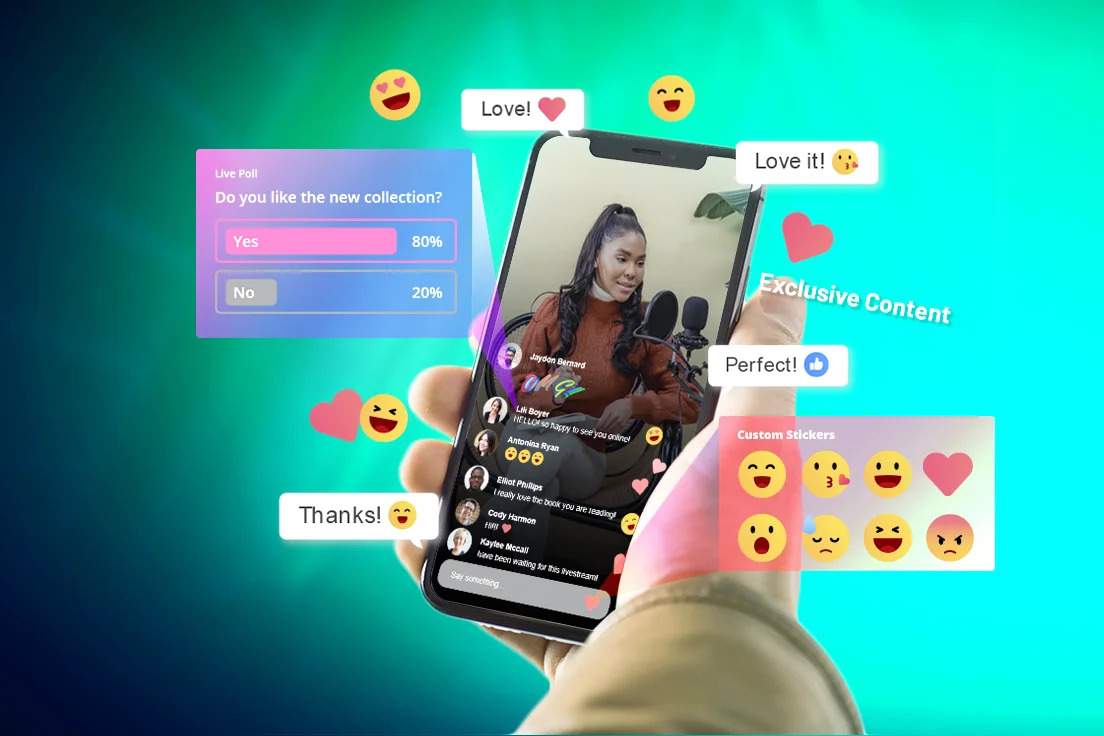
At LiveLike, we have developed a feature that allows you to do exactly this. With the Influencer Chat widget, users are able to witness live conversations with influential members of the company’s community including commentators, coaches, actors, social media influencers, and more! You can invite up to 10 influencers from various backgrounds to chat while your users have the option to watch, react, and even ask questions for the chance of having their favourite influencers respond. The Influencer Chat is a great way to engage your users, create a greater sense of community derived by fandom, and incentivize your audience to stay loyal to your platform.
To let you in on why your organization should be prioritizing influencer marketing, we’ve compiled all of the information you need about our latest and greatest Influencer Chat feature.
Main Features
So let’s break it down. At LiveLike, we know that the best platform features for our partners are the ones that are simple, easy to use, and able to be customized to suit the tone and aesthetic of different brands. That’s why our Influencer Chat widget supports in-app notifications, avatars, stickers, reactions, moderator tools, room member lists, and more. It is fully customizable and can be integrated into your mobile application or website, or even live as a stand-alone product for your platform. The Influencer Chat feature is available on all LiveLike SDKs and through our APIs.
Leverage the Influencer Chat to Drive Business Objectives
Not only will the Influencer Chat widget draw in new users and engage your existing audience, it will also help you to meet some of your key business objectives and monetization goals. By pairing the Influencer chat with the rest of our Audience Engagement Suite toolkit—including the use of public and private chats, polls and trivia, sentiment meters, leaderboards, and bonus point rewards—you’ll be able to create a complete user journey and incentivize users to spend more on your platform and sign up for your product or service. Of course, logged out users will get a modified UI provided by the integrators that prompts them to log in or sign up in order to participate.
Influencer Chat & Interactive Widgets
Why don’t you push widgets for Influencers too? Leverage our library of widgets (Polls, Quizzes, etc.) alongside the Influencer Chat to allow influencers to answer questions and react to the audience’s pulse. They’ll love being able to connect with their fans and in turn, you’ll have created an amazing engagement platform—win-win!
Influencer Chat & Gamification
By implementing a gamification strategy based on badges and points, you’ll be able to reward your audience for completing certain actions within the Influencer Chat feature. For example, you can reward your Top Leaderboard Members who have earned Gold Status by letting them join the Influencer Chat and interact with their favourite celebrity icons.
WNBA Use Case
One of the best examples of seeing our Influencer Chat feature in action occurred during the 2021 WNBA draft when we created The WNBA Draft Fan Zone, an interactive audience engagement platform. By leveraging the Influencer Chat alongside other LiveLike capabilities, the Fan Zone allowed fans to not only interact with the event through fun quizzes and challenging predictions, but also to engage with their favorite athletes and even with the league’s commissioner. During the draft, WNBA MVP A’ja Wilson teased commissioner Cathy Engelbert within the Influencer Chat, an interaction that later went viral on Twitter. This is just one example of the potential the Influencer Chat function has to create unforgettable moments between influencers and fans, and between fans and organizations.
Conclusion
All in all, the Influencer Chat is one powerful feature of our vast library of audience engagement tools that can be used to enhance your platform. By creating the opportunity for these interactions, the LiveLike Influencer Chat brings fans closer to not only the action but the influencers they know and love, and brings you one step closer to realizing the future of fandom.
Let’s face it, as the world gets more and more digital, it becomes increasingly difficult to create an online presence for your brand that stands out amongst the rest. In 2021, most brands understand the importance of creating high-quality content online that will educate, entertain, or enlighten their digital audiences. These expectations were heightened by the onset of the COVID-19 pandemic, and brands were pushed even further to adapt to users’ desires for a deeper sense of connection with their content. But when everyone’s in on the same secret, it becomes all the more challenging to capture the attention of your users, who have come to expect more from your brand’s online experience..
So how can brands set themselves apart with a more meaningful user experience (UX) and keep their audience engaged on their platform? One word: Interactivity.
Interactivity is the first of LiveLike’s three major pillars for success alongside community and gamification, and is a key step to reviving your online platforms. Gone are the days of using solely traditional, passive content; creating immersive digital experiences has become crucial for brands and companies to better suit societal needs and business trends, and to meet these newfound user expectations. At LiveLike, we believe prioritizing interactivity is mandatory to stand out in a competitive market, retain your customers, and drive greater revenue.
In this article, we’re breaking down the three major reasons why your brand needs to be more interactive.
To Increase Brand Exposure and Engagement Rates
We’re going to get right to the point on this: most passive content is simply disposable. In other words, your audience is likely to engage with your content one time—if you’re lucky—and never return to your platform for more. And this is likely because they simply don’t find as much value in static, text-heavy content that they can’t interact with.
When users aren’t given the chance to engage with content by playing, socializing, or being challenged, they’re likely to see the platform as nothing more than a one-and-done experience, and feel no reason to revisit it.
On the other hand, if users are offered a moment of personalized fun, challenging competition, or thoughtful, real-time discussion, they are going to be much more likely to want to relive the experience. Because of this, even the most mediocre interactive pieces of content typically see high levels of engagement due to the very nature of active content itself — because it’s content that users find valuable.
Engagement, of course, is crucial for business as it can help to increase sales, drive direct website traffic, and encourage user actions—all factors that can dramatically improve SEO performance and search result ranking. Not only are your users more likely to interact with your digital content, revisit your platform, and spend longer periods of time engaging with it, they are also more likely to subscribe to your content, or share it on their social platforms.
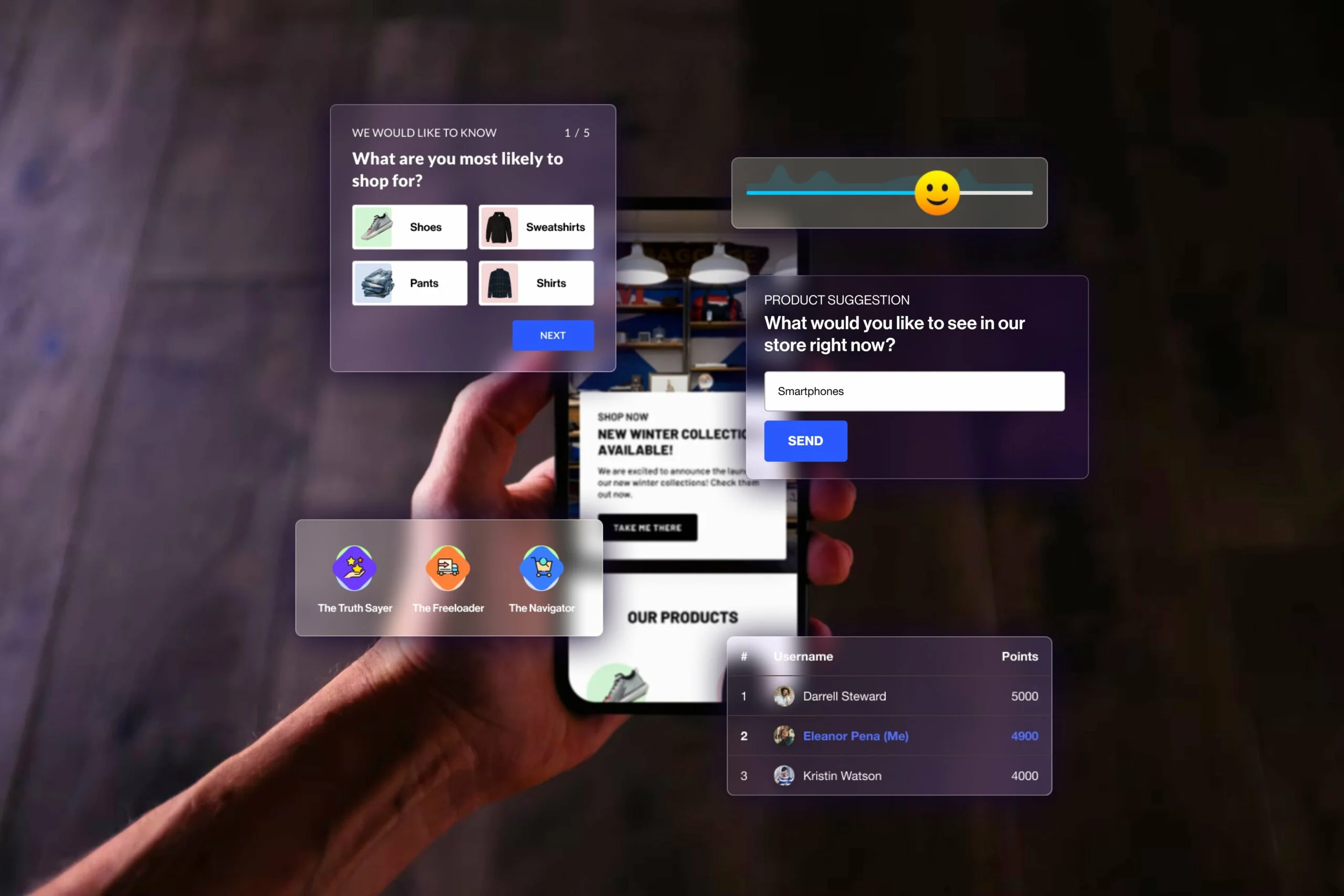
In fact, users are 28% more likely to share content pieces that are unique and interactive to their social networks than they are with passive content. These active pieces can include quizzes, contest giveaways, polls and surveys, live chats, live streams, interactive maps, Ask Me Anything tools, and more! When there’s a fun, engaging element to the UX, who wouldn’t want to keep coming back for more and share it with friends?
All in all, creating authentic B2C relationships through active content creation leads to higher engagement rates, which in turn leads to increased conversion rates, brand awareness, and revenue.
To Capture Customer Feedback and User Data
What else is likely high up on your radar as a modern marketer besides providing a high-quality customer experience? Collecting as much user data as possible.
Whether it’s personal data, engagement data, or attitudinal data, collecting insights on your users is a great way to optimize your strategies and engage customers. Needless to say, the better you know your audience, the more easily you’ll be able to satisfy their needs and turn them into loyal fans.
The tricky thing about collecting data, however, is finding effective ways of doing so without losing the trust or respect of your audience. Major data breaches like the 2019 Facebook—Cambridge Analytica scandal have caused users to lose trust in companies and become much more apprehensive when sharing personal information online. While there are many reasons why people being cautious online is a good thing, it certainly makes it harder for marketers to target their audience and optimize their campaigns without access to valuable user data.
That’s where interactive marketing and active content can really save the day. By creating online experiences that are fun, dynamic, and engaging, you not only provide easy ways for your audience to provide this first-party data, you also offer them an enjoyable experience in return that encourages their participation.
Whether you’re testing their knowledge on a trivia question, getting them to vote on their favorite pop singer, or letting them predict the outcome of a basketball game, you’re creating a win-win scenario in which users are given a fun experience while you get practical insights into their needs, pain points, behaviours, and goals as a customer. What’s even better, you’re doing so in a way that doesn’t make them question your trustworthiness as a brand!
To Empower Stronger Brand Loyalty
With so many brands competing for space and attention online, building brand loyalty among your customers is invaluable. In fact, becoming the go-to platform for your users or the site they recommend to friends can mean a world of difference for your success as a company.
By its very definition, brand loyalty describes when a customer repeatedly returns to your platform to use or purchase your product or service—not because you’re the only option they have, but because they’re familiar with you, they enjoy the user experience you provide, and they trust you.
By creating a platform that prioritizes a fun, engaging UX, captures the attention of an audience, and utilizes customer data to enhance its content and customer experience, you’ll create a brand that users will love and stay loyal to.
So, there you have it! Creating active content—when done tactfully—can lead to more engagement, brand exposure, and user data, and create a stronger sense of loyalty in your customers. Bring life back into your marketing strategy with interactive content and start converting your one-time users into loyal fans.

Pioneering Audience Engagement and Gamification Company Continues Rapid Growth
TORONTO and NEW YORK – November 16, 2021 – LiveLike, an audience engagement platform that incorporates community, interactivity, and gamification to the online user experience, has announced the opening of an office in Toronto. The new occupancy in Canada strategically grows LiveLike’s presence in the country as it expands its relationship with media and other businesses in the region. Throughout this process, LiveLike worked closely with Toronto Global, a team of experienced advisors assisting international businesses to expand into the Toronto Region.
LiveLike’s cutting-edge approach enables its partners to activate and empower their audiences via customized, interactive features. It does this using a suite of tools ranging from virtual watch parties, private and influencer-driven chats, and prediction games, to fan leaderboards, live polls, quizzes and more.
In only the past two years, LiveLike has seen their audience engagement platform utilized by the likes of the NFL, the NBA, the Golden State Warriors, NASCAR, Canal+, WarnerMedia, FOX, and more. Now, LiveLike turns its attention to organizations in Canada, including those in sports and media, as well as in fintech, edtech, and publishing, or any platform looking to directly engage with their audiences and retain them as fans.
Commented LiveLike Co-Founder and CEO, Miheer Walakavar, “Toronto is an excellent location for our second office in North America and first in Canada. We have already begun to tap into the exceptional talent in the city, including recent additions on our marketing team with more to come, and we are thrilled to be expanding our business through partnerships with companies based in this vibrant city.”
“The Toronto Region is drawing the attention of the world for its emerging digital media and game development sectors, its diverse and welcoming community and dynamic entertainment scene,” said Toronto Mayor John Tory.
“I’m thrilled that LiveLike will call Toronto home, create jobs for our talented residents and contribute to our reputation as a global centre for innovation, creativity and economic growth. Welcome to the Toronto Region!”
Founded in 2015, LiveLike is headquartered in New York, and in addition to Canada, has offices in India and Europe, with additional staff around the world. For more information on LiveLike, please visit livelike.com, and for career opportunities in Canada, visit livelike.com/careers
NEW YORK – November 15, 2021 – The eSkootr Championship (eSC) is pleased to announce its partnership with LiveLike, an audience engagement platform that incorporates community, interactivity, and gamification to the online user experience. LiveLike’s cutting-edge approach enables sports and media companies to activate their audience and empower their fans via customized, interactive features. With this partnership, eSC will be leveraging LiveLike’s extensive toolkit and invaluable industry expertise to engage a worldwide community of fans and users.
When eSC takes to the track for its first event next spring, the series will present a new competitive sport to the world and a new way of engaging with fans on a global scale. With a diverse range of riders already making eSC one of the most accessible competitive sports worldwide, LiveLike’s technology will ensure that the championship remains highly accessible to fans watching trackside and from home.
LiveLike will integrate directly into eSC’s digital platform to help fans interact with the event in real time and consume eSC content in a whole new way. As a technology-driven sport, eSC aims to be as ground-breaking off track as it is on track. Fans will be able to engage directly with other fans worldwide and with racing experts, commentators, and riders through chats, live polls, and even live race interactions.
Hrag Sarkissian, eSkootr Championship™ co-founder and CEO, said:
“We’re reimagining racing to make it more accessible than ever before. This means creating compelling new ways to connect fans to our riders and races, getting them closer and more involved in the action, whether at trackside or watching from home. That’s why we’re partnering with LiveLike, like us they’re on a mission to take fan engagement and interactive sporting experience to another level.”
Miheer Walavalkar, LiveLike co-founder and CEO, said:
“Hrag has been a friend to LiveLike for a long time, and we are grateful not only for his support but also his partnership. As the excitement continues to build toward eSC’s big event next year, the opportunity for enhanced fan interaction is clear. Our team is thrilled to be working closely with eSC to help them build features directly into their platform, including gamification elements that will keep their fan community engaged before, during, and after the competitions.”
LiveLike is just one of the media partners working with eSC as the world’s first electric scooter championship gears up for a global racing event which will race on specially created city centre tracks starting in spring 2022. eSC Chief Content Officer Sharon Fuller, will be speaking on a Future Prospects panel at the SportsPro OTT Summit on Tuesday with other sports media and technology leaders. The SportsPro OTT Summit is taking place between 15 – 18 November 2021.
.svg)
.png)