Let's Get Shoppable!
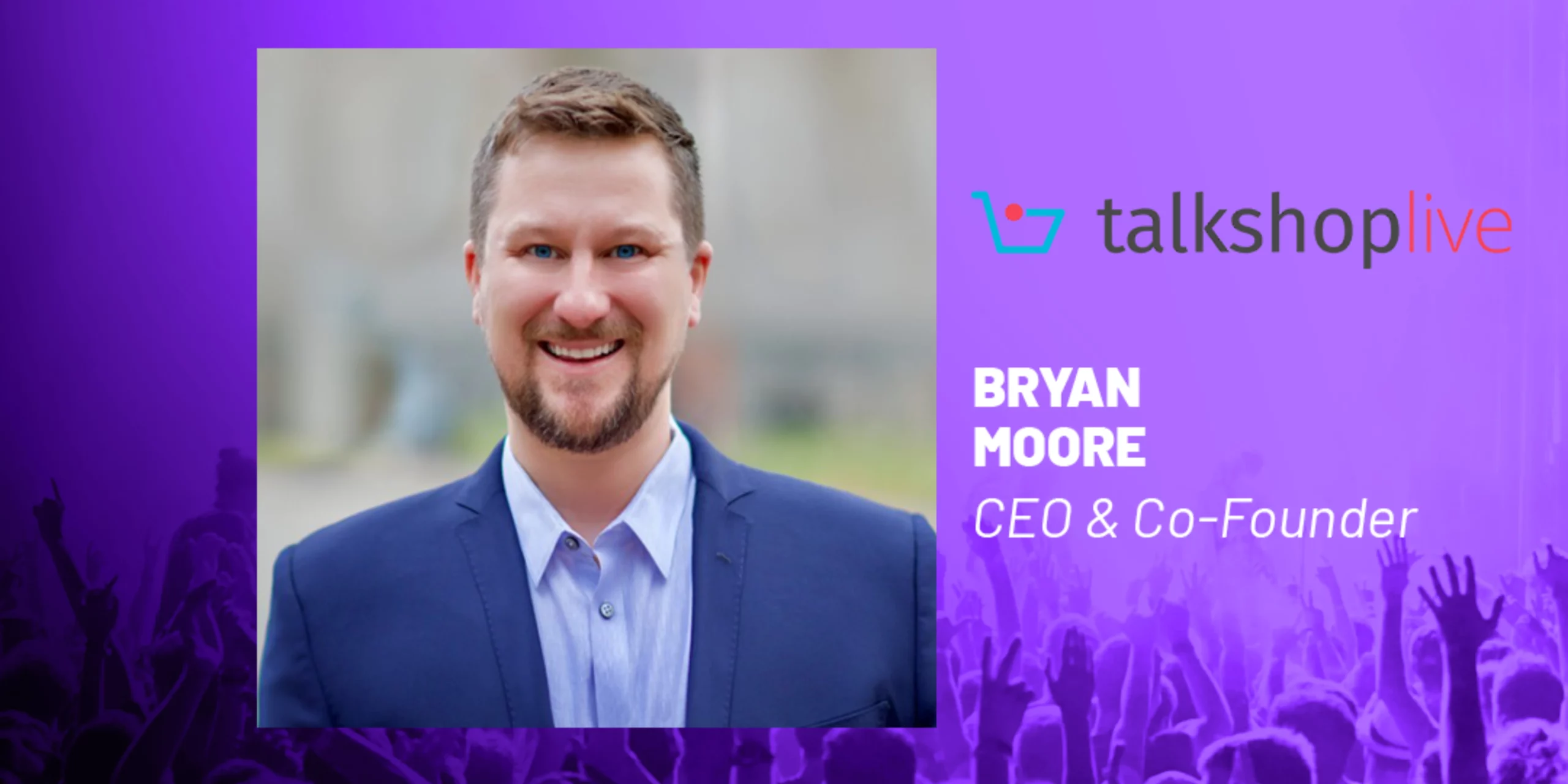
Today on The Future of Fandom, we’re live! Well, not really, but we talk a lot about being live. On this week’s episode, we learn about the ever-evolving world of live shopping and commerce, thanks to the perspective of talkshoplive and its CEO and co-founder, Bryan Moore.
As you probably know, this world of live shopping was started on television years and years ago. While live streamed content became more popular across sectors like gaming and then more broadly, Bryan was studying trends in the far East to learn about how the discipline was trickling into shopping. What’s resulted is a sharp focus on creating the best shopping experience possible—one which is interactive, always-on, and available wherever you are.
Since 2018, Bryan has been shifting those trends westward and has brought along mega-talent and merchant partners to combine customers and fandoms in unique experiences which we’ll touch on today. Of course, as always, we’ll also leverage his perspective on how far we’ve come to get a glimpse at what the future of live commerce will be—plus, we’ll expand on why every brand should leverage live content as a pillar of its strategy.
So let’s talk shop, so to speak, and predict the future with talkshoplive and Bryan Moore.
Connect with Bryan Moore on LinkedIn: https://www.linkedin.com/in/bryanmmoore/
Read more about talkshoplive: https://talkshop.live/
Full episode here:
FULL TRANSCRIPT BELOW
Adam Conner:
Hey Bryan, how are you?
Adam Conner:
Hey Bryan, how are you?
Bryan Moore:
Doing great. Thanks for having me. How are you?
Adam Conner:
I’m doing well. This whole world of live commerce is new-ish to me. Actually really new to me because I’ve never purchased something in a live context, and not through some of the ways in which that live commerce is proliferated today. So this is going to be a class for me and our listeners as to what it’s all about. And what’s changed over the years and what you see going forward. So I appreciate you coming on and for educating us, first off.
Bryan Moore:
Of course, glad to be here.
Adam Conner:
So just so we set the record straight, let’s start with a very brief description of what talkshoplive is and why you started it. What clicked in your brain like, hey, this is where I got to be. This is where I got to be building, and this is what people are going to want.
Bryan Moore:
Yeah. So, just to put out there, talkshoplive is a livestream commerce platform where people go live, sell their products. The player on talkshoplive is in embeddable, which means everywhere that the video player is embedded, sales execution happens within the video player. So what we really set out to create was a vehicle that really helps connect the retail landscape, right? Between publisher, creator, brand, retailer, and for all of them to win at livestream commerce together, which we can get into when I kind of talk to you about kind of the inspiration behind talkshoplive, and kind of what we looked at as the model and what it would really take for livestream commerce to be successful here in North America.
Adam Conner:
Okay. So then, let me nip this thing right in the bud, a comparison that I have in my head, which folks who may be like me and maybe have not yet used this new age of live commerce to interact with a brand or talent or to buy something might have stuck. I want you to break it loose for me. And that is this comparison to only other way that I’ve seen something be shopped out live to someone, which is just television. I mean, folks, you probably saw a shopping channel at night, overnight, infomercial, something. This is obviously much different. I would say probably better than that from my initial understanding. Can we break it apart what talkshoplive is from that sort of like QVC world of old. Real quick, before we even go forward, because I’m sure people are thinking about that.
Bryan Moore:
Absolutely. Well, first and foremost, I’m a huge fan of QVC television shopping and kind of how they created the genre of TV shopping, right? But what I will say is that with livestream commerce, I think people who are most successful at it, look at it very differently, right? Because when you look at traditional television home shopping, it’s very much, it’s very much about the sale of the product. Whereas when you look at what’s driving the success in livestream commerce, what it really is, is connecting content with commerce. Bringing people into an experience that’s shoppable. So maybe, if it’s useful, Adam, I can just kind of jump back and kind of give you the why on talkshoplive really quick, because I think that that would be useful in kind of just explaining this difference.
Bryan Moore:
But I worked in television for a long time. I started the social media department at 20th Television, and my whole role was how to get TV and the viewers to adopt different social platforms and how we would utilize them to create community around what was on television.
Bryan Moore:
So I was at 20th Television for about five years. I moved over to CBS where I oversaw social and digital for Entertainment Tonight, the Insider, all their syndicated programming. And then when I left, it was that time period where influencer marketing was taking off, right? The social media algorithms were starting to shift and impact how people made sales. And I had taken on some really cool clients, basically people that, in my mind, wanted to use social media to not just check the box, but destroy the box. Right? So from Vanity Fair, like social clubs around the Oscars and the Emmys, to the United Nations, to Garth Brooks, right, on his comeback and return.
Bryan Moore:
And one of the things that I was looking at, because I had studied Mandarin Chinese for 13 years, and I actually lived there for two, but I watched as livestream commerce took off in Asia and became a billion dollar industry. And I was like, wow, I wish I had the power of this for my clients in the US, but it would need to look different. Right? Because as opposed to people driving their fans, their viewers to go download an app, to get into an experience to potentially buy a product, I was like, what they ultimately need is something that sales can execute within the video player. They can bring the talent fans of the brand, bring them into an experience and have an engaged conversation, which drives social media to do so well, right? And then allow them to execute the sale within that. Right?
Bryan Moore:
And ultimately with the embeddable player, serve as that distribution vehicle that then helps them connect across the whole landscape of the internet. And so, when you’re looking at the difference between QVC and talkshoplive, or television home shopping and talkshoplive, what I would say is it’s really about the experiences that people are creating. It’s the same shift, I believe, that we’re seeing in advertising, right? Nobody loves, you know, I feel like people hate being advertised to, but people love entertainment, right? So, if you look at even how advertising is changing, is people are really looking to bring people into it, right? And invite them into your brand, as opposed to chasing them.
Adam Conner:
Yeah. This is right down the middle of what we are looking at on this podcast.
Bryan Moore:
Fantastic.
Adam Conner:
Because this is something that we have talked about in terms of well, fandom. We did it really early in the show with a gentleman by the name of Pete Vlastelica and listeners, you may remember this, but we talked about how interacting with entertainers today is less this quasi demigod of there they are on the stage and on way back here, and much more being invited in, as you say. Fandom changes over time of course, and getting more actively involved is what consumers want. And if that means that it’s an easier way, instead of just looking across a television screen and seeing somebody sell something to, it’s right here on my phone, it’s very simple from a stream. I can just click a link, even better. That access really is what people want. And it doesn’t matter if it’s shopping or anything else, but obviously shopping is the key here.
Adam Conner:
So I’m glad that you stepped into that. And as a nod to your studies of the far east, I think we probably on the show should do a better job of how far ahead markets in Asia are when it comes to tech-enabled offerings, tech-enabled shopping, live commerce. Maybe even, I’m glad we’re doing that now. But those trends are slowly moving westward and it’s good to know that you saw that and were inspired in part based on that.
Adam Conner:
So to that, there’s obviously a reason why those trends are moving westward. I want to know from you next, the way that live commerce has evolved to today, thanks to you and some other players. What have you seen to be the impact on the ultimate engagement with the consumer, from the perspective of a merchant, because obviously a talent is going to always have that sort of palpable direct connection. Obviously it’s a little easier now, but I don’t think that the merchant, and by merchant, folks, I’m talking about the brand that has the thing that they’re integrating with the talent, knows or knew how to do that as well before this, have you seen a palpable impact there also?
Bryan Moore:
I have. I have. And what I often liken it to just when we’re talking about timing is that when I first started in social media, right, I remember when I first got that job at 20th Television, it was a brand new job. It didn’t exist. And when I first got there, everyone was like, what social media? Do we really need social media? A year later, everybody was like, what’s our social media strategy? And then it was, what’s our Twitter strategy, Facebook strategy, Instagram, you know what I mean? It became very, very, very important. So it took that, inflect that year, and then that inflection point and then the adoption. And I think we’re at that point with livestream commerce right now, in North America, right?
“I feel like everybody’s kind of like, what is this? Do we need to be doing it? We know that it’s become a billion dollar industry in Asia and people started dabbling in it. Right? And being like, we need to experiment in it. And now is where we’re at the adoption phase, right? Where the merchants, to your point are adopting it, the merchants and the brands. The retailers are adopting it. And most importantly, the consumers are adopting it. And we believe at, talkshoplive, that talkshoplive’s the most adoptable version of livestream commerce because we meet the customers where they are. You’re not going into an app, right? You’re not going just to one website. Right? But because the player’s embeddable everywhere. And we have partnerships with Condé Nast, with Hurst, with Ziff Media, MSN. So our players exist all over. So wherever you go, talkshoplive is meeting you there. Right?”
— Bryan Moore
Bryan Moore:
So we really serve as a solution for these brands and retailers to meet their customers where they are, even if it’s not within their domain. But allowing it to exist in their domain too. But now, to your initial question that I jumped off on here, but in terms of how the brands and merchants are really doing with it, I would say, on talkshoplive, we’ve been really fortunate enough to have everybody from Mattel, to Pampers, to L’Oreal, to a lot of P&G products launch on talkshoplive, and I think where they’ve been able to see, beauty and food are our fastest growing categories, right? Books and music were our gateway categories. And where I think these brands and suppliers were able to really see the value is the value in connecting with the retailers, right? They also have a great value connecting D-to-C. And what they’re able to do is provide that experience so that they’re their customers, right, are now having a fantastic shopping experience online. Right?
Bryan Moore:
I believe that for the past two decades, right, everybody’s been trying to figure out their e-commerce strategy, which is how do we create the best buying experience for our fans. And what talkshoplive and livestream commerce is really going after is how are we creating the best shopping experience for our customers, right? And that engaged experience. And one example that I’ll give you is when someone was on and they asked a question, they bought the product from the show. And then later they actually wrote into our help desk at talkshoplive, and they explained that what was so great about it was they didn’t just learn more about the brand, right? But now every time they use the product, it brings them back to the experience that they had when they were shopping for it. And I think that when you’re looking at what’s a shopping experience versus a buying experience, that’s creating a lot more brand loyalty, and in the case of this podcast fandom for these brands.
Adam Conner:
Yeah. That’s where I am trying to draw a line where people cross over from being just a customer into being a true fan. And I’m still talking about of a brand here, because most of the time with talent or an entertainer, you are a fan first maybe, and then a customer. Obviously the ease of access, creating the best shopping experience possible, all of these are overarching variables in crossing that line to true fandom. Are there a few others that you can think of or just from your experience over time, a few moments that clicked in your head as, well, I guess, watershed moments from the transition from a customer to a fan? I ask because I assume that you, via the live commerce angle have a perspective that few others really do, at least now.
Bryan Moore:
And I think we’ve seen that a lot. And I think a lot of the brands who are on the platform have been able to see that. And that’s why when we talk about livestream commerce, talkshoplive specifically, and kind of what we put out there as best practices is that it’s not about the one off show, right? The one off show is kind of an experience, right? But to kind of create consistent programming where people are connected to your brand in a meaningful way, and where a lot of the brands, the retailers that utilize us, what they’ve seen is that people continue to come back for their programming and their audience grows week over week, their sales conversion rate grows. Right? And so, I think that that is a true testament to if you’re creating the experience, they will come.
Bryan Moore:
And I think the other thing that talkshoplive really tries to provide to our sellers is to work with them on what is creating the best live commerce experience all about for your brand? And I know there are a lot of people who can bring on people onto their team who come from eCommerce, right? And who come from tech, right? Who come from partnerships. But what we’ve done in assembling our team at talkshoplive is our team is very much, obviously we have an incredibly strong engineering and development team. We have a strong partnerships team. We also have a lot of people on our team who come from media, right? Because the big thing to be successful in livestream commerce is how are we creating content around the products that we have, right?
Because, back to the point that you brought up in the beginning, it’s different than television shopping where you’re just showing the product, offering a sale price, and expecting it to sell, right? With this, you want to create a shopping experience worth talking about. A shopping experience that people want to share. A shopping experience that people want to embed. A shopping experience that people want to pass to their friends. And our team is really skilled at A being kind of first to market in the US doing this, but also a lot of people coming from media and content creation on our team.
Adam Conner:
Yeah. It’s always great to be first here. And it means that you get a pretty serious swing at the bat with some big names, just probably because they haven’t quite heard of it before. But, I want to transition here into doing a little bit of storytelling. Actually, I’m going to ask you for a story or two, because ever since you started this, you have been ramping up the integrations you have with merchants and talent, the intersection there, everything in between. And for instance, and listeners, I don’t know if Bryan would say this, but I will. I know that you’re doing a heck of a lot of work with Walmart, and that Walmart looked around at all these other services that did live commerce, and they chose you, obviously for a few reasons, which we might get into, we might not.
Adam Conner:
But regardless, the frequency has ramped up significantly. I feel like every week on your LinkedIn profile, which I’ll link in the show notes to listeners, you can see another great integration you’re doing with a consumer electronics manufacturer or a megastar, whatever that is. Now, I’ve spoken about how fandoms interact in the context of product in retailer. Had that discussion with Rakuten. With merchant and merchant, had that conversation with Extend, which is a player in extended warranties. But I haven’t had it with the intersection of a merchant, a megastar, and let’s say a manufacturer. And I know that was one of the most recent instances of an integration that you advertised.
Adam Conner:
This is a long pre-conversation here, but listeners, we are releasing this on Tuesday the 20th, or rather the, yeah, the 21st of June, and we’re recording this on Friday the 17th. And you just talked about, on your LinkedIn, Ciara, and Samsung, and Walmart all coming together, and I want to learn from that some of your favorite stories of brand building and fandom building through the platform. Just bring this to life for us, if you wouldn’t mind.
Bryan Moore:
Yeah. So, well, A I’m super excited about the Ciara, Samsung, Walmart program. That’s actually happening on the 21st. So when people are listening to this, this is happening.
Adam Conner:
Okay, well, listeners, you get this in the morning. You get this at midnight. So now you know what to do. Anyway, go on.
Bryan Moore:
Yeah. But I think that being able to have the creator collaborate with the retailer and with the brand, and then everybody can embed it within their worlds and also put the embed code and press releases to exist in other worlds. What it really does is it creates a lot of distribution for your program. So that, in addition to your existing audience, you’re also able to bring new audience, right? And bring people into that experience with you.
“The best examples that we have of brands, retailers, talent coming together. I have so many stories, but one that really put us on the map in a big way was Garth Brooks coming on with his vinyl box collection. It was fulfilled by Best Buy. It was embedded on bestbuy.com, garthbrooks.com. It also existed on aol.com, todayshow.com. Everywhere that picked it up, right? So it was able to really meet all of those customers and people able to come in for that experience. And it ended up being a record selling, not to use record twice, but it ended up being a record selling sale for Garth’s records. And put us on the map in a big way, right, to then be followed by Oprah coming on. And then Dude Perfect, and a lot of the digital stars like Noah Schnacky and Joshua Wiseman.”
— Bryan Moore
“But I think what’s really incredible is we look at the space and how the space is going to evolve for livestream commerce, right? When we talk about our vision at talkshoplive, it was it’s livestream commerce, right, and how that can really benefit brands, retailers, and creators, and publishers. Right? But more than that, as we look at how it’s changing the future of shopping, right? And creating those experiences for people to come into where you can go into the kitchen with your favorite food network chef and shop their cookbook, but also shop all of the products that they have in the show from Walmart.”
— Bryan Moore
Bryan Moore:
What it does is it really starts to connect your experience with the brands and with the talent, because you’re also engaging with them. Right? And it’s a very meaningful experience for people who bought Oprah’s book, right? To have that book delivered to their doorstep and know that they had that personal experience with Oprah. It changes that shopping experience versus just buying it off of a website. And what it does, is it makes people want to come back for their future experiences with those brands. It makes them say, hey, you know what? I want to follow this. I want to be a part of this. I don’t want to miss the next opportunity.
Bryan Moore:
Sorry, and before I just keep talking too much, because I get super passionate about it. But when we look at how beauty is one of our fastest growing verticals, right, and we do a lot with Allure, we do a lot with New Beauty Magazine, and we do a lot with independent beauty brands. And what’s so great is that as people are applying, everybody knows that people love beauty tutorials, right? But as they’re having the tutorial for the viewers to be able to ask them the questions, right? And then get the product, and then the person be able to acknowledge who’s actually purchasing it. Right? It really, what it does is it connects the dots in your shopping experience. And what we constantly look to do at talkshoplive is how are we connecting those dots online. But also as we look forward, one of the things that we hear from all of our major retail partners is that when people do their talkshoplive programs, they’re seeing omnichannel in store sales lifts for every product that they’ve had on their programs between 15 and 400%. Right?
Bryan Moore:
So the numbers don’t lie in terms of being able to actually convert sales. But I think what’s even bigger than that for the brands, for creators is to be able to actually give their customers, their fans, their viewers, an experience that they will always tie to that product and tie to the brand to remember.
Adam Conner:
Yeah, I mean, this seems like a pretty clear indictment that live commerce in general, and the evolutions they’re in, will be part of the future of most brands and certainly of your business, obviously. And those numbers are striking. To the point that maybe this question is redundant, but I do want to ask, assuming you believe this to be true, why should live content be a pillar of every brand’s experience?
Bryan Moore:
Well, what I’ll tell you about talkshoplive is there’s a process right behind it. So we recommend doing a promo video seven days in advance of your show that’s shoppable. The live show that’s shoppable. And the replay of that show, that’s also shoppable, right? So why is it so important for it to be part of every brand’s experience is because it’s the ability for you to connect with your customers in a meaningful way, right? It’s a way for when if they’re not coming into the store and they’re watching online, or they’re consuming content online, it’s an ability to actually touch and engage with them in real time, and those engagement and those touch points make a difference.
And when these brands work with talkshoplive, they also have best practices, right, which is looking at the behavior of how people operate online, so that when you’re doing your program in the first two minutes, really get out kind of what the program is going to be about, because there are some people who come just for the first two minutes of the show on the replay, and there are other people who will come for the whole 30 minute experience, you know?
Bryan Moore:
So I think it’s livestream commerce is when you’re just looking at our business alone, we were up 800% year over year, last year. And we’re up already 730% over last year. Right? So I think-
Adam Conner:
Good Lord.
“That what that shows is the adoption. I think also looking at it and saying everybody from the Vogue Club, which does a bimonthly show with us to Allure, to all of these publications, GQ, People, they did a shoppable interview with Scottie Pippen where people could shop from the show while he was getting interviewed. But I think looking, as a media starts to adopt it, right? And I think one of the things that we’re starting to get a lot of requests from is the actual creators themselves, right? Who are thinking to themselves, wow, I don’t want to just be out selling a product, but if I can bring my community into an experience, right?”
— Bryan Moore
Bryan Moore:
Where they see the, because right now we live in a time period where everybody’s looking for transparency, right? And so, for people to be able to be transparent with their audience, bring them into an experience, and have them remember that experience, that’s how you create connectivity to your brand and just searching a topic online, purchasing it, buying it. You’re not having that shopping experience, and I think by getting back to that shopping experience, brands are also getting back to brand loyalty. And I think for creators, it’s also really about authentic connection.
Adam Conner:
Speaking of content creators and connection, we’ll go to another, well, let’s say conference that carries a C word as we round out here, because as you listen to this listeners, Bryan has just shipped off to Cannes in the Southeast of France and where they have award shows and fireside chats and everything about creativity. Keep going with these C words. So, in that way, I want to ask, what are you excited for there? What do you anticipate to see in terms of, well, can I say the future of fandom, or maybe just the future of commerce. Like what you anticipate to see, be highlighted from the best and the brightest out there when you head out next week as we are all listening today.
Bryan Moore:
Yeah. Well, I’m really excited, because I have the opportunity to do a fireside chat. It’s put on by Influential, which is one of the biggest creator influencer agencies in the country, and I’m doing a fireside chat with the head of global commerce from TikTok. And what I’m really excited about is A, that live commerce is on the map in the way it is, and top of mind. Obviously we’re seeing all of the big players in the space get into it now.
“Right? But I think because brands, and retailers, and creators are starting to see success in it. And for me, what I’m personally really excited about with talkshoplive, and where we fit into that ecosystem is that we’re the only player in this space that’s really connecting the retail landscape. Right? So when it comes to your program, and because of our in embeddable player, right, with the sales execution happening within it, and everywhere it exists that it’s shoppable. So the ability for brands to work with retailers, to work with creators, to also work with publishers and have this mass distribution, and the next phase is a lot of social media platforms are also looking and reaching out to us about partnerships for programming and extending with them.”
— Bryan Moore
Bryan Moore:
And so, I think there’s a lot of opportunity. Really, we look at it as us being the experts in livestream commerce, and really partnering across the landscape to allow everyone to collaborate, to work together to see the most success. And I think what we’re able to deliver in terms of the experience that people can provide for their audiences, in addition to the ability for them to have the connectivity and ability to reach their audiences, eliminating the social media algorithms is really powerful.
And I think that as brands, and retailers, and media are adopting it in such a big way, like that we get to look at it and say, wow, talkshoplive, we get to do the significant programming that we get to do with Walmart and help them connect with their suppliers to create these amazing experiences for their customers. But the other thing is that it’s scalable, because I think the point that we’re at right now is everybody’s trying it, and now they need a solution that’s scalable. And the VP of brand at Walmart, he put a quote out there saying that talkshoplive is their scalable solution for livestream commerce. And that to me is the greatest quote we could possibly have heard, because at the end of the day when you’re doing anything with your brand, you need to consider how is this scalable, right?
Bryan Moore:
And so, the fact that brands and retailers can come on talkshoplive, cut their production costs by 95%, see their sales increase, see the distribution increase, and it’s something that they can go from doing, one or two a quarter to saying let’s do 20 in a month. I think that that really shows the power of scalability.
Adam Conner:
I totally agree. I think, listeners, I had a lot of great conversations here with brand geniuses, and I do get a glimpse at what is yet to come. We are right at the beginning of this live world of commerce, and obviously live content been around for a long time. Streaming really picked up. You can thank all the gamers for that for several years ago, but the commerce side and the shoppable side is just beginning. So to have you here, Bryan, to learn about one of the real pioneers here and somebody who will likely lead the charge going forward is great. And that has been evidenced by these giant names that work with you.
Adam Conner:
One final question, and since we’ve talked about a lot about what could be or should be, I want to get your thoughts very briefly just to fill in the blank on something that won’t be. So I’ll do the sentence, and I’d like you to fill in the blank.
Bryan Moore:
Okay.
Adam Conner:
Given my expertise in live commerce and how I’ve seen it grow and transform the way that fans interact with talent and merchants alike, I can tell you that the future of fandom likely won’t include any more ____.
Bryan Moore:
The future of fandom won’t include anymore… The hard sell. It will be the experience.
Adam Conner:
Clear enough to me. And hey listeners, you’ve seen that probably if you’re in the business world and you get sold software and various widgets, you know that it’s been more experiential buying than just somebody cold calling you every day. It doesn’t work anymore. If you are in a retail shop, you know there’s plenty more AR experiences that you put the product on you before you actually buy. Same thing here with live content. The fact that it is interactive, that it is shoppable, that it is, is it weird to say not quite evergreen, but certainly greener that it was considering that you can make these things past, present, and future shoppable, even though it’s not the time of the event. All of these things leading to a future, I think which is much more deeply connected for A, a consumer, and then hopefully the future fan. Bryan, thank you for all of this expertise. It’s a world that I get really jazzed about, and listeners, you may hear this too, but I just think it’s wonderful and I’m glad that I was able to learn more from you directly.
Bryan Moore:
Awesome. And thanks so much for having me. Love your podcast.
Adam Conner:
Hey, thanks.
Adam Conner:
As Cannes unfolds this week, I’m sure we’ll be learning a lot more about the world live commerce and its overarching trends – and I have a feeling talkshoplive will be a big part of it. Thanks again to Bryan Moore for joining us.
And thanks to you, the listener, for exploring The Future of Fandom with us. I’d encourage you to stay connected — so subscribe to The Future of Fandom wherever you listen to podcasts, or you can also find all our content at livelike.com. Across socials we’re also on LinkedIn @LiveLike and Twitter @LiveLikeInc.
I look forward to predicting the future again with you soon. Until then, I’m Adam Conner saying so long and thanks for being a fan.
Letting Your Superfans Tell Your Story
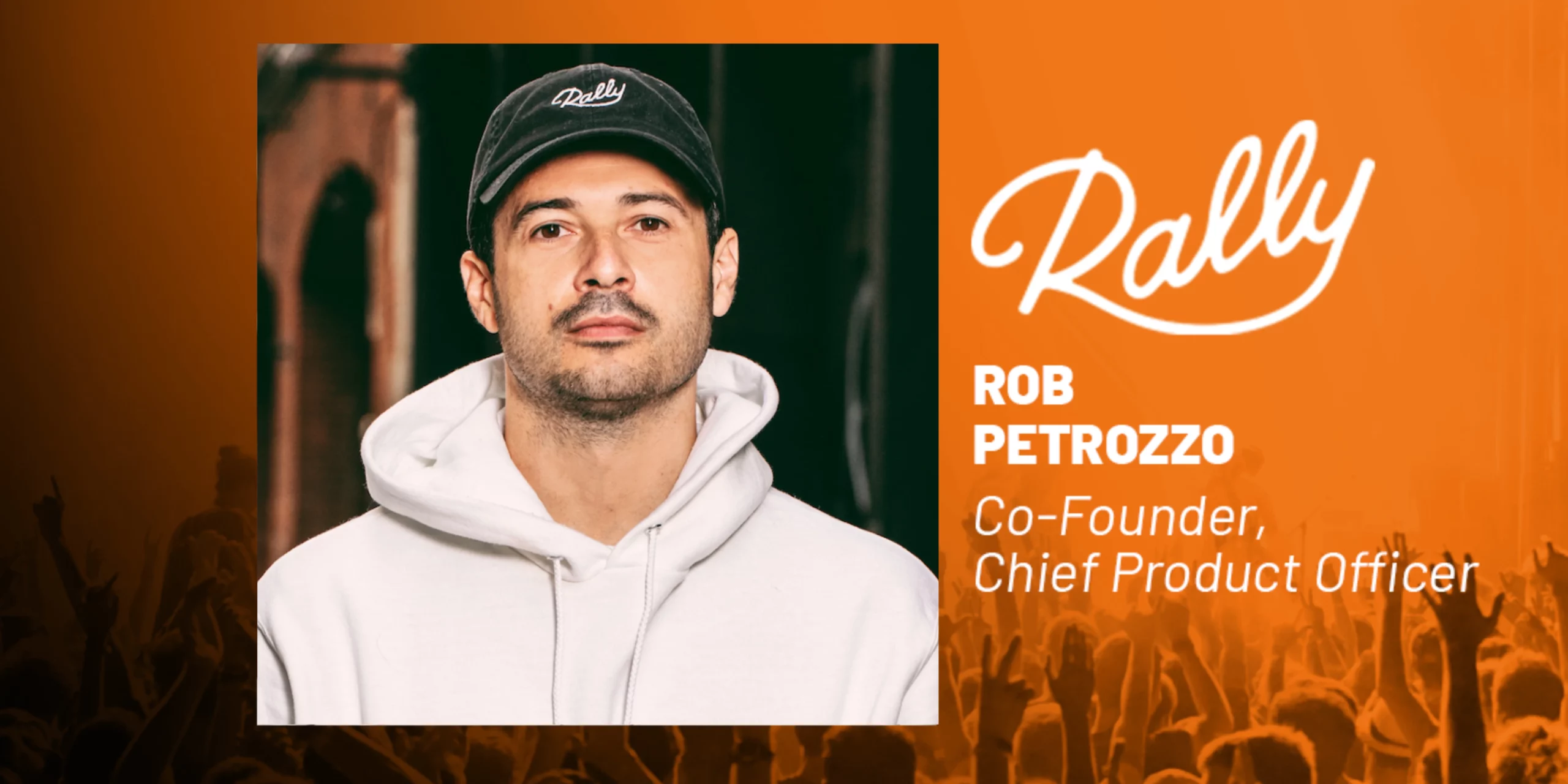
Today on the Future of Fandom, we explore how to let super fans tell your story for you. On this episode, we take a look at Rally Rd. and how it creates shareable experiences for its investors and die-hards, all with the help of Rob Petrozzo, their co-founder and chief product officer.
We’ve chatted with a few fintechs and investing brands on this show, but Rob is a true modern day pioneer of the belief that anything can be an investment. So he’s seen the best and the worst of the trends within alternatives, and he’s had a front row seat to the ways regulation impacts the ways financial brands can tell their stories, not that that stops him. Rally had developed a cult following, and with a little experience tinkering and a lot of shareable moments, Rob has managed to steer his community into a frenzy whenever they get in on the investing action.
We chat about this particular strength and how the future relies on that critical muscle, no matter who you are. So join us as we predict the future with Rally Rd. and Rob Petrozzo.
Connect with Rob Petrozzo on LinkedIn: https://www.linkedin.com/in/robpetrozzo/
Read more about Rally Rd: https://rallyrd.com/
Full episode here:
FULL TRANSCRIPT BELOW
Adam Conner (01:06):
All right, Rob. How are you? Wonderful to have you on the show.
Rob Petrozzo (01:22):
Adam, what’s up, man? Thank you for having me, dude. Appreciate it.
Adam Conner (01:25):
I’ve chatted with a ton of folks in fintech and broadly within investing for this show, but you’re one of the earliest entrances to the world among those with whom I’ve spoken. And just before we got on here, we were talking about just how we think alike and also how even the concept of this show we’re doing, The Future of Fandom, very much applies to the ways in which you’ve built the audience over the years.
Adam Conner (01:49):
Now, before we get into the nitty gritty of that, because it’s interesting to me and our listeners, let’s just start with a very brief description of Rally for those who don’t know. I assume most of them do. And also, why you founded it, what pulled you into this world so soon?
Rob Petrozzo (02:02):
Yeah. That’s a good intro, and it’s also true in that fandom is also something that we’ve always thought about from day one. When we started this platform, the long and short of it is that it’s intended to let regular people buy and sell fractional equity in unique, often one-of-a-kind assets that have a lot of historical and cultural significance.
Rob Petrozzo (02:20):
So every week we run initial offerings, which are kind of our version of an IPO. And that allows investors of all income levels to purchase shares of assets similar to the way you might buy shares of stock, and then we do that with no minimums and no commission. And then we also facilitate a secondary market for those assets to register broker dealers within the app, that allows you to access liquidity daily during market hours, so you can buy and sell based on bid ask after the initial offering runs.
Rob Petrozzo (02:45):
So really, it’s about taking these really unique assets that have great history, great stories. We do our best to tell that story within the app, then we allow you to own real equity in it and really put it into a portfolio. So for us, when we founded it, myself and my co-founders Chris and Max, we always talk about it as these missed opportunities are what led us to put this idea on paper.
Rob Petrozzo (03:04):
So Chris, my co-founder I’ve known forever, one of my oldest friends, also one of my smartest friends. He’s always really loved classic cars, but the idea of owning the one that he wanted meant making the decision to spend all of your money, and go get money, and live your whole life sort of working to find this one million dollar thing. When in reality, there are these millions of consumers everywhere, and these millions of enthusiasts in classic cars and in baseball cards, and in dinosaur fossils, and in NFTs, and all the things that are on Rally now, these 20 different asset classes. They know everything about it. They know what the best ones are. They feel like they can see around those turns, but owning real equity and the best versions is impossible without owning the whole thing.
Rob Petrozzo (03:44):
So we saw the ability to take what existed, that fandom that existed around these spaces, and to allow regular people to get equity for 10 or 15 or $20, the same way you might buy stock and put the best version in your portfolio. So that, for us, was always the motivation. And when we started in 2017, I don’t think that we envisioned the world changing as dramatically as it did, to understanding what alternative assets were, but now we’re in a place that we’re able to bring awesome stuff that people really care about it every week.
Adam Conner (04:11):
Yeah. I’m so glad that you’re here then to talk with us about this, because of course listeners to the show will know that we’ve spoken to a couple of players here, but really folks who are just starting to trickle into it, either the executives themselves or the businesses themselves. You’ve been here since 2017, which was very, very early in all of this.
Adam Conner (04:33):
Technically, I know the first I think NFT was made around 2014. 2017, the first, first early adopters really started to jump in, so quite prescient that you should make a platform that was based around these broad alternatives. And you’re right. The folks that are going to do well are those who are broadly diversified in their investments. You can extend of course that philosophy to all sorts of asset classes.
Adam Conner (04:57):
Now, because of that, that being your breadth of coverage here, my guess is that since 2017 lots of things have changed, both about the offerings and the people who take up on those offerings. What are the most predominant trends that you believe have stayed consistent since that time, and which are new? And then I want to ask about those you think are dying away, but I’m going to start with the ones that have been the mainstays and the newest.
Rob Petrozzo (05:26):
Yeah. The real heart of all this, I think, and the big trend is not even necessarily asset based. If you had a hundred people on earth right now, one of those would control 50% of the wealth. I think that wealth inequality and that wealth gap is something that over the last … when we first had the idea, 2015, we started putting it on paper, seven years ago, between then and now, people have started to understand that in a way more real way, and the conversation around money has changed so dramatically.
Rob Petrozzo (05:53):
Our comfort with talking about money, just like the general how much my salary is or talking to your friend about what they’re spending their money on or the investments that they’re making, and the ability to broadcast those investments and have conversations with the tribe and with the community that cares about the same way as you, that’s this giant fundamental shift.
Rob Petrozzo (06:09):
And I think it was happening over the course of the last decade with the proliferation of more of the investment tools for retail investors, starting with the E trades of the world, leading into Robin hood and Coinbase and all the asset classes that everyone knows they can invest in now. And the conversations that kids have with their parents about NFTs. All that has kind of changed obviously and become way more commonplace. That all really accelerated during COVID. And I think it’s impossible to ignore what that did for so many different types of investments, and in terms of access to information, it changed dramatically during COVID.
Rob Petrozzo (06:38):
So what we saw in the opportunity that existed for Rally was always that the future would involve you investing and putting your money into things you care about and not necessarily as discretionary purchase. As a true in investment and true equity. The understanding of equity has changed so dramatically over the last six or seven years since we started this business, that now trying to explain to somebody that a baseball card could be an investment or a blue chip NFT could be an investment, even though that’s so relatively new, compared to everything else in the platform.
Rob Petrozzo (07:08):
It’s not as hard as it once was. It’s as easy to tell somebody, “You can get a real return on a Michael Jordan rookie card or on a vintage first edition book, a first edition copy of Harry Potter for example. You can get the same or better returns or be a part of a conversation about real equity with those assets, the same way you might 401k or a stock or a real estate even.” I think that’s what’s changed so dramatically. And we’ve seen that kind of become commonplace and obviously never investment advice, but I think people have kind of taken it upon themselves to find the asset classes that matter to them. And they’ve seen returns there as well.
Adam Conner (07:42):
I’ve certainly seen it. The offerings have obviously broadened, that they are available now on your platform and I can’t help but think of the skepticism that came with what I had experienced as the first wave of collectible hype. This is all the way back in the ’90s. This is a real legacy description, but we’re talking Beanie Baby era. What have you seen happen to the skepticism around these alternative investments, between 2017 and now? Of course they’ve become more accepted, but have those skeptical voices gotten quieter or are they just the same volume drowned out by those enthusiasts that are getting involved with them?
Rob Petrozzo (08:25):
Yeah, that’s a great way to put it.
“I think that [skepticism] always exists. And I think that people are inherently scared of what they don’t understand. The things we find comforting are the ones that we overindex, and that’s just human nature. And the things that you’re uncomfortable with, it’s really easy to say, “That’s wrong.” And to take a really serious stance against the things that you don’t understand. And I think that’s happened throughout history with every investment. There was a time, not that long ago where stocks were deemed too risky and everything was bonds.”
— Rob Petrozzo (8:27)
Rob Petrozzo (08:51):
And then things start to change and [inaudible 00:08:52] come out. And that’s the thing that everybody looks at and goes, “Oh no, that’s never going to be a thing. It’s too risky.” And now real estate that, all that stuff, it makes up a significant portion of the way of the S&P. The same thing happened with crypto. The same thing happened with NFTs.
Rob Petrozzo (09:04):
I think what’s happened that’s changed all of that, is that the voice of a collective group and the ability to share that voice has gotten so dramatically larger to drown out those voices, because passion, it gives you power and it really levels the playing field a bit. And at the most basic level, it’s something you can bring to any conversation. At a higher level, it’s how you find actual joy. And then you can make smart investments from that joy, and you can find other people who feel the same way.
Rob Petrozzo (09:28):
And I think that’s what’s helped Rally for sure, but helped a lot of platforms who are really keen on that passion and turn it into real equity. I think it starts with the fact that so many people are having the conversation now to drown out some of the naysayers or the voices that are always going to be there, because those are people who don’t understand why somebody would invest in first edition literature. Why would you put that into a portfolio? That’s a thing. But when you see all these people talking about it and finding all that joy from it, it’s impossible to ignore at this point.
Adam Conner (09:53):
Yeah. And it’s something which I would’ve initially assumed to be just the property of the elite, right? Who invests in art? Well, people who have money to buy their own island, where they keep that art. Something like that certainly has been more democratized now, to anybody and listeners, you don’t have to be on Rally right now. We hope you get there, but you don’t have to be on there right now to understand that these people who are really enthusiastic about this, their energy is electric and magnetic.
Adam Conner (10:21):
These investments have not only gone through and they’re maybe approaching the top of a hype cycle, who knows. But their value has also gone up considerably. And with that, you got to follow that money a little bit, comes other voices and people curious about this world. Mainly the government. Talking about regulation here for a second, Rob. I know that these asset classes have exploded, speculation on them has exploded. And so too has buzz about regulations. Now, obviously you’ve mentioned earlier that nothing that we’re saying here is investment advice, but as a brand operator, how does tightening regulations around these instruments affect your ability to actively speak the message that Rally is trying to give?
“I think it’s funny because we kind of got lucky in that respect, in that we’ve never had a ton of marketing or even a true marketing function at the company. There’s no CMO here. I do a bunch of the brand stuff. We have a great team that on the operation side and on the social side, that just helps with sort of amplifying message. But our biggest driver and the biggest sort of push toward the flywheel that becomes the conversation around Rally has been our users. And we’ve always relied on them to tell our story.”
— Rob Petrozzo (11:05)
Rob Petrozzo (11:34):
We’ve been as transparent as we possibly can be with them at every step. And they’ve kind of taken it upon themselves to go to work and go to bat for us. What’s happening on the other side is that from a marketing perspective, we work with broker dealers who help us transact a lot of these individual assets. And they’re the ones that put their stamp for approval and go through the KYC process and all that, is all part of the platform.
Rob Petrozzo (11:55):
But it’s also a situation where we’re not in a position to … we don’t want to, when we’re not legally allowed to really promote these assets, the same way you might see some nonsense NFT project that’s being pushed on Instagram by some B list celebrity. We would never do that. That’s not a world we live in, because we really think about these as true investments. But also there’s a lot of passion and a lot of information around these assets and the group around them are the ones that tell the story, the most appropriate and most effective way. And that’s our user base. We always, and each of these assets is essentially a regulated security.
Rob Petrozzo (12:25):
So each of these are qualified by the SEC. They’re Reggae Plus offerings, which was part of the Jobs Act, which was from almost a decade ago at this point. But when Reggae Plus came out, the goal was to sort of bridge that wealth gap. And it was a measure taken to allow for regular people to be involved in some of the assets and the investments that only the wealthy had access to, where a platform that’s really about bringing more of that to life and working with the SEC and with the regulators to make sure that we’re doing that in the most appropriate, possible way.
Rob Petrozzo (12:55):
And that’s also a big differentiator for us too. I think NFTs and the unregulated marketplaces that are continuing to come out, we don’t want to be on the wrong side of that. And I think that a lot of people will find themselves on the wrong side of it eventually. Working within the confines sometimes is a little bit rigid of the SEC and of the regulatory bodies, but it also allows us to sort of protect ourselves and protect investors in the most viable possible way. So, that’s always been a working relationship that we make sure is above board.
Adam Conner (13:18):
Well, it’s a relationship that you have to work at these days, especially as that skepticism, maybe doesn’t necessarily get louder in aggregate, but certainly within various projects that end up getting rugged or things which are obviously scams. As you mentioned, are easy pickings for celebrities and influencers, not so much for the actual investors of those things. So it seems to me that the way that you’re able to speak loudly is through those fans.
Adam Conner (13:49):
And of course, this is great not only for this show, but I have approached this topic over the last several years, listeners even before this podcast. And so that’s what gets me excited, because you have created fans, you have probably created super fans and those people are very socially loud. And while maybe you can’t do as much active promotion of what you offer as possible, as you’d like rather, these super fans are the ones who can just outside of your sphere of influence.
Adam Conner (14:19):
How do you set up either Rally or them, to be able to spread that message? How do you empower them to be able to be loud? I would think that’s some of the best ways to do it. Certainly some of the most authentic ways to do it, assuming you can stay on the right side of those influencer endorsements and all that. But I’m curious, because you’ve done it well, you’ve just said to yourself, not so much on the marketing side, you’ve had to do, luckily. How have you maintained that?
Rob Petrozzo (14:48):
Yeah. I think the stories of each asset and we always at those as like the celebrities. So it’s, you can have someone that you pay a hundred thousand dollars to go all over Instagram and put it on their story and hashtag it as an ad. Or you can build something that people really care about and then link it to the story of the asset. So whether it’s the Honus Wagner card, which is the Holy Grail of baseball cards, and we have one on Rally. Or it’s a dinosaur fossil from millions and millions of years ago. Or it’s a NASA, some sort of NASA vintage, something from Apollo 11, from a space shuttle. Those all have these stories that we do our best to tell inside the app, as it’s own kind of mini editorial.
“The difference between us and a regular investment platform, is that finance is inherently a zero sum game. And it’s like make money by any means. And there’s sometimes nuance to it. But, and I think everyone wants to do the right thing in some capacity, but experiential value has been looked at as the polar opposite of investment value forever. And that’s why Tesla feels way different as a stock than it does as a car company. And that’s why Elon Musk, when he’s tweeting and going crazy people, aren’t like, “Oh, he’s talking about cars right now.” He’s talking about the experience and everything around it. And he’s very, very opinionated. That’s part of the story that he tells and the story that his tribe tells, that everybody who’s in that cult to Tesla is going to tell that story for better or worse in the same voice as Elon Musk.”
— Rob Petrozzo (15:26)
Rob Petrozzo (16:06):
What we try to do on Rally is that we take these assets that are really celebrities in their own right, we put the story inside the app, and then it’s up to you to spread that as you want. Certain assets will get more attention than others. Certain stories will get more attention than others. We’ll put a quick Tweet out that tells that story and a threat maybe, or gives a link to something else that is on YouTube, that shows a video from the moment it was used. But then it’s up to the users. They’re the ones that amplify that content on our behalf, because it’s that interesting, it’s that unique. And we’ve always tried to find the best possible assets to help tell the story without us having to do it. And it’s worked to this point.
Adam Conner (16:38):
Got any favorites among the times in which it has worked?
Rob Petrozzo (16:42):
Yeah. I mean the NFTs are a really, really good example. I think that’s a world that it’s got momentum all its own, and it’s a massive, massive divergence from everything we’ve seen in finance at this point and the way people talk about it. We launched our first NFT, it was a crypto punk, which now has taken a little bit of a hit since the real run up a few months ago when crypto punks were looked at as one of the earliest NFT projects and they’re the ones that gain the most celebrity attention. That was all happening in the ecosystem outside of Rally. We acquired our first crypto punk really well, where by the time we ran the initial offering at $72,000, the floor for that particular NFT, the cheapest price that any of them were for sale was closer to $200,000.
Rob Petrozzo (17:25):
So at that point, you had this mechanism where everyone looked at it as an arbitrage opportunity that was investing on Rally. It was also the first NFT that we brought to Rally. It was before the peak of NFTs, where you are allowing users to use their insight and see around that turn and empower them to make a decision really early into a space. But also the biggest difference with the way NFTs work on Rally versus the way they work if you were to buy from OpenSea from one of the third party platforms, is that it doesn’t require you to own crypto, or to have a wallet, or to have a seed phrase tucked away somewhere, or to have a ledger. It doesn’t require you to link a wallet when you get to a separate website.
Rob Petrozzo (17:59):
It’s the same transaction you make by buying anything. You’re linking an ACH or a bank account, and then making a one click purchase. I think that was the big differentiator, doing it with NFTs, doing it with an under priced NFT, and then doing it with one that was a Marque Blue Chip NFT, doing it really early, putting that out on Twitter. One, saying it’s going to be live and a week was enough to generate the type of interest that we had never seen before from any offering. And that was one of the best days, in terms of new investors, in terms of engagement, in terms of every measurable metric on Rally, the day that offering went live for that crypto punk.
Rob Petrozzo (18:28):
And then we had this little mechanism at the end of each offering, where once you make your investment, you get a little shareable card that says, “You’re in,” and has an image. It talks about a little bit about what that asset is, and it goes to Twitter or Instagram and your social media accounts. And that was the most we’d ever seen anything shared from the platform ever, was after that offering was done. So now you have three, 4,000 people who own this really unique, significant NFT. And they’re able to talk about it and be a part of this group that felt really closed off beforehand.
Rob Petrozzo (18:55):
I think that for us, it was a big win, but it was a bigger win for investors and for the people who were able to get their first NFT on Rally, of which 70, 80% or something like that when we did our user surveys had bought their first NFT on Rally. So anytime we could do something like that, where we’re hitting on the zeitgeist as part of a cultural moment, but we’re able to sort of break down the barriers to entry in such a way that makes you part of something you weren’t sure you could be a part of. That’s when it takes off on its own. And that was a really good example of it.
Adam Conner (19:22):
Gosh, I’d say so. To be able to issue this, can we call it literally a status symbol, to folks who had gotten in on this. Anybody who … listeners again, you should go on Rally, but whether you’re there or not, if you’ve seen anything on Twitter about the latest shoe drop, I think the sneakers app does this, doesn’t it? When they get it, don’t they give you an image that you can share that says, “I got it,” or something with the picture?
Rob Petrozzo (19:45):
Yeah, I’ll be honest. There are certain growth mechanics that it’s easier to think about what others have done successfully than reinvent the wheel. That’s where we took it from. That was … when I first started designing the first version of the app, it was one of those things where it’s like sneaker culture. Is diverging right now with investment culture. They’re all part of the same thing.
“What the Nike app does well, is allow you to share your purchase after it’s done. But they also foster a community where saying you took the L and you didn’t get in, is as big a part of it. So even when there’s you didn’t get the sneaker, the community that forms around that drop is so impactful. And it’s so important to the future of that platform and the community. Emulating that as best we could was always part of the thought process with the way that we do share ability on Rally.”
— Rob Petrozzo (20:01)
Adam Conner (20:26):
Yeah, totally. That is something that now that I’ve heard it and seen it elsewhere, and I have this duh moment where I’m wondering why others don’t do it. But maybe it’s because they aren’t like you. Now I have a question then to round us out, because that’s certainly novel. Creating shareable pieces of the experience is a way in which you can continue to grow this fandom, especially outside your four walls.
Adam Conner (20:56):
But as we stated towards the top, you were early to this broader alternative world, all the way back in 2017. Today, there are plenty of services out there. We’ve had a few on this show, dipping their toes into that world. It’s crowding, thus I’m curious as it crowds, what will the elements of a world class experience on one of these apps, yours or somebody else’s but hopefully yours? What will it look like in the future?
Rob Petrozzo (21:29):
Yeah, that’s a good question. I think it’s one of those things where kids always kind of want to do what adults do. When you’re young, you seen adults doing something you want to do it. And adults are always going to chase what kids are doing and that if you make good products for either one of those, you’re usually good. I think something like Rally and where a lot of the big ideas are going to come from, are things that hit on both, where somebody gets to plan for their future and invest in a way that’s really interesting while they’re young. But if you’ve seen a few things and you know a few of these plays that are coming to life right now, you can put your money where your mouth is. That’s what we did really well.
Rob Petrozzo (21:59):
I think the amount of ideas that are kind of coming to life and the supply coming to market is moving at a pace right now that we’ve never seen before. But the pace of innovation and the pace at which information sticks is also increasing exponentially. And that pace is relentless right now. So really, it’s a matter of in my mind, it’s a lot, it’s going to be, and it is right now, a lot more of quantity with quality. So it’s one of those things where you can’t really sacrifice both right now. I think a lot of what we’re going to see is that when those communities get built and the fandom gets built around a lot of these communities and you have a product that hits on all those points, where kids love it, adults love it and it’s also moving quick.
Rob Petrozzo (22:34):
It’s hard to deny that in a space that we’re in right now, because it’s one of those things where great ideas come from people, but they’re brought to life by community. And that’s kind of the litmus test. That’s the pass fail. So if you have a good idea, you’re moving quick, you put out in the world, it’s something that allows real sort of investment in community or even things like the way we’ve done it. It’s going to come to life if enough people care about it. I think that’s what we found out in 2017.
Rob Petrozzo (22:54):
And we see it every day now. The more people that care about what you’re doing, the money flows and the ability to make money with the product flows, if you get that community to care about it. But the pace right now, it has to be head down building. That’s the only way to bring things to life right now, because there’s 4,000 kids that are just knocking this out every day right now. They’re going to have a hit just by the numbers. You got to catch up with that right now. We got lucky, in that it was still really early 2016 when we put this on paper. So to get to where we’re at now, was just that relentless pursuit of building things that people care about.
Adam Conner (23:25):
So let me hit you with two more quick hits before we get out of here. The first is that you saw this before most, five or six years ago. Today, as you’ve noted, people are building new projects every single day. If you don’t know exactly what it is, in what vein of thought do you think the next super early future Rally founder is thinking right now? I mean amidst all this noise of projects, what do you think doesn’t get enough attention?
Rob Petrozzo (23:53):
Man, that’s a good question. I think that part of our mission, and I think this should be the mission of everyone who’s working on something new right now. And I think a lot of kids are thinking about this, especially in the NFT space, is building to make money and building a product that solves a need or taking away friction. That was the biggest thing. When Robinhood came out, the idea was like, damn, this UX is seamless. They built something that I’ve never really seen what this looks like before. I’ve seen this movie before, but I’ve never seen it played this way. It was kind of the way it was looked at now. It’s about making things meaningful.
Rob Petrozzo (24:26):
And that’s what we’ve always thought about too, because people care way more about the outcome and the product and the prettiness of it and the aesthetic, and making sure it’s something they could use, but use in a way that it feels shareable and feels like they’re part of something new, way more than they care about the return right now. And that’s from a user perspective. So if you’re building anything right now, if there was a kid right now and I try and talk to as many of the 17, 18, 19 year old builders. And I try and make small seed investments in these founders.
Rob Petrozzo (24:51):
So I see that kind of have that twinkle in their eye a little bit, where they’re thinking about it more, about experience and about making sure people care about what they’re building, than making money on the product early. That’s the be all, end all. That’s what opened up all of Web 3.0. That’s what the idea around NFTs were a real utility. And that’s what the on-ramps look like right now. And that’s why these alternative chains are starting to pop up. And that’s why tokens with shared governance and the way NFTs are looked at, is not just aren’t anymore, they’re part of this remarkable new shift and the way people think.
Rob Petrozzo (25:18):
All that is kids that are building with the experience in mind of making it meaningful and not, I’m going to make a billion dollar company. I think that’s the, my generation has that make the next Facebook and exit. That was always the mentality really early on for anyone in their mid to late 30s. But someone now who’s like 18, 19, they want to make dope shit for their friends right now. They want to make something that everybody cares about as soon as they start using it, and call them up and be like, “Oh, this is awesome. I’m a part of this.” Anyone building right now with that in mind, all the other stuff comes with it. That’s been the real fundamental shift, at least I think I’ve seen over the course of the last five, six years, especially in marketplaces
Adam Conner (25:54):
And hey, the first Facebook was built on that premise. Let me make something cool for my friends.
Rob Petrozzo (25:59):
That’s actually true. I can’t even talk crazy. I’m thinking about it more as like the 2011 Facebook and not the 2004 Facebook. You’re right.
Adam Conner (26:05):
Sure. Yeah, yeah, yeah. Got it. Totally. All right. Let me round out one more. It’s a bit of an inverse question at you, but we’ve talked a whole lot about what you think the future will be. If you could fill this blank for me, I’d be entertained. I, Rob could tell you the listener, that the future of this alternative investment world will definitely not include blank. What is that blank?
Rob Petrozzo (26:27):
Damn, in my mind, it’s going to include everything. So it’s hard to say that. What it won’t include is stepping in front of a moving train. So anyone who’s a naysayer right now to something as simple as NFTs or something as sort of old school as gold, you’re probably making the wrong decision. That’s probably something that you’re going to regret at some point in the next 10 to 20 to 30 years. I think that’s the biggest thing for me, that’s a little bit of a nuanced answer. It’s probably the wrong answer, but that’s the way I think about it.
Adam Conner (26:53):
Well, all of us are sort of guessing at what will be the next biggest, brightest and greatest. Thankfully, you’ve been there since the beginning. So you have a little more directional knowledge than most. And I’m glad that you’ve shared that here with us on the show. So Rob, for telling us the Rally story, thank you so much for predicting the future with us.
Rob Petrozzo (27:12):
Adam, thank you so much, man. I appreciate it.
Adam Conner (27:16):
If you’ve listened all the way through, it’s clear you like podcasts or maybe it’s just us, but in case it’s the former, Rally has a podcast as well. It’s called The Best Money I Ever Spent. Take a listen to their stories as well. They got Gary Vee as the launch guest. This host is a little jealous, I’m not going to lie. Thanks to you, the listener, of course, for exploring the Future of Fandom with us. I’d encourage you to stay connected, subscribe to us wherever you listen to your shows. And you can also find us at livelike.com/podcast and on social LinkedIn @LiveLike and Twitter @LiveLikeInc. I look forward to predicting the future again with your real soon and until then, I’m Adam Conner saying so long and thanks for being a fan.
Protecting the Future of Your E-Commerce Experience
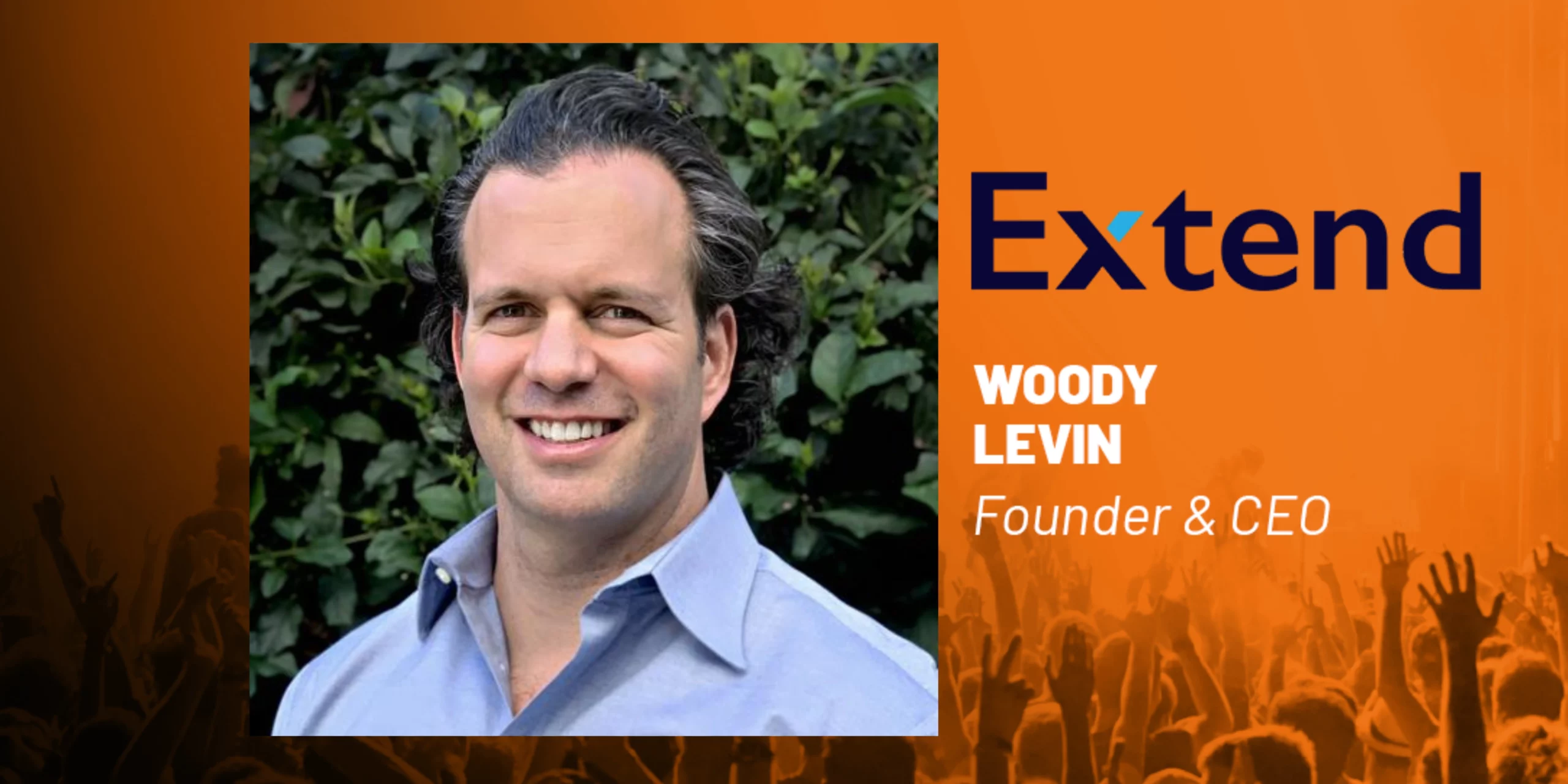
Today on the Future of Fandom, we protect you, by telling you how you might be able to protect your platform. On this week’s episode, we explore how Extend is building and borrowing fandoms in the name of protecting product, with their founder and CEO, Woody Levin. On the show, Woody refers to Extend as the AppleCare for everything, and our conversation drifts into what a best-in-class e-commerce purchasing experience might look like in the future. He’s betting that it will include warranties on what you love written in plain English, and that consumers will grow to demand that just as they do for protection for their iPhones.
Woody also talks about how you can’t create external fans without internal ones, which we haven’t touched on too much on this show, but it carries extra weight when talking about an industry not known, at least not yet, for having fans. I’m not sure how many extended warranty brands have that right now, but they might down the road. So let’s get some coverage on this topic and predict the future with Extend and Woody Levin.
Connect with Woody Levin on LinkedIn: https://www.linkedin.com/in/woodrowlevin/
Read more about Extend: https://www.extend.com/
Full episode here:
FULL TRANSCRIPT BELOW
Adam Conner (01:19):
Woody, thank you so much for joining me. How are you doing?
Woody Levin (01:21):
I’m doing great. Thanks for having me, Adam.
Adam Conner (01:23):
It’s a pleasure. We should start, of course, as most of these do. It’s probable that a lot of people know what you are, but they don’t see you until the very end of their normal shopping experience, so could you please start us out by just describing what Extend is and why it started?
Woody Levin (01:43):
Absolutely, I’d be happy to. So Extend, and I love that we say that it’s probable that a lot of people know. I love that, and we do work with over 800 merchants.
Adam Conner (01:51):
We’re certainly hopeful, yeah.
Woody Levin (01:53):
Yes. We work with over 800 merchants today offering modern, digitally-native, best-in-class, extended warranties and product protection. And what I mean by that is Amazon, Best Buy, Costco, Walmart, Wayfair, when you were checking out and buying something, you, many times, are offered to an extended warranty, or what we call product protection on that purchase. But you really don’t know what you’re buying, you don’t know how the service is going to be. The customer experience could be really poor as it is with many of the legacy players out there, and the customer isn’t informed. It’s not a transparent offer to them. What’s covered? What’s not covered? Is there a deductible? How do you file a claim? What does that process look like? So Extend is solving all that. Let me take a step back. What we found is that a lot of people don’t love extended warranties as the legacy players provide them, but they do love AppleCare. And I don’t know, Adam, if you buy AppleCare, do you?
Adam Conner (02:51):
I do. Yeah, I’m a customer of AppleCare.
Woody Levin (02:54):
Fantastic. So AppleCare has almost 85% of Apple, and iPhone owners add AppleCare. It’s a huge revenue generator for them, and they’ve figured out a way to provide customers with a great value that is called AppleCare, but it’s really just an extended warranty. So think of Extend as AppleCare for everything. Modern, digitally-native, approachable, fair, transparent, and where customers can get value. So we created an easy to integrate, API-first solution that allows any merchant to offer extended warranties and protection plans on the products they sell while doubling down on focusing on the best customer service in the industry, as well as making sure that for merchants, we can also drive significantly higher attach rates than any of our competitors. In a nutshell, you should think of Extend as AppleCare for everything. Really, a modern, next generation e-commerce tool that levels the playing field for all merchants and allows them to offer the optionality customers have come to expect from the biggest retailers in the world.
Adam Conner (03:59):
Okay. Helpful foundation, and that is a good way to explain it, AppleCare for everything. Folks, you’ll know exactly what Extend is, and I didn’t say that tongue in cheek at the beginning. You’ve probably literally seen it. In fact, you may have gotten an Extend warranty and not immediately attach the name to this, but now you will. So this ease of use is something that I have explored, specifically within FinTech with the various instruments in which you can invest your money today. I mean, that continues to grow almost by the minute. And in that world, it’s all about access to information and ease of investment.
Adam Conner (04:42):
Now, you mentioned ease of use in sort of picking up an Extend warranty or an Extend policy with anything that you buy. What else do you see as a gap in that total e-com transaction that helps to set your mind towards what a next gen or future state of e-com experience, the way that it is. Obviously, this is where you’re developing and spending all your time right now, but I’m just curious if there’s sort of a higher ecosystem that you think this is part of that it’s modeled after.
Woody Levin (05:19):
Well, I mean, if you look at the best retailers in the world today, right, they’re offering same day shipping. Not everyone does that, but the best retailers do, in my opinion. The biggest retailers do, in my opinion. They’re offering “Buy now, pay later,” or consumer point-of-sale financing, right? Different ways for you to purchase that item. They’re offering product protection. They’re offering returns management or free returns, so I think there’s this modern e-commerce stack, right, that the largest merchants, the largest retailers have been using for some time now, and in order to truly compete with them, you have to have these bells and whistles. You have to offer customers these options.
Woody Levin (06:05):
Now you can say, “Well, sure I’d get it,” but you’re not going to get the limited edition or the bespoke products, right, on an Amazon or on a Walmart that you would get when you go directly to the OEM, or directly to the manufacturer or the fashion designer. And you’re probably right, so there are ways to accomplish differentiating yourself from the marketplaces or the big retailers with special products, but that’s a much bigger lift than just saying, “Hey, there’s all these tools that I can now use to, and sign me up.”
Adam Conner (06:37):
So at the end of the day, of course, this just makes for the best possible customer experience, and that’s where we focus a lot of our time here on the podcast, is to learn how that experience is being built and the various pieces that layer together to create it. I’m going to stoke this next question a little bit because those various pieces can come together, and, of course, as e-commerce has really come into its own and, let’s say, across the 2000s broadly. That tends to be piecemeal, things coming here and there. You put in different widgets here, different suppliers there, but you note the importance of owning the full stack of that. Can you explain what that is a little bit more and put it into the mind of a consumer who may be experiencing that piecemeal process today?
Woody Levin (07:26):
When we say Extend owns the full-service contract stack, and service contracts are just a different way to say extended warranties and protection plans. When we say we own the full stack and that we believe it’s necessary to own the full stack in order to drive the best customer experience, we mean that you need to control the technology-enabled broker. So what that is that’s the prebuilt integrations into the e-commerce platforms like Shopify, Magento, BigCommerce, WooCommerce, IBM Hybris, and many others. It’s the administration layer, so you need to be licensed in all 50 states in order to be an administrator of service contracts, and the administrator is who controls the customer experience, the approval and the denial of the claims. [inaudible 00:08:15] you get a replacement? Do you get a repair? What does that look like when you get reimbursed? Do you send someone a prepaid debit card or a check in the mail, or can you actually keep them in the merchant’s ecosystem, turning potentially negative experience into a positive one like Extend does, and getting them a replacement directly from that merchant?
Woody Levin (08:33):
So controlling that customer experience by the administrator is so important. And then last but not least, there’s the underwriting, right? So again, technology-enabled broker, administrator controlling the customer journey, and then the underwriter is who’s taking on the balance sheet risk of these programs. Now that may sound pretty mundane, but it’s important that the underwriter, or the obligor who’s taking on the balance sheet risk of the programs, can create bespoke programs that serve the customers best. I’m happy to give some examples of that later on, but we found really owning the full stack from the brokering, the selling of the protection plan, to the administration, the customer experience if and when something goes wrong, and how do you utilize that protection plan to get a repair or replacement of the product, as well as the underwriting, are all necessary elements to be a leader in this space.
Adam Conner (09:32):
Yeah, I would feel much more comfortable if any of my buying experiences, at least in my head, gave me the perception that it was all in one house, so to speak. And not even just from a fluidity of experience, but just from I don’t want my data going here, there, and everywhere else. As a customer and as a regular Joe who’s always weary and wary of that kind of thing, I agree, and not just as a business operator. Of course, if I were owning the business, I want to own every piece of it, too, but I think that is going to continue to be part of best-in-class customer experience for anybody because the more barriers that you can take away, the more obstacles, mentally or otherwise, you can take away to a consumer engaging with your thing, whatever that thing is. You get them closer and closer to becoming a fan.
Adam Conner (10:27):
I mean, are there really fans of extended warranties on things? I want to get your thoughts here because I’ve talked to a lot of folks and a lot of brands for whom the word fandom is tangential, maybe translatable, but here it seems completely extraterrestrial. So could you help me figure out how extend works to build something close to a fandom within the consumers it serves?
Woody Levin (10:56):
Fandom or promoters or advocates of our service offering, that’s what we strive to do every single day is build that. We are in the midst of building, and we’re doing a pretty good job of it thus far, a consumer-facing brand that is recognized across hundreds of different merchants that’s trusted, that’s reliable, and that gives you value. That’s the end goal here, right? No legacy company in the service contractor or extended warranty space has built a powerful brand. The net promoter scores of these insurance companies that run service contract businesses or the service contract businesses is in the low 20s.
Woody Levin (11:45):
Our CSAT score is over 92. We’re talking step functions greater than what it is today, so we are so focused on, again, building promoters, building happy customers, which become fans of our product, and they talk about the experience they had with Extend. How easy it was to file a claim, how we replaced their products immediately from the retailer they bought it from, or from that manufacturer, how we very quickly got to a resolution on their claim, how they didn’t have to jump through the hoops that they thought they were going to.
“Again, creating this elegant, digitally-native, modern, dare I even say, delightful experience around extended warranties because when you need us, if we’re trying to create obstacles, create hurdles around filing a claim, then you’re not going to be our fan. But if we can create this streamlined experience and do what we promised, you’re going to tell your friends about it. Next time you see it, you’re going to buy it, and it will create this flywheel, right? It will create this flywheel where merchants will be incentivized to work with Extend because they know their customers are going to get a great experience. We are an extension of our merchant partners. One of the reasons we’ve been able to grow so quickly is because of the fact that we have created, to use your language, your vernacular, fans of Extend. Both merchants who are fans of how we integrate and how we drive revenue, but also consumers who are fans of Extend because we stand behind our offering. We service them well.”
— Woody Levin (12:19)
Adam Conner (13:26):
The flywheel is where I’d like to turn for a moment because it’s a really advantageous thing as a business, of course, to be able to, at least at the beginning when nobody really knows who you are, borrow the fandom, but really consumer base of somebody else, adding on a value-added service. And then in time, creating a core of people who love you for you. I talked about this earlier in our podcast with Rakuten, and serving as a marketplace within which you could buy your favorite pair of shoes or from your favorite retailer. And now, they have developed an audience where some of their die-hards will only shop through Rakuten, no matter what. If Rakuten isn’t attached, it doesn’t matter what the brand is. They won’t do it, and maybe that’s because of the benefits they get and in their case, it’s not ease of service or ease of claim, but it’s the cash back. Do you see brands of the future, who become really sticky, start in that same way, “borrowing other fandoms” to create a flywheel of fandom? Does that make sense?
Woody Levin (14:31):
Sure! I can’t speak to how others will grow or how others think about it. I can really only be specific to Extend, and I can tell you that from the beginning, it was deliberate for us to focus on delivering an uplevel, dare I even say, the best customer experience in the industry right from the start because we knew at the end of the day, if we served our merchants’ customers well, the chances of them ever leaving us and going somewhere else were very small. And the opportunity for us to grow organically from the ground up, because all these merchants talk to each other, right? All the merchants are saying, “What new tool are you using?” or “How can I improve my business?” They all talk to each other and they share information. And for Extend, they talk to their customers too and when their customers have a great experience with Extend, they promote us to other merchants, and we’ve seen that.
Woody Levin (15:28):
That’s one of the reasons.
“I mean, we’re only 37 months old. We’ve only been selling for just over two years and we already have more than 800 merchants on our platform, including Peloton, and Brilliant Earth, and Traeger Grills, and Advanced Auto Parts, and Sur La Table, Nectar Sleep. It’s amazing how quickly we’ve gotten traction in the industry. Number one, I think that’s because the industry was really looking to, again, level the playing field and have these next generation or future e-commerce tools, but number two, because of how maniacally focused we are on driving a best-in-class customer experience that hasn’t been seen before.”
— Woody Levin (15:30)
Adam Conner (16:17):
So no matter how these brands build their consumer bases, and yes, great experiences at the center of it, I think it also comes down to just being easy to get, just being easy to understand it, and that’s where I want to go next. Again, I mentioned earlier in the show that I’ve spoken within other industries, and that was the real basis of how they became sticky. It was like, “Well, we make investing in blankity-blank easy,” and I’ve even talked about insurance too. “It’s really easy to get a policy with some people out there, blah, blah, blah,” and that’s become a real selling point.
Adam Conner (16:50):
Let’s talk about the brand value. No matter who you are unlocked, when you just make things clear, put things in plain language. Anybody who’s wrote a contract for anything understands you can stuff it with a lot of legalese and confuse people very quickly. I’m sure you knew that as well, and getting into this world, probably you were tempted with quite a bit of that at least upfront, but as a way to protect yourself. Let’s talk about how you can create these relationships much more easily when you sort of get out of your own way.
Woody Levin (17:21):
So I don’t know if you knew this, but actually I’m a licensed attorney and …
Adam Conner (17:26):
Okay, so maybe it was in your DNA to be like, “Oh God, but I really should say this and warn them,” or whatever, right? I mean, didn’t that pull at you?
Woody Levin (17:32):
I mean, you can go both ways. I don’t practice, but I’m keenly aware of the legalese that can be put into terms and conditions or contracts and sometimes, even as a lawyer, I can read it and I have no idea what someone’s trying to say. It’s like they’re trying to say everything but say nothing at the same time. If I’m a lawyer and I can’t understand some of what’s going on in the terms and conditions and with the protection plans that these companies are offering, a layperson is probably going to have a harder time understanding that, so we really came at this. When we think about transparency and building trust and being fair and driving value, that’s across everything we do, and that starts with offer presentment, right? When we pop up on a merchant’s page, are we clearly and consistently telling a consumer what’s covered, what’s not covered? Is there a deductible? How do you file a claim? What does it look like when you file a claim, and then allowing them to double click into what’s called the terms and conditions.
Woody Levin (18:44):
So the terms and conditions, they can be 12, 15 pages long. They’re regulated by many different states, so you have to have specific nuance in them, but it’s basically what are our responsibilities? What are the customer’s rights, and what governs the purchase of your service contract, your protection plan? We completely rewrote, and got approved by all of the state regulators, our own easy to understand terms and conditions. So our terms and conditions have tool tips. If you were online and you would mouse over something, an icon, and you didn’t know what it was, we have tool tips for almost every section on the right side of our terms and conditions, explaining in plain English, what the legal mumbo jumbo means.
“See, we’re not trying to hide behind anything. We’re not trying to create customer confusion. We’re trying to create clarity, and when you create the clarity of information and people understand what they’re purchasing, we have found that an informed consumer who understands the value they’re getting converts at a three to four, to even five times higher rate for extended warranties and protection plan, than in the legacy providers are driving today. So let me say that one more time. Because we, from the beginning, are fair, transparent, and open and educating consumers on the value of what they’re spending money on with our extended warranties and protection plans, we’re seeing conversion rates, how many people out of 100 buy an extended warranty when offered, that are three, four, sometimes even five times greater than the legacy protection plan providers. Our attach rates are 14, 16, even 20%+ across our merchant universe.”
— Woody Levin (19:30)
Adam Conner (20:29):
All those metrics are super impressive, and the one thing I can’t get out of my head is, “My God, I wish that there were some sort of translate tool that I could just highlight some text in a contract available online somewhere, and it just like live edits.” There’s a good business. Somebody out there listening to this. Maybe you don’t practice. Maybe you went to law school or something like that, similar to our guests and have that in mind because my God, wouldn’t that be easy? Wouldn’t that be a great experience for a consumer? But it is undeniable, the business case here, and obviously it’s showing, even though you’ve been around for what, just about three years, just a little over. You have been able to grow and create those great experiences and those great relationships. You’re doing so externally.
Adam Conner (21:11):
Now, I’ve got a few more questions here for you, but before I get to the big other F word here, which is future, I need to talk about how you’re doing things internally. And maybe this is where fandom becomes a little bit more recognizable of a word because, of course, you’re building relationships with everybody who’s getting covered through your services. How do you make sure that your employees are fans of you, too? I’m going to say a quote here because folks, we do a little bit of prep, and the quote that I wrote down from my notes was, “You can’t create external fans without internal ones.” Well, that’s plain English to me, but I’d love to, let’s say, double click into that a little bit more if you could, Woody.
“So we live in a different world today after the pandemic, where there’s less face-to-face interaction, and Extend is a remote-first company. We do have offices in New York, and in Austin, and in San Francisco, but for the most part, we have people working from everywhere, wherever that they can be effective. I think that it’s really important to build good internal culture, and people throw that word around a lot. Culture, culture, culture. What does that mean? How’s your culture? Do you have a culture? Is it good culture? I think the simple answer is you can’t BS culture. You either have it or you don’t, and that comes from the founders, right? That comes from the executives and it trickles down throughout the organization.”
— Woody Levin (21:54)
Woody Levin (22:37):
I’m passionate about what we’re doing here, right? I used to be a competitive athlete. I played sparingly, but I played Division I College Hockey at the University of Wisconsin, and I’m extremely competitive. Now this is my competition, right? I want to build. I want to win. I want to be proud of what we’re doing, and I like to bring people on this journey, the team members that we have at Extend who are also focused on that. We give people ownership here, right? We’re not micromanaging them. We hire them and we point them towards what we want them to go tackle, and they get to figure out how to do it. Two of the biggest things at the beginning of the year that I shared with the entire team, we’re about 440, 450 people right now, were number one, focus, number two, accountability. What are the key things which we’re going to focus on, what we’re going to drive forward this year, right, and what’s going to be expected of you?
“If you provide your team members with those two things, “Here’s what we’re going to focus on, and here’s what’s going to be expected of you to get us towards those goals,” I believe that you create a culture, you create an environment where people can thrive. So not only do they become fans of the work they’re doing, but they become fans of the culture and the environment, and they become fans of the team that they’re on. So again, as we talked before, you can’t create external fans if the internal people are not passionate about what they’re doing. And that doesn’t mean that everyone here has to wake up every day and go, “Oh my gosh, I love service contracts! I love extended warranties!” Because besides me and a couple other people here, probably not many people do, right? But they need to be stimulated by the challenges here, they need to feel like they’re making an impact. They need to feel like there’s a career opportunity, and they need to feel, again, like our customers feel, that I am being transparent about where the company’s going and what we’re doing.”
— Woody Levin (23:32)
Adam Conner (24:30):
Well, I mean it’s easy to just throw that word around, as you said at the beginning, culture and be like, “Oh, it’s great. Yeah everybody!” It’s just such a team dynamic, and you could very quickly slip into an area where even if somebody’s an employee over time, just to start to look around and say, “Ooh, okay. People really don’t either practice what they preach, or it’s just not as important as they claimed it was when I was signing my papers.” But I completely agree with you, and it’s something that we don’t really talk about a whole lot on this show. Again, we mostly just talk about consumer experiences, but you really can’t do that and hope to build it, especially in a world where it hasn’t really been prevalent before like in the business that you’re in, without having those internal advocates, because that’s how you build the best team in the future.
Adam Conner (25:21):
Now, let’s talk about that future as we begin to round out today. I would broadly just say, “What do you think the future of Extend looks like?” But rather, I want to go back to something we touched on towards the top, and we touched on it lightly while talking about owning the full stack of your service, but just in a broad sense, looking at what the future of e-commerce tool sets should be, and maybe the future of what consumers within e-commerce should expect. Because if you have services like Extend, where you’re the AppleCare of everything, that’s like bringing a top level service in with anything from a one person, mom-and-pop shop, all the way up to the largest retailers out there. It makes me wonder what other elements of that consumer experience we should expect in the future to rise to that level of the biggest and greatest to survive.
Woody Levin (26:16):
Yeah, so coming from Extend’s standpoint, we’re really focused, Adam, on upleveling and owning the entire post-purchase experience for consumers. And if you think about how much money is spent and how much time and effort is spent on pre-purchase, getting customers to the merchant, getting the product or in their cart, right? Clicking on that button, right? So there’s the pre-purchase, there’s app purchase, right, which is how do you check out? Is it one-click checkout? Is it buy now, pay later? Is it stripe? Is it PayPal, whatever it may be? And then what happens post-purchase? In so many industries which you see, is you see an unbundling of services and that leaves you with dozens or more of providers who are offering discrete services, right, to a user base, or a merchant base in this case, and you have to manage dozens of different integrations.
Woody Levin (27:15):
So what usually happens is that over time, you see a rebundling that happens, and you’re left with maybe three or four integrations, but they’re still providing you with this wide array of services, and Extend wants to own the post-purchase experience for our merchants and their customers. There’s a lot that we’re building there in order to be able to provide a more streamlined experience, just like we’re doing by owning the entire stack internally for service contracts. Unfortunately I can’t share all them today, but we’ve identified multiple customer-merchant interactions that take place post-purchase that are very disjointed and disorganized today. So as we look towards the future, where we want to grow is to really go deeper in that merchant stack, and we can because of the significant right to play across the merchant stack, because of how we integrate into their ERP, into their order management system, into their customer service stack, into their billing and accounting system, we are already there. So we’re getting pulled deeper in the merchant stack, which allows us to do more for customers and merchants in the post-purchase timeline.
Adam Conner (28:42):
Well, I’m sure you have a master plan. I don’t want you to uncover that plan for us. I’ve done this a couple times, but I’ll round out with this then. Perhaps you can help me by filling in this blank, and I’m going to make a sentence and hopefully you can fill it for me. Sentence reads as follows, “If I have anything to say about it, the future of best-in-class e-commerce experiences will not include blank.” What’s that blank for you?
Woody Levin (29:13):
It will not include customer confusion, frustration, misinformation. I think that’s the focus, right? Eliminating confusion, eliminating frustration, eliminating misinformation.
Adam Conner (29:30):
Well, there you have it. Well, I appreciate you going into this world with us. It’s a world that I knew very little about even before jumping on the mic and listeners, I’m guessing you probably haven’t explored this world, or you’ve certainly explored it less than Woody. And as it relates to creating relationships and maybe fans down the road, it’s just an angle that we wouldn’t normally approach. So for looking into that lens with us, Woody, thank you so much for joining us.
Woody Levin (29:55):
Thanks for having me, Adam. I really appreciate the time.
Adam Conner (30:01):
Thanks again to Woody Levin for joining us and telling us how Extend is building relationships. I enjoy chats like this. It makes me wonder what other often ignored offerings are quickly building followings, and maybe even fandoms. And thanks to you, the listener, of course, for exploring the future of fandom with us. I’d encourage you to stay connected, so subscribe to The Future of Fandom wherever you listen to podcasts, or you can also find all of our content at livelike.com/podcast, and across socials, LinkedIn @LiveLike, and Twitter @LiveLikeInc. I look forward to predicting the future again with you real soon, and until then, I’m Adam Conner saying so long, and thanks for being a fan.
One of our favourite parts of the Get to Know LiveLike series is learning how passionate our employees are about the work they do. And this week’s featured teammate is a perfect example: Senior UI/UX Designer Lauren Granato.
Lauren’s passion for design started back in her middle school days, when she was first introduced to Photoshop. We’re happy to introduce you to Lauren and give you a chance to hear about her career journey, her day to day life as a senior UI/UX designer, and more. We’re proud to have someone like Lauren on our team, and excited to get to share a bit about her!
Tell us a little bit about your career path. How did you get into UI/UX design?
My passion for design started back in middle school, when my grandfather, a photographer, introduced me to Photoshop. Years later, after graduating from college with a degree in Graphic Design, I spent about two years freelancing and jumping from job to job to find my best fit in the industry. At that point, I realized I didn’t have the skills necessary to be the type of designer I wanted to be and realized I needed more education.
So, I spent the next six months in a bootcamp type course that gave me a ton of knowledge and new skills surrounding UX/UI design. It was at that point that I dove headfirst into a field I barely knew about, but I immediately knew I loved it and knew where my design skills were going to be put to use.
It was before I even finished the six-month course that I started my first role as a UI/UX designer. The role gave me hands-on experience with user interfaces and the design aspect of it, and made me realize that the conversation about user experience, which describes how users feel when they actually interact with an interface, didn’t truly exist. Over the next several years, I have spent countless hours studying use cases, other user data, and personas to achieve an understanding of the best UI/UX design tactics. I absolutely love the combination of designing what a space looks like but also focusing on making that design user focused so it is easy and satisfying to use.
Can you describe what a Senior UI/UX Designer does and what your typical workday looks like?
A designer in any position doesn’t really have a typical day, but there are some constants! I usually get up and start my day checking emails and looking at current design trends. Then I spend the next several hours working on design tasks for my team. I also QA developed designs to make sure they are getting completed the way I had envisioned them prior to creation. In between all of this, I am typically doing user research, and studying personas. I always like to end my day by looking at what I accomplished for the day and making sure I gave our users the best experience possible.
Did you always want to work in a design role?
Yes! I was introduced to design at a young age as I mentioned, and I have always loved looking at the way color, typography and images blend together to create something beautiful. I didn’t know where my roadmap would take me, but I always knew that I would be doing something related to design.
What have you learned about LiveLike (as both a business and a team) since you joined?
As someone who hasn’t been at LiveLike long, I certainly have learned a lot about the company and the community that exists here. LiveLike is a start up, and we are consistently adding to the team so that we can properly enter new markets, grow the current business and move forward with creating more interactive spaces and experiences for our customers.
Something that I have learned about the community at LiveLike is that we are truly like a big family. There is always someone there to listen when you need an ear; There is always another team member that can help you out if you get stuck on a task; There is always someone to help explain something that you may be finding challenging or confusing. We support each other through our highs and lows in and outside of the business.
Is there anything else you’d want to share with aspiring designers?
Dear aspiring designers, I see you. Your designs are good. Stop comparing yourself to the other designers out there. Always aspire to be better, but don’t let that stop you from excelling where you are now. Do your research, look at other designers, get inspired outside of the internet (nature is my personal favorite inspiration). Don’t take feedback personally; it’s not about you or your skills, it’s about the fact that every person has their own interpretation about what good design is. Love yourself for trying.
Thank you, Lauren!
If you’re a part of our growing LiveLike community, or have an interest in gamification, user engagement or digital optimization, you’ve probably already heard about the Future of Fandom. And if you haven’t, it’s about time you did!
Launched at the start of 2022, the Future of Fandom is a podcast brought to you by LiveLike that is dedicated to giving you your digital fandom fix. Every other week, our host Adam Conner sits down with chief executive officers from some of the world’s most recognizable names in Sports, Fintech, E-Commerce and beyond.
Since launching, we’ve had the pleasure of hearing from some incredible industry leaders, including Tim Clark from NASCAR, Adam Grossman from the Boston Red Sox, Jordan Olivas from Qisstpay, and many more, all eager to discuss what the world has planned for the next generation of digitally-native users.
In this article, we’re talking about the key lessons we’re learning so far from the Future of Fandom.
1. The Future is Undoubtedly Digital
Though this one may come as no surprise, our first round of guests have made it clear that optimized digital experiences are becoming a must for brands and businesses alike. As a society, we’ve certainly been heading in the digital direction for a long time now, and COVID helped to speed up the process even further.
What has been confirmed by our guests so far is that this is not unique to any one industry, but to all of them—in other words, all industries seem to be on a similar path of prioritizing digital experiences. Your users have come to expect the ability to access your product or service either online or in person with minimal sacrifice to the quality of the experience. Whether they’re looking to watch a rugby game, take an online dance class, shop at their favorite store, or invest in the stock market, they want to do so in a way that is quick, easy and fun, from their fingertips.
“Last year when we were able to fortunately have fans back, what we saw was the rise for us in our digital ticketing. Without having paper tickets anymore and physical tickets, what we saw was a massive digital transformation. We were reticent in the past to force people to go digital. Last year, there was no option. Now we’re amongst the league leaders in digital adoption.”
Adam Grossman
Chief Marketing Officer, Boston Red Sox
“The pandemic has been eye opening in a lot of ways about the way people shop, how people shop, when people shop…as you remember, the first six, nine months or so, people were not going into stores. So that in itself was an interesting and different dynamic. Everyone was forced to buy nearly everything, from clothes, to sunglasses, to toilet paper, online. That of course changes the dynamic. One of the things I think has been very eye opening to us around how retailers and merchants are balancing what I would call a sort of hybrid approach now. People are going back into stores. People are comfortable going into a shop now. But, e-commerce already really blew up and people have become used to buying online.”
Dana Marineau
Chief Marketing Officer, Rakuten
“What’s really interesting is there’s a strong preference toward digital first, all-in-one solutions. Now, if you take the pursuit of financial freedom and then couple it with the tendency to want a digital-first solution, I think this sort of sums up why people are investing through Roofstock. And you think about all the apps and tools and investing services that the younger generations use like Robinhood, they’ve come to expect sort of the same level of ease and user experience, right? With online banking, with Rideshare, food delivery apps, and also real estate.”
Suresh Srinivasan
Chief Marketing Officer, Roofstock
2. Users Expect a Personalized, Rewarding Experience
A major theme from our guest insights so far is that users want to feel the love from the brands they stay true to, and get something in return for their brand loyalty. The same way that most of us dream of being a regular at our local coffee shop, your users want to feel as though the brands they support know them on a deeper level, and can provide them with an experience that is tailored to them.
Whether it’s meeting them where they’re at in the user journey with customized notifications, curating a brand voice that is relatable, consistent, and familiar, or fostering a strong loyalty rewards program, your users are no longer satisfied with cookie cutter brand interactions, and instead want them to feel unique and personalized.
“What’s most interesting about better digital engagement isn’t just that you can have more frequent fan engagement and more eyeballs on a product, but actually it’s all ultimately about how do you actually add greater value to that end user’s life…To me, that’s the future of everything. And you can see everybody moving in that direction. Every brand wants to figure out how to better engage digitally, and to actually exist with the end user out in the real world, in their natural course of their lives, organically as possible. And digital technology, truly the nature of AWS and native serverless architecture really does allow for the immense processing power of data to create hyper targeted and hyper personalized experiences.”
Joel Lieginger
Founder & CEO, Paceline
“I think everyone realizes that we’re constantly marketed to, but it’s the idea that, I think people want that personalized journey. Look at things like TikTok. Talk about consuming personalized digital media. That is a perfect example of how consumers love to consume this content, but at the same time, make sure it’s personalized to them and make sure it’s relevant.”
Jordan Olivas
Co-Founder & CEO, QisstPay
3. Consumers Crave Genuine Connections and Brand Transparency
As well as users wanting more interactive experiences that are both digital and personalized, a key takeaway from our episodes so far has been that users also long for a sense of realness and authenticity from the brands they love. Gone are the days, or so it seems, where users will blindly return to a brand simply because they have been endorsed by an influencer they admire, or even because they offer the best solution on the market. Consumers crave a sense of pseudo-mentorship or friendship with your brand over idol worship.
“I think there’s two words that I come back to on the sponsorship front in our sport and that’s authentic and honest. And the reason I use those two is because I think in a, and this goes beyond sports across all of media, I think consumers are just conditioned now to be accepting of advertising and marketing. That messaging and that promotion is intertwined in almost anything that you do on a day-to-day basis. I think the authentic and honest relationship that our sponsors have within the sport is that our fans are able to understand how those brands are supportive of their favorites.”
Tim Clark
Chief Digital Officer, NASCAR
“It used to be a very different dynamic where the star was untouchable and unrelatable, and the fan just sat there and watched and worshiped, I guess…it’s now easier than ever for a fan of an athlete to learn and follow an athlete’s training, nutrition, recovery, mindfulness, et cetera routine, and to use the services, the products, and to kind of follow the experts that these athletes are using and following to get the performance edge and the longevity edge that they’re looking for…Suddenly, the relationship feels more relatable, more familiar, more like a friendship, more like the fan has a real stake in the success of the performer. And they feel a connection with them that I don’t think last generation sports fans felt with their favorite players.”
Pete Vlastelica
Venture Partner, Elysian Park
While we’ve already learned so much about the future of fandom, we’re really only getting started, and we can’t wait for you to hear from the amazing guests we have in store. New episodes come out every Monday, and each one presents a new opportunity to learn more about what lies ahead.
If you haven’t yet joined our band of avid listeners, trust us, you’re going to want to get on board. Join the Future of Fandom now.
Fostering Fans From the Small Side of Small Business
Today on the Future of Fandom, we explore an explosion of entrepreneurialism, chatting with Fundbox about how to build and retain communities of small businesses and its similarities with consumer efforts via their Head of Brand and Content Marketing, Cameron Maxwell.
Think about it for a moment: How many people that you know have started up a side hustle over the last few years? The truth is, small business is on the rise, and Cameron has a front seat as to how those businesses are being built and supported. We also talk about how to market when small businesses and consumers become indistinguishable. After all, on the small side of small business, we’re essentially just talking about people. Thus, a fandom can be achieved even in a B2B context, and Cameron explains how. So let’s all put on an entrepreneurial hat and predict the future with Fundbox and Cameron Maxwell.
Connect with Cameron Maxwell on LinkedIn: https://www.linkedin.com/in/cameroncookemaxwell/
Read more about Fundbox: https://fundbox.com/
Full episode here:
FULL TRANSCRIPT BELOW
Adam Conner (01:11):
Cameron, thanks for joining me. How are you?
Cameron Maxwell (01:14):
Hey, Adam, I’m doing well, thanks. How are you?
Adam Conner (01:16):
I’m doing fine. This is an interesting angle that I haven’t really got to approach yet, and we haven’t on the show, which is this great nexus of the individual, the side hustle and the small business, all as it relates to building, retaining, sustaining community and getting to that ultimate F word, Fandom. Now, let’s get to another F word to start this, which is of course, Fundbox. For those unaware, could you explain what it is and does?
Cameron Maxwell (01:44):
Yeah, absolutely. Fundbox is an embedded working capital platform for small businesses. So we’re embedded in customers, systems and workflows, and we’re also embedded in the tools they use every day. For instance, we have partnerships with QuickBooks, recently announced a partnership with Stripe, we’re embedded natively in their new mobile app center. So small businesses can come directly to Fundbox for working capital and spend management solutions or they can access Fundbox through those partner tools.
Adam Conner (02:15):
Got you. So Fundbox is generally speaking when it comes to the entity on the end user, let’s say. These are small businesses of what, generally between one and 10 employees or does it vary?
Cameron Maxwell (02:27):
That’s right. Our customers are the smaller side of small business. So prop, generally less, up to 50 employees, less than 1.5 million in annual revenue. So on the smaller side of small business. Yep.
Adam Conner (02:40):
Okay. This is actually perfect because in most of the conversations we’ve had so far here on the Future of Fandom, we have been talking with businesses and brand purveyors of those businesses who are marketing to consumers, individual entities aside from any business entity. And so knowing that you are approaching the small side of small businesses helps this case a little bit. And the case that I speak of is this rising wave of entrepreneurship that of course was spurred by COVID and a lot of people losing their jobs in 2020. I certainly was a part of that. And now has led to a, not resurgence, but just a never stronger side hustle craze. Outside of what Fundbox does and what you’ve experienced for them personally, have you seen this in your life, just with friends that you know, family members, maybe even yourself, have you noticed people taking on more side hustle type of maybe small business before they call themselves a small business just in the world?
Cameron Maxwell (03:43):
Absolutely. Like you said, COVID has driven a lot of… Folks have just had more time and obviously the job market is crazy right now, but I think similar to how photography or music production have become more accessible over the years, starting a business is easier than ever. It’s fairly simple to start a website. So much of the process of getting started as a business can happen digitally. You can stand things up pretty darn quickly. So I think that’s amazing. And there has been this renaissance and it’s a really exciting time for small businesses where I think folks are really empowered with the tools that are available to them now, to be able to stand up their businesses and really pursue their passions.
Adam Conner (04:40):
Yeah. It’s never been easier to start something. I’ve seen this in real life too, between friends of mine, personal contacts, even colleagues who have started things. I don’t even know if it’s with extra time or time that’s been opened up, but just the need to produce more for whatever reason, prevalent, persistent, perhaps linked to a newly found non-permanence of a job. But in essence, it seems that most people are at least thinking about this if not doing it. So again, easier to start than never. I would argue as a result, harder to sustain than ever. Now I’ll talk a little bit about what you may perceive as part of your work at Fundbox. What do you see as challenges for these small businesses that are starting at a higher clip than ever? And in many cases are first time ventures. I’m curious to get your thoughts there.
“The challenge is the competition. When it’s easier for anyone to start a business, then it’s much easier to have a whole lot of competitors and I’ll use music again as an example. It’s fairly simple to open garage bands now and anybody can put together some sound loops and record their voice over it and make a song. But what that means is it becomes a fairly crowded space. There’s a whole lot of content being produced. And because of it, the way that content is consumed has really changed over time. You have a lot less big music stars as an example, and you see a lot of playlists and on Spotify or Apple Music, et cetera, and songs don’t necessarily have the shelf life that they used to.”
— Cameron Maxwell (05:35)
Cameron Maxwell (06:29):
You don’t see hit songs sticking around necessarily unless you’re Adele or something, for a year, right. A lot of songs might blow up for a couple weeks and that’s it. And then it’s on to the next. So just to draw the parallel with business, a lot of businesses starting in similar spaces, in similar categories, I think from a brand perspective, differentiation is extremely important and is going to be part of the challenge and part of what separates the winners and those who forge ahead. But in general, I think having access to the tools to be able to start these businesses is great. The sustaining part is, I think the big factors are differentiation, increased competition and operational and execution excellence is of course important for the success of any business.
Adam Conner (07:25):
Totally.
Cameron Maxwell (07:25):
But those key factors.
Adam Conner (07:28):
Now let me get to another part of this whole thing, of course, because given this newest, strongest wave of entrepreneurship, just as you have the movements out there that say buy local, shop with small business, you have on the other side of that, of course, these small businesses, tons of them who are all going after the same overall dream, growing, surviving in some ways. In terms of the ways that you bring those people together, and I say people because a lot of times these small businesses are just single entities. In that way is building a community of small businesses that much different from building a community of just people, individuals like you might with a consumer audience?
“The lines are blurred a bit, especially when you’re talking about the smaller side of small business in terms of how that happens on both sides from a B2B and B2C perspective, I think particularly for digital businesses like ours that we don’t have a whole lot of human touch points. Content is key. It’s the way that we have a conversation with our customers, the way that we provide additional value and the way that they get to know us as well. So I think content has really become in whatever channel that’s distributed through, wherever your customers are, whether it’s social media or email or own content on your blog, et cetera, content has really become a key part of building communities because we’re so digital. And so particularly I think that’s true of both B2B and B2C companies. So again, in some ways the lines are blurred. In other ways, once you get into bigger businesses, there’s account-based marketing and things like that and the tactics become different, but certainly from the consumer and the smaller side of small business side, there’s a lot of parallels there.”
— Cameron Maxwell (8:15)
Adam Conner (09:36):
Yeah. And I’ll get to that growing angle in just a second, but it’s good to have your perspective on this. Listeners, just as background, Cameron has done this both in B2B and B2C for many years from the content point of view. And this is in some ways, if you are a small side, small business owner, sometimes you feel like, well, there’s not a whole lot of support around you. I feel like it could just be you trying to make it. And so bringing together people via content related experience can be incredibly powerful. I’m curious and I might as well just dive into this just a little bit deeper. Cameron, what are some of the ways that you do this today at Fundbox?
Cameron Maxwell (10:15):
There’s a couple of ways we do it. I think having a robust life cycle marketing program is vital. Additionally we have our Resource Center on the website, which is blogs and eBooks and guides, and we publish content on a weekly basis on the blog, if not more often than that. And I think part of it for Fundbox it’s being a trusted resource. And again, truly adding value to our small business customers. It’s about offering actionable insights. So from a tactical standpoint, we’re giving businesses tools and learnings that they can leverage in their everyday lives. But there’s also a storytelling theme as well, like what we’re doing with podcasts. Some things that we’re developing with video where it’s not just a list with maybe best practices on marketing or sales or ops topics. It’s told through the stories of individuals in a way that is I think more relatable, and small businesses in general, there’s no one size fits all. They all have different experiences. And learning through the stories of others is a really powerful way, I think, to still deliver interesting content from an entertainment and enjoying the consumption perspective, but also layer in really actionable insights and takeaways that other folks can relate to and apply to their daily lives.
Adam Conner (11:56):
Agreed. And hey, good nod to the podcast world. Obviously much appreciated on this side of the mic. So let me ask you about that growing angle that I mentioned just a moment ago. This is mostly today an offering that as we described up top is mostly taken up by the smaller side of small businesses. Employees could be up up to 50 in an organization taking advantage of Fundbox. I’m curious now how you keep folks engaged with the offering during their growth, but once they have grown beyond that typical threshold that you serve. Obviously you and any brand wants to grow with their customer. And so I’m curious, have you thought about this? Once a small business gets out of the small side or stops being a small business altogether, how do you stay with them?
Cameron Maxwell (12:49):
Yeah, it’s a great question.
“I think in general, our product roadmap is certainly taking this consideration, certainly reflects our thinking around this. And it’s a good point particularly for a lender, for instance, which we do provide working capital, but we also offer spend management solutions as well. So I think it’s really looking at, for us, the product roadmap and making sure that the products and services we offer address the needs of our target audiences. Additionally, knowing your target audience is really important for a small business of a certain size. There’s certain things that really a bank has the type of infrastructure that’s needed, right? You have an individual banker and there’s treasury services, et cetera. So there does become a time when a business might become so successful or grow in a way where they outgrow the product. And obviously we want the success of our customers, so that’s okay. But I think the thing about Fundbox is we recognize that there’s a whole segment of the small business economy that’s really underserved. The big companies have access to working capital. They have access to the tools that they need to run their business. And that’s not necessarily the case for businesses on the smaller side.”
— Cameron Maxwell (12:50)
Adam Conner (14:16):
So with this in mind, talked a little bit about the fandom, how to build content and service around small businesses who sometimes feel like they could build on a very small island in a very large ocean, how you’re bringing together archipelagoes as small businesses let’s say. I want to get to the other F word that we focus here on the show, which is future. I’m curious, given the fact that you’ve been able to see firsthand the ways in which consumers starting small businesses and small businesses themselves have engaged with services like Fundbox and other adjacent services, which you’re no doubt aware of, what do you think will be certain elements of the future of how those types of services will attract and retain communities of small businesses for themselves? Essentially I’m asking, what do you perceive to be the future of behavior in these small businesses that you’ve just started to see the beginnings of now?
“I think maybe there is something to the content piece in general. It becomes a real differentiator in the way that content is delivered. I think in general businesses are already of course getting really smart about social media and their email marketing programs and things like that. But in terms of the future, I think there’s also efficiencies and new technology and content production, for instance, like AI copywriting tools, that just make it easier from a self-service standpoint for businesses to more efficiently produce quality content. So in terms of the future, I think that there are some really cool tools being developed that will make it more accessible for folks who maybe aren’t creatively inclined to be able to produce content that’s relevant to their audiences easier and faster and more efficiently. And so similar to what we were talking about earlier, it’s easier to start a business now, but from a future looking standpoint, I think content’s going to be really important, especially differentiating from the competition, from everything we’ve been talking about in terms of establishing and maintaining relationships with your customers.”
— Cameron Maxwell (15:14)
Cameron Maxwell (16:42):
And I think there’s some really cool tools out there that will, and you’re already kind of seeing it with Canva, for instance. Just make it a lot easier for these small businesses to create content that addresses their target audiences in a way that’s more impactful and it’s just easier for them to create than it has been historically.
Adam Conner (17:04):
Making that process easier lightens a lot of loads. And especially if it can be value creative to a provider or even a small business, all the better. I appreciate getting your thoughts on that and for speculating on this a little bit with me. I have one more question, which is the inverse of the one I just asked, but one I’ve asked a little bit recently and well, I enjoy listening to the guests give the answer. So I’m going to give you a blank. I want you to fill in the blank for me, if you could, as we round out today. Gone are the days of blank when it comes to getting in touch with, attracting, and retaining communities of small business as a service provider.
“I’m thinking about this in the context of, again, this might seem selfish, through the lens of content and I keep bringing it up. But I think that there’s really a requirement from a content perspective to have a strategy, to make it a robust strategy, and I guess gone are the days of being able to be successful without creating and being intentional about creating communities. And again, I think I mentioned earlier, I think one of the primary ways that’s done today is through content. So I would say gone are the days of low level of effort, creating a successful long term relationships with your customers and growing your business.”
— Cameron Maxwell (17:47)
Adam Conner (18:36):
Just as it’s become easier to start a business than ever, so too has the baseline of required effort to grow it and sustain it risen, and so too has that barrier risen for providers like Fundbox. I’m glad that you’re at the helm there when it comes to branding content. And again, thanks for exploring the future there with me. Look forward to seeing how else small businesses will be supported going forward. For giving me a look at the now and a glimpse at the what may be, Cameron, thanks so much for joining me.
Cameron Maxwell (19:07):
Thanks Adam. Thanks for having me.
Adam Conner (19:12):
Thanks again to Cameron Maxwell from Fundbox for joining us. Hopefully you got your mind racing about your passion project and how much easier it may be to start than you thought. And thanks to you, of course, the listener for exploring the Future of Fandom with us. I’d encourage you to stay connected. So here’s what you do. You go to livelike.com/podcast. Of course, listen to all our episodes there and you can subscribe wherever you listen to podcasts. Finally, across socials, LinkedIn at LiveLike and Twitter at LiveLike, Inc. I look forward to predicting the future again with you real soon, and until then I’m Adam Conner saying so long and thanks for being a fan.
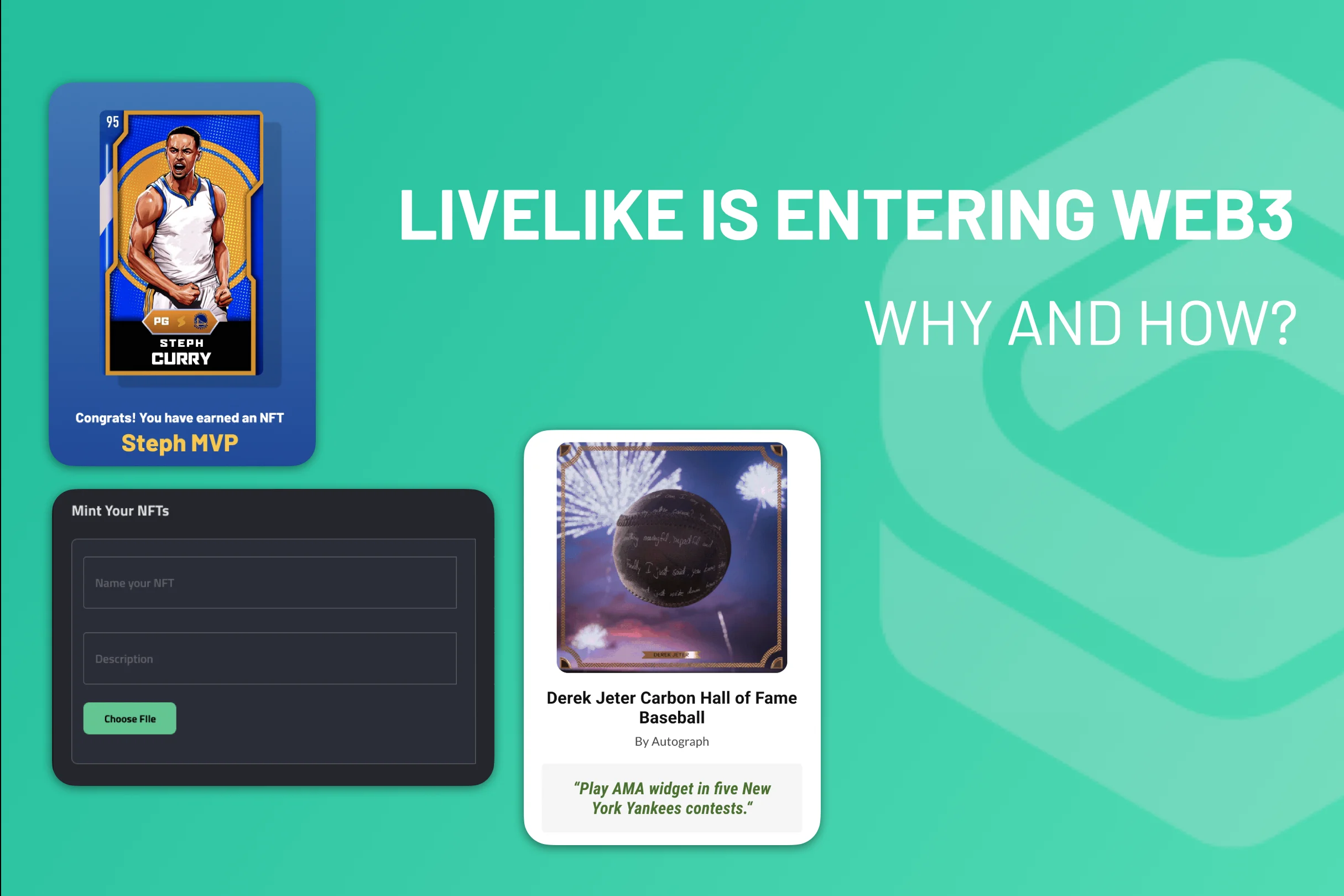
For months now, we have been working on LiveLike’s entry into the NFT market as a natural evolution of our product. Over the years, we have powered amazing experiences for some of the greatest organizations in media, sports, and entertainment. Our solution has proven its efficiency to engage millions of end-users and consumers, and we have proven our adaptability to tailor our solution to satisfy every stakeholder’s expectations and needs.
LiveLike as An Enabling Technology
That being said, we see Web3 and NFTs as a natural extension of what we’ve been doing so far, adding a new layer of enabling technologies to help brands bridge the gap between Web2 and Web3 by reaching the next 100 million users and further democratizing NFTs.
If we take a step back, our mission at LiveLike has always been to develop a product that brings together communities, engages those communities to turn them into loyal customers, and rewards them for their loyalty. Stepping into the Web3 and NFT space will allow us to take that third pillar of our mission to the next level, and shape the future of loyalty rewards and digital empowerment.
So, What Will LiveLike’s Entry to Web3 Actually Look Like?
LiveLike’s entry into the NFT market will consist of providing customer tools to seamlessly onboard non-crypto native users, and meet them at the stage of understanding and education aligned with their current knowledge and crypto ambition. These tools will complement LiveLike’s existing engagement suite to further drive engagement and open up new revenue opportunities. Our product suite will host two major features:
Minting-as-a-service
Through our CMS, our clients will soon be able to mint their own NFTs. Our main objective is to simplify the overall minting process for the operator, removing the complexity of building smart contracts “on-chain” and providing useful details during and after the minting process is complete.
Minting-as-a-service
Note that NFTs won’t be stored on the LiveLike platform but in your crypto wallet. They will also be transacted in your wallet, and as minting an NFT requires computing energy used by the network, the operator will be required to handle it. This computing energy is represented by a gas fee. And in order for the gas fee to be paid, a connection to a crypto wallet is required.
Utility-as-a-service
Our second objective is to allow operators to easily integrate a utility layer into their NFTs. The utility aspect is becoming more and more important within the NFT space—as scarcity, reputation, proof of ownership, and certificates of authenticity seem to no longer be enough incentive for consumers—and we truly believe it will be the next key step of this industry. That being said, our vision is to bring forth a new NFT model based on utility-first structures, the concept of the earn-to-use model, and Proof-of-Participation, a protocol that rewards individuals who successfully interact with digital experiences, such as quizzes, polls and chats within their favorite brand’s native apps.
Through our CMS, you will be able to link your NFT to exclusive rewards, and gated experiences, all of which will be supported within your native app and/or in other LiveLike-supported ecosystems. We are also willing to provide this service to any third party who wishes to add more value to their tokens.
Who Are We Targeting?
By entering the Web3 space, our goal is to democratize the use of NFTs to incentivize larger audiences and to increase the value of NFTs over time through utility. We hope to work with as many companies as possible, from those who have not yet been exposed to NFTs to those who have created their own NFT-based technologies.
For uninitiated companies, our major objective will be to raise awareness about the opportunity for these new technologies to engage their users and monetize their platforms. For companies who are somewhat familiar with the Web3 and NFT space, and may have already launched some NFTs, our goal will be to offer a turnkey solution so they can mint more NFTs of their own. Finally, we are also keen to work with established providers to investigate more ways to add utility on top of their existing NFTs.
We hope this rundown has helped you to understand how we will be working within Web3 and how our Audience Engagement Suite will evolve in the coming months to complement your future engagement strategies. We will be announcing more exciting updates regarding our product soon, so make sure to stay up to date. Please do not hesitate to reach out if you have any questions or if you want to discuss these topics further.
Better Banking for Humans
Today on The Future of Fandom, we bank for humans. You’re a human, right? Well, then you’re going to love this.
In this episode, we explore how Dave is creating an ecosystem for, and inspired by, those facing economic hardship, through the lens of their CMO, Michael Goodbody.
Ever notice how most fin-techs or financial apps you see gain popularity, target investing and other actions frequented by high earners or high net worth individuals. Well, guess what? Most people aren’t in that position and the team at Dave noticed. It inspired Michael to join and build a community to serve a different set of needs. It also brings up interesting brand questions like, how do you create an enthusiastic community around financial topics, which people don’t love to talk about? How, even if you empower them to better their finances, do you retain that base?
Connect with Michael Goodbody on LinkedIn: https://www.linkedin.com/in/michaelgoodbody/
Read more about Ladder: https://dave.com/
Full episode here:
FULL TRANSCRIPT BELOW
Adam Conner (01:17):
Michael, how are you? Thank you for joining me.
Michael Goodbody (01:19):
I’m great, thank you. Thanks for having me.
Adam Conner (01:22):
I appreciate you taking the time to speak with me here. I’m super curious about a few things around how you build community in your corner of the fintech world, but before we get into the nitty gritty, I just want to know what about Dave specifically, compelled you to join their ranks? And also, we should probably tell the folks what the heck Dave is. But I would love to know more about both of those things.
Michael Goodbody (01:46):
Yeah, absolutely. For anyone that isn’t familiar specifically with Dave, we are an app first, financial service’s product, founded in 2017, 2018, so four, five years old. And we really started out in the financial service’s ecosystem by offering people a way to avoid overdraft fees by effectively closing that gap, in terms of short term credit. If somebody needs up to, in terms of the original time that we launched it, up to $75, in an emergency. And so from my personal perspective, Dave’s again, been around for three or four years, but really came on strong in the ecosystem a few years ago.
Michael Goodbody (02:39):
And I think anyone that was in fintech took a lot of… Final technology, for those don’t know that, the shorthand for fintech. But for anyone that was in the space a few years ago, Dave just came out of nowhere with a really interesting value prop, really interesting and different way of thinking about brand and thinking about relationship with the consumer from a financial service’s perspective.
Michael Goodbody (03:03):
And so, it’s always been really heavily on my mind, as somebody that’s been in this space for a while as a brand and as a company, that’s just pushing the edges of things. And so when the opportunity came up, for me, it was a no brainer because of the heritage they’d already built in that three or four years that they’d been around, but also their willingness to push the boundary and do something different. And so for me, it’s a combination of that, a combination of the fact that they have a really significant data advantage within the financial services space, and we can talk to that, but also just from a brand and marketing perspective, it’s just heavily differentiated and just a really interesting challenge to solve with the consumer, but also, they’re solving it in a really interesting way. So it was super interesting to me as a challenge and as an opportunity.
Adam Conner (03:52):
The opportunity is where I want to go here, because you’re specifically creating community and serving, well, humans, as it says right on the front page of Dave.com. But in the fintech landscape, and let’s call a spade a spade here, most of the services that we see, or at least that I see, are catered to young, high net worth, or HENRY, high earners not rich yet, types of folks, people who can spend money, invest. Not typically the community that is first thinking, “How am I going to pay for X, Y, Z when my paycheck doesn’t come in until Friday?” And so, that obviously is one thing that you do a little bit differently in terms of who you target, but I guess my first question is, why don’t more people focus on the type of people that Dave does? And maybe within that, you can help us elaborate on how you differentiate. But I noticed that right off the bat, and it’s good.
Michael Goodbody (04:53):
Yeah. I mean, I think that the assumption, and certainly when fintech first started come coming around, 4, 5, 6, 7 years ago, and it was really… I think the origination of fintech in its first instant was in coming out of the financial crisis, and it was more of a trust thing opportunity for technology companies to come in and play a role in financial services, than it was maybe about mass market opportunity. It was just there were a large set of consumers that had lost trust in existing financial services brands. And so there was this opportunity for new entrants to come in and win. But in that moment, I think everyone globally in the U.S… Obviously you can probably tell, I’m from the UK, so there’s a lot of that heritage in terms of how I think about things as well. But everyone came in and was like, “Okay, we’re going to solve problems for people at the higher end of the income spectrum, at the higher end of the credit spectrum.”
Michael Goodbody (05:55):
And because I think, the assumption there is that they are, I guess, a more profitable customer base if you’re trying to build a new business.
“What is really important to understand when you think about how fintech has taken off in the U.S, Is that there isn’t the same level of problems to solve for people who are, to your point, high income, high earning, high net worth. If you have a good income, if you have a high net worth, if you have good credit in America, you’re okay.”
— Michael Goodbody (05:55)
Michael Goodbody (06:32)
There’s plenty of great opportunities out there for you and most of the big, even what I consider to be main street banks, do a really pretty good job at servicing that user base. But it’s really, if you’re in that lower income, high paycheck to paycheck, lower credit cohort, which the majority of Americans are, that the financial system actually tends to give you a really poor product experience.
Michael Goodbody (06:59):
So, I remember when I first moved over from the UK seven or eight years ago, and I went and opened an account with a main street bank, and one of the things that really struck me was that it was fee free, provided I had more than $2,000 in my checking account at any given time. And if I didn’t, I had to pay a maintenance fee and I had to pay overdraft fees and all that sort of stuff. And it struck me as this, even then, it struck me as very strange that if I have less money, I pay more fees, but that’s the way that the system is built here. And so, when you look at fintech, most of the companies actually that I’ve seen come to scale in the last three or four years, have really done so by solving problems for the lower income paycheck to paycheck, lower credit score users, rather than for the high credit score users.
Michael Goodbody (07:50):
I think there were some early entrance into that space that did really well there, continue to build a brand there, but recently it’s been much more about how do you solve problems? How do you give a great product to people that are constantly being hit by fees and poor experiences? Because there’s a lot more friction in their experience, and so there’s a lot more opportunities to convince them to shift over, than there are with higher income banking experiences.
Adam Conner (08:17):
Yeah. I immediately think, growing up, obviously, even 10 years ago, there were weren’t apps out there in even the fintech world that could access any audience. But I think about this world of lower income where these financial hardships are a real problem, and I think about predatory payday loans, you go… There were physical locations and they were always built in low income areas and it just didn’t carry the, well, experience that you are hoping to grow and to have people thrive in. And I find it incredibly important that those exist, because it’s fair. It’s equity. It’s access to that experience. I feel very strongly that actually, by large numbers, been discriminatory against economic classes with regard to how our experiences and [inaudible 00:09:15] after made. And with that carries a lot of emotion, specifically for those who are subject to those circumstances.
Adam Conner (09:26):
And so I’m really curious, because we talk about fandom a lot here, financial hardship, all of these things, that these stereotypically carry a reluctance to share about that. People don’t. They feel ashamed. Poor credit, things like that. You don’t have the same access everybody else does. How do you build a passionate fan base around that though? I mean if Dave is the solution, part of that’s got to be word of mouth, and it could be within those small communities, but ideally, you want people to shout into the rafters. How do you build one when it’s a topic that people are reluctant to explore vocally?
Michael Goodbody (09:59):
Yeah. I mean, I think it’s not just reluctance. I think it’s also just… I mean, you’re layering on that reluctance, which comes from talking about our product, which shows that you are, from a financial service’s perspective, potentially not thriving, I guess would be the right way of putting it. But on top of that, who talks about their financial services partner anyway? Do you?
Adam Conner (10:26):
Right, exactly. Even the folks that are making a ton, unless they’re bragging and [crosstalk 00:10:31]. They’re not going to-
Michael Goodbody (10:31):
Who else have you talked to about how great your bank is? Your primary banking insurance. It’s just not something that we are naturally [inaudible 00:10:37] to talk about. I think take a step back. So 65% of Americans live paycheck to paycheck, and that’s self-defined, they define themselves as living paycheck to paycheck. And then of that, a very significant proportion of them say they are struggling to live paycheck to paycheck. So even 12% of people that earn a $100,000 or more, actually say that they’re struggling to live paycheck to paycheck. So, I think the important thing when you really try and drill into this is, a, there’s a lot of people in this situation.
Michael Goodbody (11:12):
We started off here talking about high income, high net worth. There’s a lot of people, even in that category that are struggling to maintain their own personal liquidity through a month, through a two week period, as they pay bills, pay rent, pay whatever’s expected of them.
Michael Goodbody (11:29):
So, first off, I think it’s important to understand that there’s a lot of people in this situation, where they actually have to figure out how they’re going to pay a bill this week, pay a bill next week, before their paycheck comes in. On the other side of it, I think the important thing to think about is that the existing systems that are set up are… And we talked about this at the beginning
‘If you don’t have enough money that the banks can effectively lend your money to make a return on that money, you’re going to be paying for your financial services or your banking experience in the form of fees. And the lower down the income spectrum you go, the more that becomes about fees and interest, because that’s the only way that the banks can get the money back that they incur from providing you services or lending you money.”
— Michael Goodbody (11:55)
Michael Goodbody (12:21):
And so, the downside of that is that, to your point, the lower income you are, the worse your experience is. And so the people that pay the most fees are the ones for whom it is the biggest burden. And it’s a natural tension and it’s a natural imperfection of the system that exists right now. So for us, as we think about, to your point around fandom, one of the first things that I did when I got up today, we did a big brand study to try and understand, what is it about this brand, has led to the growth that we’ve had? And we’ve had phenomenal growth. We’ve given out more than 50 million advances, about 3.7 billion of origination. We’ve got six million total members.
Michael Goodbody (13:03):
And when you look at just downloads of the Dave app, since 2018, since we really scaled up, you’ve had more downloads on iOS and Google than you have of American Express, of Discover, of a lot of these other credit products. So they’ve done something amazing at Dave, and I really wanted to dig in to try and understand what it was. And what we found was that, against all of these other brands that we think about, top 10 banks, all the other digital banks, all the other fin-techs, Dave actually had a higher quality score amongst people familiar with the brand than anyone else. And it really blew me away, because I didn’t expect to see that coming back. And when you dig into it, the root of it is a couple things, right?
Michael Goodbody (13:44):
When somebody is going through a tough time and pretty much, you turn to Dave when you are going through a tough time. The way that we bring people into our ecosystem is through this idea of like, “Hey, we’ll lend you up to $250. You can get it the same day. We’re not going to… It’s free if you don’t want to…” We actually work on a tip basis, so about half of our users tip us and that’s where a large portion of our revenue comes from. And so in that situation, we are helping people out at a time when they’re struggling with something. And so we found that both that ability to solve a short term problem that’s pretty significant for somebody, that leads to a lot of, to your point, fandom.
Michael Goodbody (14:27):
I think the other side of it is the how we do it and how we represent ourselves.
“So if anyone’s listening to this and wants to go and look, Dave.com, you’ll see, from a brand perspective, we are very different to what you would expect from a financial services brand. Our tagline is “Banking for humans”, but ironically, our persona is this bear, this cuddly teddy bear type creature, that’s all across our app, it’s the icon for our app and is in all of our media services.“
— Michael Goodbody (14:35)
Michael Goodbody (14:51)
And what we find when we talk to consumers is the idea of being confronted with a tough financial moment and then having to deal with or steer a financial brand that can come across as judgey, it doubles down on that pain and that discomfort.
Michael Goodbody (15:22):
So what we do is, we completely shift that experience to people, and we’re literally a cuddly brand. We’re a happy, friendly face that people can turn to when they need that help. And it’s just a really interesting difference in how you build that relationship. You take away the intimidation factor of financial services and you just make it into a partnership, into being someone’s friend, and being approachable, even to the point that we’ve personified the brand as a name. Our name is Dave, and again, it comes across, Dave is like, Dave’s your friend, Dave’s a brother, an uncle, whatever it is. But we’re personifying, we’re making it less intimidating. And that just works really, really well in terms of building that relationship with our core user because they’re going through something difficult.
Adam Conner (16:15):
Yeah. I couldn’t help, but notice, and I assumed actually, that Dave was the name of the turtlenecked bear.
Michael Goodbody (16:22):
That’s right.
Adam Conner (16:23):
Okay. So there we go. But yeah, it’s an interesting way to put it. A cuddly presence, or a friendly presence, which certainly is, well, I would not describe that. That would not be an adjective to describe what I’ve seen in other solutions, gosh, even over the last 20, 30 years, for this financial class.
Michael Goodbody (16:42):
And there’s a reason for that, which is that most financial services brands make money, most financial services companies make money by convincing you that you haven’t got this, you can’t do this yourself. So even the investment firms, there’ll be some guy in a suit standing next to you being like, “Hey, we’ll help you out” but it’s all about convincing you that you can’t do this yourself and you need to pay them to do it.
Adam Conner (17:10):
Right. Exactly. And that’s just not the case, is it? I mean, it’s not. Everybody has the power to do it and they should, and so I’m glad that there are services like Dave that are there to do it. Now, let me ask you this, because this is an interesting tidbit of it for me. Obviously, you are helping these financial classes, these communities, grow themselves financially. You want to empower them to elevated positions of maybe not needing that, I don’t know, the advance on the payday. They might graduate from that specific offering. I’m curious how to maintain a fan base though. And we can assume, as a baseline, that no finance community is really shouting to the rafters, except maybe somebody invested in a meme stock, about what they do. But at the same time, if somebody engages with Dave in the best way possible, given that specific service, they get beyond the point to which they need Dave. Now, I’m guessing you guys thought about that, but I’m curious as to how you’re maintaining the fan base going forward.
Michael Goodbody (18:20):
Yeah. And I think that’s the important way to think about our business model as much as anything else, which is that, Dave is a neo bank so, or just a bank, I guess, if you don’t want to use the technology term or-
Adam Conner (18:36):
Yeah, the futuristic prefixes.
Michael Goodbody (18:38):
Yeah. So that’s what we are.
“We have a debit card, we offer cashback rewards on the card. There’s a host of other products that we attach right now, and that we will attach in the future to that banking experience. But the way to think about it is that yeah, what we are doing is bringing users into our financial service’s ecosystem, which just a traditional. We offer debit products, you can put your paycheck in Dave, you can pay your bills on Dave, you can go spend the money on our Dave spend account. But we acquire people by solving their biggest point of need, and then we push them through that ecosystem.“
— Michael Goodbody (18:40)
Michael Goodbody (19:28):
We acquire them, you build a relationship with them by helping them in that initial time of discomfort, if you were, or creating an opportunity for them. And then from there, our job is to retain them in the Dave financial ecosystem. And so, that becomes about, okay, so first off, you take the advance, second off, we try and encourage you to put it on your Dave spender card and then we want you to spend that money and enjoy spending that money. So our big challenge is really, how do you delight users as they’re going through that process, and give them something heavily differentiated from what they’re doing right now. And again, it comes back to things like what we offer is cashback rewards on purchase that are made on the Dave card.
Michael Goodbody (20:11):
Now for most of the people that are probably listening to this, for you and me, cashback rewards don’t sound particularly differentiated. But again, if you are a lower income, lower credit user, you don’t have access to the same sort of… or often you don’t have access to the same financial products that higher income, higher credit score users will have. And so, even just giving somebody a free debit card, no maintenance fees, no overdraft fees, the ability to get cash back, all of these things are heavily differentiated in that situation for this user. And our fandom experiences is, bring somebody in through that tip of the spear value prop, which is you’re solving that biggest point of need for them, and then retain them and offer them the sort of banking experience that you get if you’re earning a $100,000 a year and have your paycheck going into a chase account or into a Bank of America account.
Michael Goodbody (21:14):
Offer them that sort of experience, for free. And that’s effectively how we’re winning them over, by giving them premium banking, which for a lot of people, just isn’t accessible, unless you have a certain amount of money, unless you meet the threshold of income that’s required, going into a certain account.
Adam Conner (21:32):
Right. And hey, free is the best price out there, right?
Michael Goodbody (21:34):
Yeah.
Michael Goodbody (21:34):
Free plus. So it’s free plus benefits. Free plus. And we are constantly looking at, how do we solve the problems that exist within the ecosystem, and gradually build that relationship with you and solve your point of need. So we start off up with that short term credit. How do we close that gap? If you need 250 bucks, up to 250 bucks in a situation. And then the next part of it is, we offer you the spend account, cash back rewards. We also have a side hustle feature where you can go and look for Uber or DoorDash or jobs like that, that are available in your area. So you can go from, “Okay, how do I close this liquidity gap that exists for me?” to, “How do I actually make sure that doesn’t happen again by helping to build up my emergency fund? Helping to build up what I’ve got.”
Michael Goodbody (22:19):
So again, it’s like, how do we solve all of these problems for people, build that relationship with them and then graduate them through the financial ecosystem?
Adam Conner (22:26):
Now that’s interesting, having a whole side of the offering, which allows people to quickly and easily, if they need to, find those stop gap things, which are often all that folks need. You just need a little bit, right? That’s the whole point.
Michael Goodbody (22:43):
Right.
Adam Conner (22:43):
And to be able to provide that quickly and in the same space. Yeah. That’s definitely a value add. It makes me wonder actually two things, a, why more… Or maybe people do that, I just don’t see it, or maybe they don’t. Hopefully for you guys, they don’t, and you guys are first. But then secondly, more broadly speaking and to that other F word, the future that we talk about here, I’m curious what you think, and let’s just take these app based services, or maybe the world of fintech. Looking a couple years down the line, obviously you’ve been with Dave now for a couple years and the offering has grown. What do you see for a best in class community building portfolio of things, that an app might do to build its community? What other elements of their economic life do you think would be included in that? If you could get everything you wanted, because somebody in the future will, what would it be?
Michael Goodbody (23:37):
Well, I think that what we are… We’re growing with our users. So again, we’re three or four years old, and by our estimate, there’s about 160, 170 million people in America that are either in what we call the financially vulnerable or the financially coping space. And that means anyone in that group is going to be over drafting several times a year, maybe up to 20, 30 times a year, depending on where they fit within that spectrum. And they’re building credit and looking for access to short and long term credit to get them through their financial needs. And so, for us, again, we solve that biggest pain point for the biggest set of users. We do it in a friendly and approachable way, memorable way.
Michael Goodbody (24:29):
And then what we try and do from there, is grow with them. So we’re trying to solve the problems that that user has as they grow. The majority of our users are in that gen Z, millennial group. They’re young, they’re under 30, and so they are almost growing their relationship with Dave as they hit the needs that they have within their financial services journey, for the first time. So, we close that gap, in terms of short term credit. Once you have come Dave, we help you pay the bills, keep the lights on, get groceries, maybe make a car payment, maybe go up market from that.
Michael Goodbody (25:10):
Maybe it’s about paying for a trip, something like that, that we’re trying to help you do. So what we do is we close that liquidity gap for you. And then from there, we help you make progress. And I think that’s the right way of thinking about it, is that generally, people fall into these different categories. They start out with, “I’m living paycheck to paycheck and I’m not coping with it. I’m not actually being able to take my income and spread it across all of my outgoings.” So we solve that problem first. Once that problem has been at least solved or temporarily alleviated, then it’s about, “Okay, how do I keep my head above water?” And so that’s about building a cushion. That’s about, once you’ve stopped having to worry about, “Do I have enough money to pay the bills?” Then it’s about, “Okay, how do I start building a cushion and how do I start making progress?”
Michael Goodbody (25:58):
So for us, that’s about things like side hustle, where we are really showing people the opportunities that are out there to earn a little bit more money, if you need to start building that cushion, as well as things like building your credit. So we have credit building options on the site, because we know that’s going to be a big part of this moving forward, is that people maybe want to start building an emergency fund.
“Everyone basically has the same, or has a similar set of needs, where it goes from stopping the bleeding to then making progress, and do you want to buy a car, get a house? That’s the journey that everyone wants to go on. And so for us, it’s about following that journey.”
— Michael Goodbody (26:11)
Michael Goodbody (26:38):
So right now, we’re in that vulnerable coping space where we’re solving the short term problem, then we are moving up and we’re starting to help people get ahead. Start getting into the point where they’re making progress, and then from there it’s going to be about, how do we help them once they’ve got past, they’ve built the emergency fund, then they’ve saved for a down payment on something that they want to get. And so then it becomes about that piece. It’s about how do you get somebody access to the credit they need, to make progress even further or change their lifestyle? And then from there, after that, it’s obviously about investing, it’s about building out those pieces.
Michael Goodbody (27:13):
But for us, for our user base, primarily right now, we’re focusing on solving the short term problem of how do I have enough liquidity, and then moving on to that next step, which is how do I just build that cushion, that emergency fund, and how do I make sure that if I want to borrow money, that I can help improve my credit to make that available to me and affordable to me?
Michael Goodbody (27:33):
But we certainly see in the future, buy a home with Dave, something like that, being something that we could do as we grow with these users.
Adam Conner (27:40):
Wouldn’t that be a cool one stop shop? Well, for explaining and speculating on the long term, in the short term, right here with me on the mic, Michael, thank you so much for joining us.
Michael Goodbody (27:52):
Thank you.
Adam Conner (27:56):
It’s worth noting that Dave’s got a hold of something pretty amazing, most recently marked by a 100 million investment at the hands of FTX. Thanks again to Michael Goodbody for joining us. And thanks to you, the listener, for exploring the Future of Fandom with us. I’d encourage you to stay connected. So subscribe to the Future of Fandom, wherever you’re listening to your podcast, and you can also find all of our content at livelike.com/podcast and on socials like LinkedIn @livelike and Twitter @livelikeinc. I look forward to predicting the future again with you real soon. And until then, I’m Adam Conner saying so long, and thanks for being a fan.
As a business, the best people you can hire to your team are the ones who truly believe in the product or service you’re offering. And who better to represent this truth than our very own Financial Analyst Paige Honeycomb?
This week on Get to Know LiveLike, we’re featuring someone who has a passion for learning, and who understands the importance of transforming the digital experience through fan engagement. We’re happy to introduce you to Paige and give you a chance to hear about her career journey into finance, her experience working at a Big Four versus a startup, and more. We’re proud to have someone like Paige on our team, and excited to get to share a bit about her!
Tell us a little bit about your career path. How did you get into finance?
In college I earned my Bachelor’s Degree in both Finance and Accounting, and then got my Master’s of Science in Accounting. After graduating, I began my career with a Big Four accounting firm as an auditor. While the experience was invaluable, I learned that auditing wasn’t the career I wanted long-term, so I chose to pivot into finance. Upon learning about LiveLike during my job search, I was immediately hooked!
My initial thought was that audience engagement is the type of thing a consumer expects, and that it’s just a matter of time before all companies realize audience engagement is not just a “want”, but a “must have.”
I truly believe in what LiveLike represents, and I wanted to be a part of it from the beginning. As timing and good fortune would have it, LiveLike was hiring to fill a position at the time that would support both my experience and the career change that I was looking for!
Can you describe what a financial analyst does and what your typical workday looks like?
This would be a relatively boring response if I was a financial analyst anywhere other than LiveLike! As the Company’s financial analyst, I am responsible for financial planning, reporting, and analysis. But what I enjoy the most is that there are no “typical days” at LiveLike, and that I am able to do so much more.
Every day presents new and exciting opportunities for me within the Company. For instance, I’ve played an important role in the formation of LiveLike’s Canadian subsidiary, I’ve had the opportunity to work on RFPs for major sports and media companies, and I act as co-product owner for our Analytics Dashboard.
I have a passion to learn and continuously grow my career, and this role allows me to do so. It’s exhilarating to be able to see the holistic view of our Company, and to have actual influence at this stage in my career.
Did you always want to work in a finance role?
Yes, I always knew I wanted to go into finance. I’ve always looked up to my mom, who has held several prominent roles within the finance world. As I continue to make my own path, I am confident finance allows me to be my “best self” professionally.
What have you learned about LiveLike (as both a business and a team) since you joined?
Since joining LiveLike, I quickly learned that everyone here has a voice, and that everyone’s opinions matter. Having the opportunity to work closely with our CFO Lawrence on a daily basis has been tremendous. It feels great to be part of a team where everyone has the opportunity to collaborate, even if it is cross-functionally.
The global nature of the Company is exciting as well, and provides a learning environment that is hard to find in larger companies. Having come from a Big Four firm, where hierarchy dictates how you interact with others, being part of a company like LiveLike has been exciting, empowering, and invaluable to my career!
Is there anything else you’d want to share with aspiring financial analysts?
I would say this is advice that is geared towards any young professional that is seeking to enter the business world, not just those who are trying to go into finance or become a financial analyst: There is not one clear path to success. Keep an open mind. Work hard, and continuously try to work smarter. The constantly evolving workplace has created new ways for you to bring value to your company. And don’t let your age fool you—there is always something powerful that you can bring to the table.
Thank you, Paige!
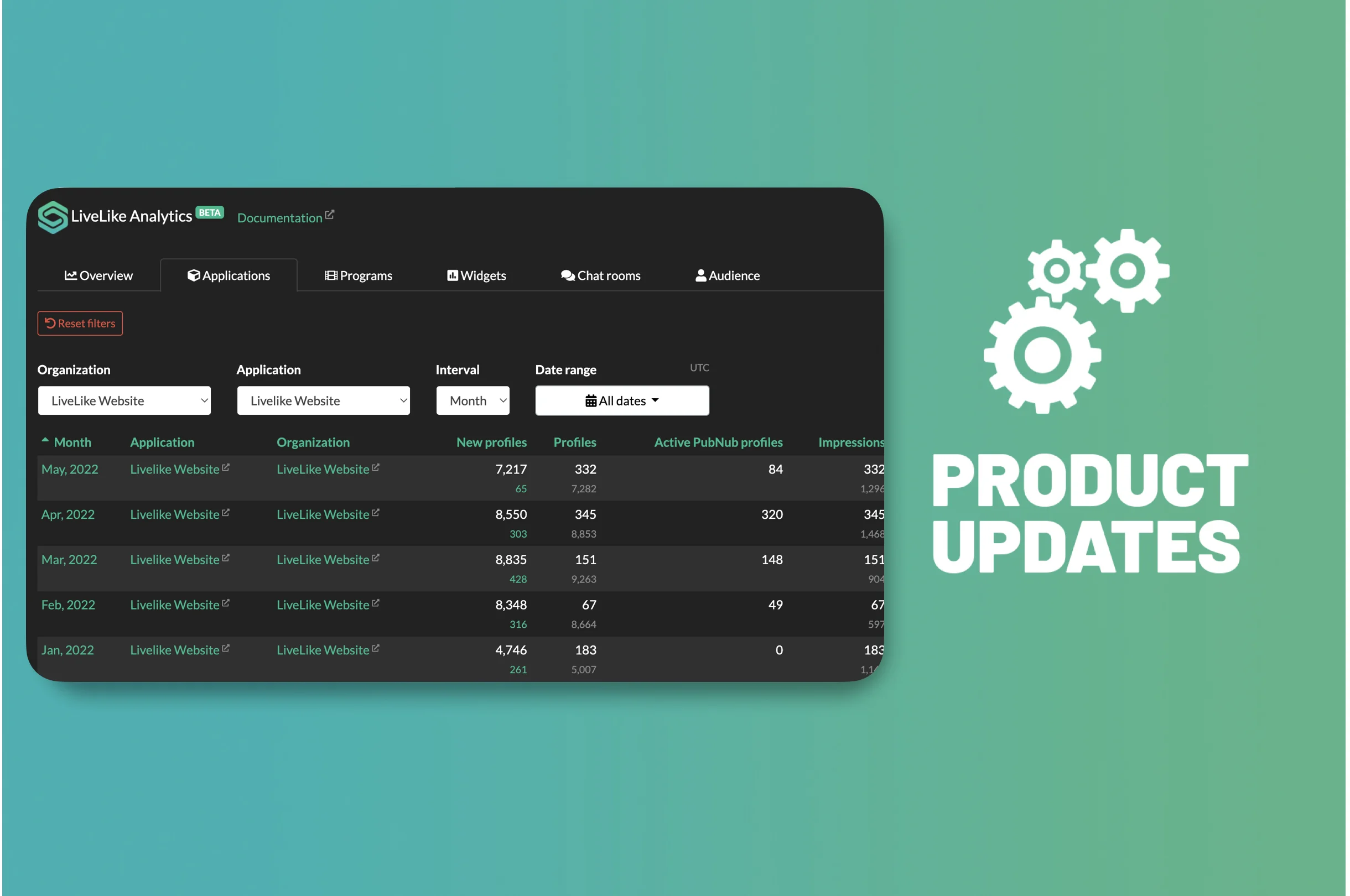
We’re so excited to announce the most recent update to our CMS: The LiveLike Analytics Dashboard is ready!
Before the launch, we utilized an external solution to gather usage data and share it with clients on an ad-hoc and manual basis. While this was a fine solution in the interim, our dedicated LiveLike Analytics Dashboard means that usage data can now be easily accessed by clients directly on our CMS!
Besides convenience, this also has some other major advantages:
- Apps integrated with LiveLike will be smaller in storage size on devices
- The LiveLike SDK installation process is easier because the project structure is simplified
So, How Does It Work?
For now, our Analytics Dashboard is composed of three tabs: Applications, Programs, and Widgets.
To see an overview of your application’s performance, simply click on the Applications Tab. You will then be able to access information on Profiles (Total & Unique), Impressions (Total & Unique), Interactions (Total & Unique), and overall Engagement Rate. Unique figures are on top and in white, while Total figures are on the bottom and in grey.
In this example, we are checking the monthly performance of the application “LiveLike Website”. At first, the months are sorted in chronological order but we can rearrange this order to showcase the best months in terms of impressions, interactions, or engagement rates.
If you want to know how a program or widget performed, you simply need to go to these tabs and sort them (programs or widgets) by the number of impressions, interactions, or by engagement rate (depending on your objectives). This will allow you to understand more about your end-users’ expectations. Note that within each of the tabs, you will have several filtering options that will enable you to get to the specific data that matters the most.
What’s Next?
In the coming weeks, we will be integrating Chat Rooms Analytics with metrics such as Total and Unique Messages, Reactions, and an Audience segmentation tab to see which platforms and devices your audience members are using to enjoy your LiveLike features!
If you already have an Analytics Dashboard, you can continue to use Analytics Hooks to send analytics from LiveLike into your own systems.
Still have questions about how you can utilize the Analytics Dashboard to improve fan engagement on your platform? Get in touch today to learn more about how the LiveLike Dashboard can help enhance your user experience.

Ensuring Your Customers Are Set For Life
Today on the Future of Fandom, get a life, or at least some insurance for it. On this week’s episode, we’re talking to Ladder’s VP of Marketing, Olivia Borsje.
Ladder is a flexible insurance startup that combines the power of innovative technology and world-class financial expertise to make it easy for anyone to access life insurance. Olivia has been with Ladder for over three years and brings with her a wealth of marketing knowledge and expertise.
Connect with Olivia Borsje on LinkedIn: https://www.linkedin.com/in/olivia-borsje/
Read more about Ladder: https://www.ladderlife.com/
Full episode here:
FULL TRANSCRIPT BELOW
Adam Conner (00:09):
Today on The Future of Fandom, get a life, or at least some insurance for it. My name’s Adam Conner, I’m your host, and on this episode we learn about some terms of digital engagement as a startup with Ladder and their VP of marketing, Olivia Borsje. Ladder lets you get a life insurance policy in as little as five minutes, which is obviously a great pull, but it got me thinking.
If you can get your customer to make a lifelong decision in such little time, how do you build community from minute six onwards? Olivia does a great job explaining that, as well as, how to set yourself apart as a startup via a little shock value, and all together, what a best in class digital insurance experience of the future looks like. So let’s stake a claim of our own and predict the future with Ladder and Olivia Borsje.
Adam Conner (01:06):
Hey Olivia, how are you?
Olivia Borsje (01:06):
I’m doing great. Sunny California today.
Adam Conner (01:10):
Oh, you know what? It’s been more frequent than not here to not be sunny. I’m on the East Coast, on the other side and we have just been back. I feel like every six hours it snows, so jealous already, but I’m hoping to get there quickly and I’m glad you’re here with us today to talk about, well, the sunny side of insurance, let’s say-
Olivia Borsje (01:28):
Yeah.
Adam Conner (01:28):
… and how you are building a community that sticks, and this will be a first for our podcast to talk about the insurance base specifically, and it carries with it maybe a few stereotypes that you can help me break apart.
Olivia Borsje (01:43):
Uh-huh.
Adam Conner (01:44):
But first, just for those who don’t know, obviously people know what insurance is and life insurance is, but why don’t you give us your spin on what Ladder is, and how it differentiates, and we’ll go from there.
Olivia Borsje (01:54):
Sounds good. So Ladder was created in response to a problem, which is the fact that over a hundred million underinsured and uninsured Americans know that they need to buy life insurance. 46% of them will tell you that they’ll suffer really harsh financial troubles within just six months of losing a primary breadwinner and yet those people still don’t have the coverage that they need. And that’s due to the fact that the barriers to buying life insurance have been so high.
You know, if you think about you and I in this day and age, we can pretty much buy anything we want directly on our phone, but when it comes to life insurance, it’s still very common for it to take weeks, six to eight weeks is what we typically see. It involves a ton of middlemen, it involves paperwork and involves medicals, so it’s just really fallen behind modern consumer expectations.
“You know, you’re talking about busting some myths, another common barrier is the cost of life insurance. Millennials in particular will overestimate the cost of life insurance by almost 10X. Whereas simple term life insurance for a young, healthy person, depending on level of coverage, can just be one to $2 a day.”
— Olivia Borsje (2:49)
Olivia Borsje (03:09):
And then the last point is almost this paralysis if you will, life insurance at its core is just this very simple promise for a company to step in if the worst happens, to take care of your family, but there’s been a proliferation of just very complex offerings, bundled with investment type of products, and so consumers don’t even really know where to start. They don’t know if they need term life, or whole life, or any kind of other life, they don’t know how much coverage they should get, they’re worried about being stuck with more coverage than they need, they’re worried about hidden fees.
Olivia Borsje (03:43):
And so there’s kind of this paralysis and all these three factors, right? The time it takes, how expensive people think it takes, how confusing it is, all of these three factors just contribute to this huge coverage gap that we see in the US today, that’s amounting to 16 trillion with a T. So what Ladder did, was invest in technology that would allow us to underwrite people in real time digitally. And this underwriting innovation is really what underpins everything else.
We still have upwards of 60% of employees today that are focused on underwriting in one way or the other, and it’s this ability to underwrite people in real time that powers our consumer experience. You know, the fact that you can get, if you’re approved with Ladder, you can get life insurance, it’s just five minutes on your phone from start to finish.
Olivia Borsje (04:36):
It’s also what underpins our ability to give you our best pricing adjusted for the risk. And it’s really… You know risk is really something that we need to be wise about if we want to make a lasting promise to our consumers. And so we have to remember that Insurtech is part tech, but part insurance, and insurance is about again, being smart on the risks. So that’s a little bit about Ladder. We’ve been growing very, very fast. We’ve been investing in a ton of fun stuff on the product and brand side, so we can keep talking about it if you want, but I’ll pause there.
Adam Conner (05:09):
Yeah. I really want to know, I mean the biggest thing that stuck out to me, which I want to jump on, is the real time aspect of the business which is highly valuable for the end consumer-
Olivia Borsje (05:21):
Uh-huh.
Adam Conner (05:22): …
but I hear five minutes. Is that right? So you’re telling me, somebody wants to get a life insurance policy, and I’m dumbing it down for, well, people like me. So if I want to get a life insurance policy and I’m like, well, I need to do it fast. I can get it done in five minutes with you guys. Huh?
Olivia Borsje (05:34):
That was, yeah. That five minutes was our fastest application ever from-
Adam Conner (05:38):
Wow.
Olivia Borsje (05:39):
… you landing on our website, filling out our application, you getting an instant offer from us saying, yes, and walking away. We actually have consumer testimonials that tell us, I got my life insurance policy while waiting in line at the grocery store, or in the security line at the airport. Those-
Adam Conner (05:57):
How about that.
Olivia Borsje (05:57):
… are true customer stories that we hear every day.
Adam Conner (06:00):
Well, and you know, to me, I have seen this as a trend, but not in insurance-
Olivia Borsje (06:07):
Uh-huh.
Adam Conner (06:08):
… it’s been in other areas, the financial sector, where a big selling point has been, set this thing up quickly.
Olivia Borsje (06:16):
Uh-huh.
Adam Conner (06:16):
I’ve seen it in banking mostly. And-
Olivia Borsje (06:18):
Yeah.
Adam Conner (06:18):
… that speed has been the message with which others have built an entire brand identity, you know-
Olivia Borsje (06:25):
Uh-huh.
Adam Conner (06:25):
… get this done quickly and boom, how easy is that? Yeah, sure, you can get it in line at the grocery store. And it’s so popular, and I don’t mean to pander to the rest of the industry, but why doesn’t everybody do that?
Olivia Borsje (06:41):
Because it’s very difficult to do, and that’s what can be deceiving about life insurance, and that’s what’s been at times almost controversial for us as far as the strategy that we’ve taken to focus on underwriting first, is because it doesn’t bear fruit until you’ve invested in it for a little bit.
So it doesn’t look… It’s not obvious on the surface what you’re actually working on, but figuring out how to find alternate data sources, to accurately underwrite people to the standards of underwriting that have existed in the industry for a very long time today, so have machines replicates what humans and decades of data have done, is a very difficult problem and you get better at it over time, as you have more data, as you learn, as you do your post issue audits, and so we’ve been incredibly disciplined in investing in that.
Olivia Borsje (07:33):
And again, once you get that right, then you can confidently make an offer to a consumer, at a great price, in five minutes, and you can feel confident about your risk, but that is, it’s a lot of hard work. It’s not just about propping a pretty website and then throwing people back into an old school application, which has happened elsewhere.
Adam Conner (07:55):
Yeah, I was… I’m guessing that it takes a lot more than a polished front end to figure out-.
Olivia Borsje (08:00):
Uh-huh.
Adam Conner (08:00):
… how to do that well, and [in scale 00:08:02] there are a bunch of interesting business growth questions I could ask here, but I want to focus instead on, well, the word that we focus on for this show, which mostly starts with the Fandom, because-
Olivia Borsje (08:13):
Uh-huh.
Adam Conner (08:14):
… of course there are many ways in which organizations and insurance, or otherwise, seek to build passionate consumers and fans. If the process is so quick, I get it done in five minutes, or let’s say that I’m a slow guy and I get it done in 10, all right?
Adam Conner (08:30):
I go through that process and I wring my hands together and say, “Okay, great, it’s done check,” because this is a big life check mark, isn’t it? I mean, at least it’s what-
Olivia Borsje (08:37):
Uh-huh.
Adam Conner (08:38):
… I’ve been told. You got to have life insurance, okay. I come through Ladder, boom, I get it done in five, 10 minutes. How easy is that? But my biggest question here, is that assuming that you are building a community of people who are, well, fans of Ladder, how do you build community beyond that, when the-
Olivia Borsje (08:53):
Uh-huh.
Adam Conner (08:54):
… whole plug is to say, well, we’re going to get it done quick, and then you got it, what comes next?
‘Yeah. It’s such a great question. So yeah, life insurance traditionally has been kind of this one and done purchase, or this eight week and done purchase if you look at the traditional way of getting it, and indeed we really want to help you get through that painful part really fast, and actually make the painful part not painful. We have really high NPSs, it’s a pretty delightful experience, but when you think about it, then we’re entering into a relationship with the consumer that’s going to last 10, 20, 30 years.”
— Olivia Borsje (8:38)
Olivia Borsje (09:28):
So there’s an incredible opportunity for life insurance brands to expand on that relationship and add value to the consumer and vice versa. And it’s not just an opportunity, it’s also very legitimate if you think about our category, we just ensured your life, so we have a lot of credibility and a lot of aligned incentives in helping you live your longest, healthiest, best life.
Olivia Borsje (10:01):
So you can imagine how broad the types of innovations and cross sales opportunities might be in this category. So at Ladder, we thought about that two vectors, one being product, one being brand, of course the two are very intricately linked. On the product side, I think a quintessential example is our Laddering feature. So, we give users the ability to modify their coverage over time.
So if you imagine you’re sending off your kids to college, or you’re paying off your mortgage, well, you don’t need as much life insurance as you used to, and so we allow you to just decrease that coverage and decrease your premiums and save money in the same proportion. That’s particularly popular when we work with partners.
So for example, a [inaudible 00:10:50] which has Ladder pretty deeply integrated, not only will they be able to offer life insurance right from that platform, but as they continue to give you financial advice and help you manage your entire financial life, you can manage your life insurance dynamically right there, so decrease it or apply for more.
Olivia Borsje (11:06):
So that’s kind of one examples of product innovation that build on that one and done relationship. There are other things that I can’t quite talk about, but that you can imagine around health and general wellness and kind of the integrations that could add on to our product today.
“On the brand side, I really think of this category less as a financial category, but more as a lifestyle one, because of what I just said, the fact that we’re ensuring your life and that there’s so much heart and emotion in this category that we can engage with consumers beyond just talking about money and their finances.”
— Olivia Borsje (11:28)
Olivia Borsje (11:51):
And so if you look at how we’ve developed the Ladder brand, the type of content that we put out there, our look and feel, it looks a lot closer to a lifestyle or almost fashion brand than it would your traditional kind of financial institution, which is also something that we’ve seen built trust with consumers and in some cases, especially younger generations, can be a little weary of the old established financial company and they’re really looking for brands that get them, that they can relate to, that look like all the other products that they consume.
And that’s really the direction we’re trying to take our brand than just a life insurance category in general.
Adam Conner (12:30):
It brings up a number of interesting dynamic levers to one’s life and some of which we can talk and some of which we won’t, but yes, it becomes easier to me when I think about, well, how should staying healthy reward you in other ways? And we’ve talked about this-
Olivia Borsje (12:44):
Uh-huh.
Adam Conner (12:44):
… on the podcast and in other measures, mostly within the world of credit and rewards with retail partners and things like that, obviously-
Olivia Borsje (12:51):
Yeah.
Adam Conner (12:52):
… life insurance have other implications, particularly in the B2B World. But again, we’re here mostly to talk about the Fandom and here’s another aspect of that, which I find to be prevalent in insurance more than anywhere else, and that is, there are a ton, a ton, and you mostly see it on a television of ad campaigns which seek to use humor, in some cases to use shock, to use gimmicks to hook a consumer, for example, well, I might not know everything that Progressive does, to throw a name out there, but God, don’t I know their characters from their TV commercials.
Adam Conner (13:33):
And in your case, you took the tact of using a bit of shock value. So I want to focus on this part next and listeners, you may be familiar with this, but we’ll describe it a little more. You had a campaign to market yourself that was called, The So Good Campaign, and So Good dot dot dot, I’ll let you finish the sentence, and created quite a bit of shock about you, I would say, in the marketing for a life insurance product, and I’d like to use that lens to get your perspective on how to use shock value in marketing to build awareness, no matter who you are, because that’s always the foundation of Fandom.
Olivia Borsje (14:09):
Yeah. Yeah. Thanks for bringing up this campaign. We’ve been very proud of it. It’s been working really nicely for us. So I’ll just take a big step back and talk about really the opportunity behind a campaign, which is the fact that there is no, beloved consumer, life insurance brand today. You know, if you go to a party today and you ask someone outside of the industry, what’s your favorite life insurance brand, they’ll look at you with a blank stare because the question doesn’t even make sense.
And again, we’ve talked about that this is a category that’s about the most selfless expression of love that you could possibly have. It’s about your family, it’s about your home, it’s about who you are as a person. So it’s crazy to me that in a world where we can love our shoes, or our thermostat, with a brand like Nest for example, we have at best, indifference for life insurance companies.
Olivia Borsje (15:00):
So we see an incredible opportunity as Ladder, to establish yourself as the beloved life insurance brand. On the other hand of that, we also recognize that building brand, is very expensive, and takes a lot of time. You mentioned Progressive, Progressive spends north of two billion dollars on ads every year. So as a startup, we know that if we want to pierce through, if we want to compete, we can’t compete with media dollars and sheer power of repetition, we have to compete with outstanding creative that’s really going to grab people’s attention.
So I’ll talk about the campaign a little more. So it is born out of a consumer insight, which is the fact that almost one in two couples that get life insurance will joke about taking each other out for the life insurance money. So we’ve designed those spots that is essentially about this dad that keeps coming home to his house that has been booby trapped by the entire family, including the dog, even the dog’s on it.
“You find out at the end that it’s because he has great life insurance with Ladder and the tagline is, Life insurance so good, they’re gonna want you dead. So, that’s kind of the shock value that you’re referring to, but what really works for me about this campaign is number one, just the memorability.
The memorability that comes through the humor, and the memorability that comes through having this inside joke that people make, be played out externally. You kind of… Good humor plays on that tension and that release, right, when that tagline kind of drops. The second thing is that it carries a true consumer promise, right? It’s not humor for the sake of humor, it’s telling you there’s something new there. It’s telling you this is not any kind of old life insurance, this is life insurance, so good, your family might come after you.”
— Olivia Borsje (16:05)
Olivia Borsje (16:54):
And then third, as I mentioned, it is grounded in a consumer insight. I think great ads resonate when there’s a real truth at their core and this is a truth, this is a joke that people actually make. So we loved the idea, I also love the fact that it had legs creatively. Right? You can imagine a whole series of these spots and we launched it at the beginning of last year.
As I mentioned before, brand advertising and awareness building is a different tactic than the traditional direct acquisition performance marketing, which we’re very used to at startups. And so it’s measured on a different time horizon with different metrics, but that said, I can already say that it’s been quite successful for us and it’s been resonating really well with our target market. So I’m looking forward to hopefully continue to build on it.
Adam Conner (17:46):
The first time I saw that ad, I was like, hang on, what, let me, what was that? And so I had to go back and rewind it again because I thought there’s no way that somebody would put out an ad like that, but that is the shock value, isn’t it? And I have found for the newest generation of consumers, no matter what they’re consuming, that this sort of, shall we say memeable message-
Olivia Borsje (18:06):
Uh-huh.
Adam Conner (18:06):
… is like jet fuel. I mean, it is some of the highest octane optics you could put out as a business and it sticks. I mean, who else does this really well outside of insurance? I mean, there are some tech players that do it, for sure. I think of like, well, somebody close to where I am just down the street, do a lingo, they use their mascot, an owl, to be just generally rambunctious on social media, completely separate from what the business actually does. And they have some of the highest social engagement out there. And so it-
Olivia Borsje (18:40):
Yeah.
Adam Conner (18:40):
… makes me wonder, as a startup, what are some things that startups need to be thinking about when doing brand building, when this sort of shock value marketing or nonsense meme messaging… Yeah, it sometimes makes for better messaging than anything relating to the offering. I’m curious because it’s not just that your startup will quickly grow, but you’re also within an industry, which is well, well grounded and has been for hundreds of years, you got to break through somehow, so I’m-
Olivia Borsje (19:14):
Yeah.
Adam Conner (19:14):
… just curious to get your thoughts on that.
Olivia Borsje (19:16):
Yeah, of course, it is a hard balance to strike. I think traditionally, if you look at the traditional life insurance or just general insurance industry, it’s very, very heavy brand, right? They’re really capitalized on that and they’ve started to catch up to performance marketing. And then if you look at startups, we’re very comfortable with performance marketing and we’re just kind of catching up on brand and figuring out how to invest there.
So we’re kind of coming at it from two opposite angles. You know, it’s in our DNA, as to companies, to just love clear cut metrics that we can measure really quickly. So usually that’s going to be all your direct response stuff. You’re creative is going to be very oriented towards your offering. You’re going to be able to calculate your return on ad spend by being kind of smart with all sorts of attributions, to just know, hey, I spent this kind of money, I got this much cash back, I’m right side up on my [inaudible 00:20:10] economics, feeling great.
Olivia Borsje (20:12):
And there’s a point where you need to, you realize that you’re not just building for short term growth and harvesting the current demand that you have, but you want to build, actually in our case with Ladder, a transformational lasting company. And in order to do that, your marketing is going to have to operate at two levels.
You’re going to have to continue to do the direct response stuff really well, but you’re going to have to start investing in brand, because brand will lift all boats. You know, when your direct response program starts to diminish in returns, brand is really what’s going to come to support your conversion rates, it’s going to come to support your organic growth, it’s going to come to help get more partners in the door and candidates in the door.
Olivia Borsje (20:58):
So it’s really a multiplying function and a differentiating moat, that I think startups need to figure out how to invest in, not too early, but as soon as they start thinking about the future and they have the financial backbone to do it at a level that’s going to pierce through. And that’s definitely not going to be a progressive level kind of investment, but if you’re smart about your creative, about your spend, you can really pack a punch with it.
The one thing I will say though, just to disambiguate is, I see brand advertising and just brand dots as two very different things, right? Brand is everything, brand is who you are, brand is your promise, brand is your product, brand it’s your look and feel. That is something that companies should invest in, in day one, really understanding clearly who they are, and who they’re for, and how to show up in the world. And I think once you’ve passed kind of that level, then brand advertising is just a different tactic that you layer onto your marketing mix.
Adam Conner (22:03):
Yeah. I really appreciate the deep dive there just because well, listening to this show right now is probably the next startup, not necessarily insurance but you know, in somewhere and I would be, and not that I’m a startup founder, but I would be really tempted by certain things and probably would misconstrue those, the nuances of brand as you’ve just said. So that was really nice, thanks for bringing that up and-
Olivia Borsje (22:30):
Yeah.
Adam Conner (22:30):
… given your expertise there, obviously, and as the person captaining the ship at Ladder, I’d like to know without diving into that which you cannot speak about, I want to peer into the future with you a little bit, because I predict that others in this industry will say, hey, we like what Ladder’s doing with regard to that speed to entry-
Olivia Borsje (22:52):
Uh-huh.
Adam Conner (22:53):
… and that digital experience Ladder leads in now, may become so popular that others might try to pick up the reins and take it themselves.
Adam Conner (23:03):
So it becomes then about an ideal overall experience. And maybe that relates to what the brand is overall, but peering into the future with you, I’d love to speculate a little bit and get your thoughts on what the ideal future insurance digital experience ecosystem looks like, because I’m still wondering, what really does come after that initial process to keep somebody engaged over time? Is it content? Is it layering of things?
And I think that’s a really great dynamic thing to lever, like I said at the beginning, but I’m curious what else you think in the digital landscape will keep folks in touch and conscious of their position with Ladder or any insurance player?
“I think there’s one thing to be said about insurance and the fact that there’s something about the, said it and forget it, that’s also nice. It’s something that you want to make sure you have, you do quickly, and then it’s just relief, such a huge burden from your shoulders, that you’re happy not to kind of think about it anymore, but we’ve had customers say, whenever I see my charge at the end of the month, fund my card, I know I’m covered, I feel good, I know my family’s protected if something happens to me.”
— Olivia Borsje (23:44)
Olivia Borsje (24:14):
And so sometimes just that is truly enough, honestly, to keep a consumer engaged and staying with you throughout the duration of their term. There’s also high switching costs, right, to leaving and to getting another type of life insurance company.
Olivia Borsje (24:31):
So there’s a natural high retention and kind of lock in for life insurance. So the question to us is more about, how do you add value on top of that, both to attract consumers to Ladder compared to other competitive offerings, and then to add more value to them and add more value to Ladder in exchange throughout this decade or 30 year long relationship?
So I do think some of that is going to come from all types of possible innovations and integrations in the world of physical wellness, in the world of emotional wellness, in the world of financial wellness. Right? So you can really imagine all the things that will help you live longer and healthier that we can add on to kind of our Ladder platform. You know, you could go as far as saying, hey, research has proven that having a dog helps you live longer.
Olivia Borsje (25:25):
It can go that far, right? We could do something with pets in the future. Right? Nothing we’re doing right now, I’m really being illustrative. And on top of kind of these wellness types of things, you’ve mentioned earlier, abilities to reward you over time for healthy or safe behavior.
So how many steps you’re taking every day, or are you driving safely, or are you paying your mortgage on time? Are you… So there’s a whole ecosystem of data as well that can be used just to give consumers some money back, which is always something that everybody appreciates.
Olivia Borsje (26:04):
So I can really see innovations in those two rounds and then the last [mode 00:26:09] around all of that, as we discussed, is just brand, right, is feeling like this is a great brand that gets me, that made me laugh, that engages with me. And then not only do I want to stay with that company, but I want to refer it to my friends.
You know, it’s a very word of mouth type of product. So really those three layers of a great product with built in with retention of value add around it, and a strong brand to cement it, is where we see our long term success.
Adam Conner (26:36):
I appreciate the outlook and I want to round out with one, fill in the blank, which brings us home with regard to the way that fans are made outside of the sports’ realm, which is this, and I’d just love to get your take. Finish this sentence and I’ll finish it with a blank. I know that my customer has turned into a genuine fan when they blank.
Olivia Borsje (26:59):
When they shout out from the rooftop that they love you and everybody else should get your product.
Adam Conner (27:06):
Well, can’t we all hope that happens with our businesses and I hope it does with yours as well, and maybe to get to the rooftop, they will use a ladder. But Olivia, thank you so much for joining us here, it was great to get your perspective, thanks for giving us all life.
Olivia Borsje (27:22):
Thank you so much for having me, it was a pleasure.
Adam Conner (27:28):
Thanks again to Olivia Borsje from Ladder for joining us. And hey, if you’ve been holding off on life insurance because it takes too long, I see you, you got no excuses anymore. And thanks to you, the listener, of course for exploring the Future of Fandom with us, I’d encourage you to stay connected beyond minute five.
So subscribe to the Future of Fandom, wherever you listen to podcasts, or you can also find all of our content at livelike.com/podcast and every episode has a sub page now. So you can go to the website and find that and across socials, we’re also on LinkedIn @LiveLike and Twitter @LiveLikeInc. I look forward to predicting the future again with you soon, until then, I’m Adam Conner saying, so long and thanks for being a fan.
At LiveLike, we strive to offer our clients the strongest possible solution to fan engagement on the market. And to do this, we make sure our product is always improving by constantly implementing new features and enhancing the use of our backend/CMS.
This month, we are pleased to introduce a major new feature to our live sports viewing solution.
Send Automated Insights During Live Events
Yup, you read that right! Thanks to our collaboration with Stats Perform, you can now automate the creation and publication of match insights and facts to provide your audience with compelling and contextually-relevant information while they are watching your stream.
These updates will be powered by Opta and will rely mainly on exciting statistics and data that come alongside the game.
Other examples of these updates could be: “G. Burgstaller has assisted his fourth goal in the German Bundesliga Zwei this season!” or “St. Pauli has a record of W6, D0, L0 when leading at half-time in the German Bundesliga Zwei this season.”
All of the information will be automatically sent to our backend and, as soon as we receive the information, we will process it and deliver it through our Alerts Widget feature.
On your side, you will simply have to connect your Stats Perform Account to our CMS and input the Stats Perform Match ID when creating the automation.
So, What’s in It For You?
To keep it simple: Less human control over the CMS, an increase in pace in terms of widget publication, and the allocation of your resources elsewhere when your event is live.
What are the next steps? We still have some work to do in order to provide you with the full suite of automated widgets.
Firstly, we are in the process of creating specific scenarios to turn relevant data into prediction games, live polls, and trivia questions. We will be releasing these during the upcoming weeks and months, so stay tuned!
Secondly, our integration at the moment is solely suitable for soccer. Our goal is to expand the number of integrated data feeds to be able to cover more sports and provide you with even more possibilities. That being said, if you wish to use our solution for other sports right now, we would be pleased to further investigate the possibilities together.
Also This Month
In other news from April, we have significantly improved our chat message feature! Now you can use the REST API to retrieve messages as well as count the number of messages sent for a given chat room.
In other words, you will be able to count messages for all time, before a certain timestamp, after a certain timestamp, or between two timestamps.
Message counts will also enable you to show users unread message indicators and highlight new chat activities with notifications.
We hope you enjoy these new updates, and please do not hesitate to contact us if you have any questions. If you are not yet using LiveLike but are interested in integrating our solution, you can also reach out and book a demo with our sales team.
Crafting Brand Love Via a Common Enemy
Today on The Future of Fandom, we craft brand love, find a common enemy and talk a little bit about Spongebob. We’re here today with Kim Rosenblum, Chief Marketing Officer of Betterment, an American financial advisory company that provides digital investment and cash management services.
Most people in their 20s and 30s will deeply appreciate Kim’s contributions as a leader at Viacom where she led creative for properties like Nickelodeon. That’s what makes her journey into fintech all the more fascinating. The perspective of a media style approach to building a community of investors is one not often seen, but many of its principles work incredibly well when it comes to influencing one’s financial choices.
As someone who’s had the pulse of the next generation since the ’90s, Kim is incredibly well-positioned to peer into the crystal ball and chat about what the leaders of this industry will need to do to stick.
Connect with Kim Rosenblum on LinkedIn: https://www.linkedin.com/in/kimrosenblumnyc/
Read more about Betterment: https://www.betterment.com/
Full episode here:
FULL TRANSCRIPT BELOW
Adam Conner (00:09):
Today on The Future of Fandom, we craft brand love, find a common enemy and talk a little bit about SpongeBob. My name’s Adam Conner, I’m your host and together we’ll explore how Betterment is setting up the next generation with a long-term investing focus (and building a fandom regardless) with our guest, their Chief Marketing Officer, Kim Rosenblum.
Adam Conner (00:32):
Most folks in their 20s and 30s will deeply appreciate Kim’s contributions as a leader at Viacom where she led creative for properties like Nickelodeon. That’s what makes her journey into FinTech all the more fascinating. The perspective of a media style approach to building a community of investors is one not often seen, but I think you’ll agree that many of its principles work incredibly well when it comes to influencing your financial choices.
Adam Conner (00:58):
As someone who’s had the pulse of the next generation since the ’90s, Kim is in incredibly well-positioned to peer into the crystal ball and chat about what the leaders of this industry will need to do to stick. So let’s do that now as we predict the future with Betterment and Kim Rosenblum. Hey Kim, how are you? I’m so excited to have you on. Thank you for joining me.
Kim Rosenblum (01:21):
Thank you, Adam. It’s nice to be with you today.
Adam Conner (01:24):
I am lucky and listeners, you are lucky. You might not know it yet, but you are lucky to be listening to this voice for the reasons I’m about to lay out. Number one, we’re going to learn all about Betterment. We’re going to learn about how fandom applies to super long-term investing. I’ll get into all that, crafting brand love, having a common enemy. We’re going to talk about a couple of things that you might relate to.
Adam Conner (01:46):
But listeners who are, oh, let’s say in your mid to late 20s, early 30s might be the most nostalgic when we talk about some of the history that brought Kim to Betterment. So let me start there. Without giving too much away. Kim, can you tell us a little bit about you? Obviously we want to learn about what Betterment is, but sort of where you came from and why you came into this world after being a part of a quite different one just before.
Kim Rosenblum (02:14):
Sure. Thanks, Adam. I am CMO at Betterment, which is the largest independent digital investment advisor. We’re just over 10 years old and we are really a pioneer in FinTech, especially in the long-term investing category regarding FinTech. So a lot of people know Betterment as a founder company. Jon Stein founded the company and it’s now grown to 700K plus customers and over 33 billion said it’s under management. So it’s a significant FinTech. We’re still, like I said, independent, which we’re very, very proud of. We are driven by innovation and really making people’s lives better through financial planning and wellness.
Kim Rosenblum (03:00):
And it is unusual for me to be in a FinTech space since I spent the majority of my career, well over two decades in media. But Sarah Levy, the new CEO that Jon Stein appointed about 18 months ago had also been in media. And she was a former colleague at Viacom and she recruited me when she came over to Betterment. So it was an interesting leap for me. And I think I brought a lot of experience from media and a lot of experience from branding since I was lucky enough to work on some of the best media brands in the world.
Adam Conner (03:34):
Well, listeners, I told you. Now, in case I haven’t laid this out clearly. We haven’t laid this out clearly enough, those 20 years at Viacom included sometime at every American’s favorite network for cartoons. I say it that way. Nickelodeon, of course. So we talk about media, man, such a passionate follower base there and it immediately makes me wonder how we’re applying some of the principles that you applied to growing those various audiences, because it wasn’t just Nickelodeon. It was the various properties that Viacom had in that world to this world.
Adam Conner (04:09):
And so I wonder like what was the first hurdle like once you joined Betterment that you foresaw and then we’ll talk about how you crafted love to get over that?
Kim Rosenblum (04:22):
Sure. Well like a word on my experience at Nickelodeon, I was incredibly lucky to walk into Nickelodeon in the 1990s, which you Adam and probably many listeners were actually at home watching Nickelodeon while I was sitting in a cubicle making Nickelodeon. I mean, it was like the startup before the word startup existed. We were just making it up frankly and growing really quickly. And it was really exciting because it was a brand-driven concept. Nickelodeon was actually acquired by MTV right before I got there. Comedy Central was a sister channel.
Kim Rosenblum (05:04):
So this idea of creating a brand, a concept, targeting a specific audience and then the product, or in this case, the programming fulfilled that brand mission and spoke specifically to an audience in a passionate way. That was like a very new concept. And so we really were inventing it and it worked. It was great. I have a ton of fond memories. I would say my proudest, funnest one is that I was in the room when we watched the SpongeBob pilot. And I can tell you that no one was like, “This is change the world.” Everyone was like, “Yeah, that’s funny. Let’s try it.” We actually were in the room, decided to put our marketing effort behind another show called CatDog, which is a great cartoon, but no SpongeBob.
Adam Conner (05:54):
Well, in the world with a little CatDog I didn’t feel that way.
Kim Rosenblum (05:57):
So I actually did like a big marketing launch campaign for CatDog. I did a lot of like business to business also with ad sales marketing and affiliate sales marketing. I worked a lot on Nick at Nite and the spinoff channel TV Land. So yeah, I just learned a lot there. And it was, like I said, a startup culture that very quickly became a media BMF.
Kim Rosenblum (06:18):
So taking all of that learning was really interesting coming to Betterment, which is also moving past startup to growth stage and also building a brand that’s based on a particular audience with products, in this case, FinTech products that really serve a specific audience and trying to generate love around that. Not just being transactional, but actually a relationship between a financial brand and a customer.
Adam Conner (06:45):
Yeah, let me go right there because I have had the privilege of talking with a few players in the broad FinTech spectrum on this podcast. Now, when I have that it has been around a specific offering or asset class, but the point for the most part has been the novelty of the product that you can invest as part of the business. Now, I am sure though we haven’t quite gotten there that there is an avatar. I mean, that’s what we would call in the podcast game like a person that you are specifically going after, an audience.
Adam Conner (07:22):
That side very, very well because, well, you targeted that as part of every episode of SpongeBob targeting a specific type of person. And sure there was a product there, but it was searching for a person first. I’d like to get your perspective on the industry because you probably know more about it than me or you definitely do with regard to where do you see that development falling? Is it in finding a specific person or is it finding that specific product and regardless what are you trying to do with Betterment?
Kim Rosenblum (07:54):
Yeah. Honestly, Adam, I feel like it can come in both directions. I don’t know that I would say it’s definitely product first or audience first. I do know that those two things have to fit really well together. And we like to say product market fit. But like if you unpack what product market fit means, it really just means that you really understand what your audience, your customer really wants and that you design a product that fits need.
Kim Rosenblum (08:20):
So that might be for us as we’re developing crypto investing portfolios, which will be launching later this year. That isn’t just about a crypto product. It’s about saying, “Okay, our customer is a long-term hold, managed, diversified investor.” So how does crypto and portfolios and what is the experience around that product mean to that customer? So for us that might mean just the way we develop the product, the way that you onboard onto it.
Kim Rosenblum (08:52):
We are there for the long-term, we there to help you make you feel comfortable. We’re there to like bring forward like our core values of trust, safety, security long-term. So I think the product like we’re developing a great product, but we’re developing it with the brand tenet and the customer in mind. So I think they go together. I would say the difference between when I was doing it early days Nickelodeon and now at Betterment is obviously it’s a much more fragmented world. There’s way more competition in every sphere. And I think what’s happening, especially in FinTech, is that in the beginning even for Betterment 10 years ago, it was a little bit of like a digital marketing play and you sort of went out and you acquired customers.
Kim Rosenblum (09:34):
Now it’s not just about acquiring customers. It’s too competitive to think about that way. And if you’re not just acquiring customers through a product, what value are you bringing to them? What’s differentiated about you? Why would you pick Betterment over one of our competitive brands? Whether that’s a smaller player like a Wealthfront or a legacy like a Marcus. And so we have to provide a point of difference and it has to have value. So to me the idea that brand or product, I wouldn’t say one comes before the other. I think they have to work together.
Kim Rosenblum (10:06):
And brand, by the way, is like a 365/24/7. And so is the product. Like our product is there for you for the long-term. So they go really nicely together. Transactional brands, which might be more in sort of like FinTech banking categories probably have different goals. So this doesn’t apply to everyone. This is where we’re coming from.
Adam Conner (10:30):
Sure. And you’re right. I mean, with regard to brand being 24/7/365 and I have found just via my conversations with CMOs just like you just how omnipresent and important it is. And to me what that signals is like, well, it’s hard not to go after that type of person in that audience first. But Hey, in an increasingly competitive space. Yeah, now there has to be that balance from both ends, as you said, the product and the person.
“I think one of the things that’s really important in branding is not just knowing who you’re talking to and what your value proposition is to them, but to know like what else they offer they have out there and what’s your point of difference? I’ll go back to my Nickelodeon days. It’s not like at Nickelodeon we didn’t know that Disney or Cartoon Network existed. Of course, you did. And it wasn’t like you’re all in or you’re nothing. It wasn’t like you could so easily, it’s so easy to just pick up the remote and flip around.”
— Kim Rosenblum (11:00)
Kim Rosenblum (11:32):
So you have to understand that like you serve a specific difference between those competitors. I think one of the things that’s interesting for Betterment is just looking at some of our data, like the other apps that our Betterment customers have on their phone include things like Coinbase and Robinhood and Acorns. Like I get that. We’re not all things. Our customer has other brands that they have a relationship with and that’s awesome and they should. We just need to have a clear point of difference and a clear value proposition.
Adam Conner (12:02):
Sure. And because it’s hard to nail down like a specific person when you’re building something, obviously you have an ideal customer in mind. But really what this triggers to me is like, well there’s a broader set of behaviors. There’s a persona that you’re that you’re going after as well. And I’ll tell you why it’s really hard to nail that at least from my perspective, because my beliefs on investing in my relative risk aversion or hunger they’re in has swung wildly, even in the last few years as you get hooked by the craze of crypto and even things like the meme stocks of early ’21.
Adam Conner (12:44):
Now, obviously I know that through something like Betterment you’re looking at it in a slightly different way, but regardless like I have swung wildly between keeping my emotions in check and chasing a check. And for you, I’m curious what the relative importances of each of these are. A persona that focuses on like just the money side and the persona that focuses on the emotions of investing. And given the fact that obviously you’re leading FinTech forward, how do you think that your leaders of this world will prioritize between them or do you think they will?
Kim Rosenblum (13:20):
Yeah. I understand. I can be the same way I can have a reactive day and I can also be a long-term strategist. Like I think that’s human. I think what’s happened is it’s on our fingertips. There’s apps that allow us to access things quickly. So impulsive behavior is possible, whereas that wasn’t true before the proliferation of FinTech apps and brands. So I think like what you’re saying, Adam, is totally normal, but honestly what we stand for at Betterment is long-term and diversified and we manage it for you.
Kim Rosenblum (13:52):
So the people that like Betterment are people who want to have like that in their life. It doesn’t have to be the only thing in their life, but they value that. And they also value … so for us, it’s not like, okay, it’s this person this age, this demographic. Like those things are helpful, but the mindset to me is more important. And these are people that and maybe you’re one of them, Adam, that like you get that there’s some fun in transactional and some hype that you want to be a part of. But you also need and know that you want to have a long-term solution.
“In some ways, FOMO, the fear of missing out on a GameStop or whatever is almost like our perfect villain, because what we want to do is say, “That’s fine. You’re going to have those impulsive behaviors, but we’re here for the flip side of that.” We’re the other side of the coin. We’re here to be your long-term partner so that when you have those moments, go ahead, you can have that fun money. You have that try some stuff, chase the check, because we got your back in terms of the long-term.”
— Kim Rosenblum (14:23)
Kim Rosenblum (14:52):
So I think that’s like where we fit in our sort of anti-FOMO brand. It’s a weird thing because it’s anti-FOMO, but that doesn’t mean we’re not in the conversation. We can just be in the conversation from that point of view.
Adam Conner (15:06):
The use of the word villain even makes me under or stand a little better how you’re thinking about this and of course where you came from. I mean, this to me is the root of anybody’s fandom of a television program when they’re a kid. You unite around what you want to see quelled if it’s plankton or whether it’s, well, it’s this FOMO.
Adam Conner (15:32):
You’ve as a result then between Betterment and that time have had long tenures of building brands around these sorts of villains. Is that fair to say? I mean, is there an element of the FinTech world that is just as much in the ease of investing as it is in the thwarting of some common enemy? I’m curious about that from your perspective.
“Listen, Nickelodeon, I can tell you because I was there in the ’90s, it was all about us versus them. Us was the kids, them was the world. So it was kids versus the world. And that’s because kids didn’t feel at the time that they had any rights or any respect. And that was sort of coming off of a certain type of parenting, sort of like this passive parenting and kids were like, “I want to have a seat at the table and no one listens to me and I’m marginalized.” So we got the advantage of sort of like rallying around this idea that kids should be empowered and kids should be listened to.”
— Kim Rosenblum (15:56)
Kim Rosenblum (16:32):
By the way, it worked because now kids and I think many parents, millennial parents who are raising these kids they grew up with that feeling and they empower their kids. And by the way, now kids are like driving major purchase decisions. They are absolutely responsible for what car the family buys, what vacation the family goes on. Parents and kids have this incredible connection. There’s a lot of family time now. So what was the enemy then is not the enemy now, but what happened was that millennial mindset kind of came forward, I think into finances as millennials became adults and started earning real income and thinking about what’s going to work for them.
Kim Rosenblum (17:12):
They did not have confidence in the institutions and why should they have? Many millennials, come out into the 2008 housing bubble pop and didn’t have jobs and had student debt, and didn’t really like get a sense that the government was there to actually figure it out for them. And once again, they found themselves sort of like me versus the world.
Kim Rosenblum (17:34):
And so out of like that, I think the FinTech and then of course the tech revolution happening at the same time was kind of a perfect moment for finance and tech to collide and address this group of people who were looking for something that was like spoke to them, that they could feel confident in that it was personalized. And that wasn’t coming from like a giant institution with whom they had little reason to trust or little confidence in a benevolent relationship.
Adam Conner (18:03):
Right. Yeah, because when I think of the FinTech world in term of somebody to look like, “Oh, I’m not like them or it’s them against me.” I’m not necessarily at least at first I wasn’t thinking about FOMO over any of this. I was thinking about some hungry banker taking away a percentage of my money just because they were there to claim it. And so it’s very interesting how these things have developed.
Kim Rosenblum (18:26):
Yeah. And I think the other thing that like Betterment was absolutely founded on was accessibility. And it’s still happening, but there was so many decades of exclusivity. And that was another piece that I think that the intersection of finance and tech allowed was for people to say, “You know what? I don’t need to be welcomed in. I don’t need to be invited in by and advisor or have my parents introduce me to their financial advisor. I can actually take control of this and drive this for myself.”
“That’s been like a real game changer and I think you’ve seen all of the legacy institutions launch FinTech brands or trying to figure out their relevance. And I think there’s no putting that genie back in the bottom and there shouldn’t be. And I think the next generation is Gen Z who’s starting to come of age and graduating college and getting jobs, they’re looking for people to advise them where they’re at. So the rise of financial influencers or the fin talk makes perfect sense to me.”
— Kim Rosenblum (18:57)
Kim Rosenblum (19:30):
I know there are some people who feel like, “Well, I can’t believe people are getting their financial advice from a TikTok.” But that’s where the audience is and that’s where they’re seeking information. So not being there doesn’t make any sense to me or being offended by that or being sort of like snobby about that. It just means you don’t really understand that audience.
Adam Conner (19:49):
Sure. And I mean, assuming that you can get through probably what … Quite a bit of is probably not great advice if it is coming from somebody who’s a young investor who hasn’t just been there very long, it can be incredibly valuable. I’ve I’ve been there as well, plus there is that added bonus of it being always on, always there, always fresh. You can swipe, swipe, swipe and assuming that you’re still in that community, you get new things.
Adam Conner (20:14):
To me, it serves as a great compliment to something like what Betterment provides. It’s the short term content to answer to the long-term vision of what making an investment in Betterment offerings is like. And that’s actually where I want to ask you a question about this because it’s a privilege to be able to chat with you as a leader of building this community of people who are focused on that long-term.
Adam Conner (20:44):
And like others who I’ve talked to who have been specialized in certain assets where maybe you can’t track a ticker every day so too does it become less relevant to be checking in constantly, frequently if you are aligned with a long-term goal. This may mean in my mind that maybe one of your customers, one of your 750,000, you say 700,000 logs in once every couple weeks, once a month assuming they’ve made the initial investment in. And I assume that’s okay for you all, but how do you build a fan strategy within that? I say fans just because we like to focus I’m fandom here. I’m curious to get your thoughts on that.
Kim Rosenblum (21:29):
It is a little tricky because the best behavior, especially like we’re talking right now 2022, it’s been a wild couple months. That we went from what was a pretty boom boom 2021 to like a very volatile 2022. And the thing that I’m really heartened by with our customer base is that they’re not making a lot of moves right now. They’re actually sitting back and like riding it out, which is exactly what we’ve been advising and will continue to advise.
“Part of fandom doesn’t have to just be about likes and that kind of measuring engagement by daily interaction. It can also be about did we give a useful message and was it helpful and useful to you? So I think people are fans of a brand because it serves their life. Not necessarily because it just pops up in their feed. So I think it’s okay to sit back. We need to constantly reinforce that value and that long-term aspect. And we do that through the normal means through paid marketing, through organic social, but also in product through our content.”
— Kim Rosenblum (21:59)
Kim Rosenblum (22:40):
We have put out a little bit of content around the volatility right now and the message is stay the course. The message is don’t get distracted, don’t be impulsive. We have a behavioral economist on our staff and he calls it going on an information diet that he advises that in these crazy times it’s actually better to get a little less information.
Kim Rosenblum (23:03):
Don’t go like too hardcore, maybe half hour of news morning, in the evening, not before bed. Because it doesn’t feed your best instincts. It doesn’t serve your best instincts to be just constantly checking your feed and wondering what’s going to happen next when things are out of your control. And everyone likes to be in control of things. It’s hard, but I don’t think fandom and daily engagement are synonymous at all.
Adam Conner (23:30):
And do you see other places in the world? We’re going to exit the world of maybe FinTech right now or maybe just a general brand circumstance. Like when specifically that engagement or that metric shouldn’t be your number one. I mean, obviously in areas where it’s a long-term considered purchase or investment like here, I get it because my guess is that what does a business focus on? Well, it focuses on assets under management, focused on having that bottom line. You don’t need, “Oh, but look at all these views I got. Well, it’s great. But it’s more of a pulse check than a business line. When else or is there, I’m sure there, are circumstances when engagement probably shouldn’t be at the top?
Kim Rosenblum (24:11):
Yeah, that’s a good question. I mean, one of the things I think is really fascinating is we have a sustainable investing portfolio of products, a portfolio of climate impact portfolio, broad impact and social impact. And to me that’s a really good example because we did actually ask for people’s participation. We brought in a partnership with Engine No.1, which is the activist investors that are taking on board seats. They took over board seats on mobile to cause change from within. So we are actively with things that are activist investing.
Kim Rosenblum (24:48):
So I kind of speak out of both sides of my mouth, but to me what’s really interesting is that’s an example of like actively engage and put your money into companies that support your values and coming from Engine No.1 that can represent you in the boardroom and do that in a way that means putting my money and I’m leaving it there because that kind of change takes time.
Kim Rosenblum (25:11):
So I think the other thing to your question about like when is it okay not to engage is long-term change. If you’re trying to affect long-term change, like reversing the climate damage, enforcing companies that are using fossil fuel to review that and reduce their dependence on them. That’s not going to happen in a short-term. You’ve got to be committed to that for the long run. So in some ways being an activist is actually a moment to also say maybe engagement and daily engagement isn’t the point. Maybe it’s about long-term commitment.
Adam Conner (25:45):
Yeah. That’s very interesting. I appreciate you speculating with me there for a moment. And I’ll ask you to indulge once more and as we start round out here, because we also focus on the future, which is speculation by definition. And since you are currently at the cutting edge of the next gen FinTech experience, especially one focused on the long-term, I’m interested in what you foresee for the future of those best-in-class digital. Let’s stick with digital experiences within finance.
Adam Conner (26:17):
What do you think people are going to want? I mean, you talk about Gen Z, they’re just coming into their own right now. They’re just starting to see their first sources of income. They’re starting to make these decisions. What are you currently see as what they want and do you anticipate they or people will want going forward?
Kim Rosenblum (26:33):
Yeah. Obviously crypto is very topical, but I actually think the bigger picture here and what people will want long-term is access to the way we are going to do business in the future. It isn’t so much about like a particular coin or a token. I think what we’re going to see is people really interested in the future of business, which is the crypto economy. So for us, as I mentioned before, we’ll be doing long-term diversified portfolio management with crypto assets. That’s alongside, that’s not mixed in just to be super clear. We’re offering that as a separate investment strategy because that’s what we think people want too.
Kim Rosenblum (27:13):
They don’t want it just sort of mixed in. It’s volatile. They understand that, but it’s going to even out and it’s going to be here for the long-term so we want to provide a product, back to that product market fit that they’re looking for. But I do think the future is going to be about that decentralized finance and that’s the way business is going to be done. So that’s how I think people will want to get into it. Not necessarily just sort of like chasing whatever is popping right now in terms of like an individual coin or cryptocurrency.
Kim Rosenblum (27:45):
So that’s like one speculation on my part and obviously we’re launching a product around that so I believe in it deeply. I also think I don’t think it’s going backwards. I think it’s only going forwards and the more access people have to be able to use digital payment I think you’ll see that really integrated. The idea of banking as a service integrated into experiences, whether that’s travel, moving money like within a consumer and retail experience I think will be commonplace. Yeah, so those are some of my sort of crystal ball predictions.
Adam Conner (28:22):
Well, I appreciate getting to peer into that crystal ball with you. And for learning all about this it’s, first of all, it’s a pleasure to talk with you just because of the tenure lead not to Betterment, but now like the ability to apply these sorts of principles to a world that I … Of course, this app-based trading and investing didn’t really, I don’t really think it existed until like seven, eight years ago really, at least in a prevalent manner to be able to apply some of these tried and true fan building, audience building, common enemy philosophies towards this world that really hasn’t had it is a treat to hear about in practice.
Adam Conner (29:00):
Because I could think about it all day. “You know, that makes sense.” But to know that there’s somebody out there doing it is really something cool. So personally, thank you for that. And for our audience, thank you so much for joining us and, well, telling the future with us.
Kim Rosenblum (29:13):
All right. Thanks Adam. It was a pleasure talking to you. I appreciate it.
Adam Conner (29:19):
Thanks so much to Kim Rosenblum from Betterment for joining us. I truly, truly appreciate what you’re doing now for the next generation just as you did for mine. And thanks to you the listener, of course, for exploring The Future of Fandom with us. I’d encourage you to stay tuned to this channel. So subscribe to The Future of Fandom wherever you listen. And you can also find our content at livelike.com/podcast and across socials. We’re also on LinkedIn @LiveLike and Twitter @LiveLikeInc.
Adam Conner (29:51):
I look forward to predicting the future with you again real soon. And until then, I’m Adam Conner saying so long and thanks for being a fan.
.png)
Leveling Up Investor Relations
Today on The Future of Fandom, we quit chasing memes and level up our understanding of the market with Public.com’s General Manager of Investor Relations Innovation, Katie Perry.
On this episode, we get a look at how Public.com is differentiating within one of the most commoditized financial services out there, stock trading. App-based stock trading has gone from virtually non-existent to everywhere within the last seven to eight years, and so has the community surrounding it. The forums of yesteryear have become the full content studios of today, giving new meaning to what investor relations really is and the power it wields. Katie has invested in this world early and makes a few calls as to what’s to come.
Connect with Katie Perry on LinkedIn: https://www.linkedin.com/in/katherineperry/
Read more about Public.com: https://public.com/
Full episode here:
FULL TRANSCRIPT BELOW
Adam Conner (00:09):
Today on The Future of Fandom, we quit chasing memes and level up our understanding of the market. My name’s Adam Conner, I’m your host. And on this episode, we get a look at how Public.com is differentiating within one of the most commoditized financial services out there, stock trading, via their GM of IR innovation, Katie Perry.
Adam Conner (00:32):
App-based stock trading has gone from virtually non-existent to everywhere within the last seven to eight years, and so has the community surrounding it. The forums of yesteryear have become the full content studios of today, giving new meaning to what investor relations really is and the power it wields. Katie has invested in this world early and makes a few calls as to what’s to come. So let’s make a few asks of our own and predict the future with Public.com and Katie Perry.
Adam Conner (01:07):
Katie, thank you for joining me. How are you? I appreciate the time.
Katie Perry (01:11):
Hi Adam. I’m great. I’m really excited to be here. Can’t complain, it’s almost spring. So looking forward to this conversation.
Adam Conner (01:20):
Me too, I have to say that Public among, just a handful of others were among the first real apps I think about when trading stocks or making any sort of investment. So it’s cool to have that full circle now and be able to talk to you and get a sense of how are you a building community and to define that word fandom in the way that you all see it. For the listener, I’m going to say this up front. And by now you follow us in a plenty of podcasts and things like that in the financial sector, but we may talk about classes of stocks, certain stock trends, things like that. None of this is meant to be construed as financial advice, okay? This is all for educational purposes. And we’re really not even going to be talking about specific tickers or anything, but just so I can cover us. Katie, how do you do, is that good?
Katie Perry (02:06):
Perfect.
Adam Conner (02:06):
Okay, good.
Katie Perry (02:07):
Our chief compliance officer will be very happy and it’s great.
Adam Conner (02:11):
Excellent, check mark on that. All right. Now, to this wild world, which can be volatile at times, but is just to me it seems to be, through the last two years, not nearing the top of a hype cycle, but certainly more exciting than I remember in recent years, there has also developed this concurrent narrative about what the stereotypical next gen investor is. And part of what I want to do here at the top is, I mean, for somebody who doesn’t know who Public is, we could talk about that, but also let’s attempt to break that narrative up and separate meme chasers from genuine information seekers. Could we start around there, your perception of what the next gen investor looks like and how they’re using Public?
Katie Perry (02:59):
I would love to start there, because this is a conversation I just love to have. I think there’s a lot of misconceptions about people who are investing these days. Public.com, we’re an investing platform, we offer stocks, ETF, cryptos, soon to be NFTs are and collectibles. So we’re really trying to build one central place where you can build a diversified more modern portfolio. And we’ve been at the heart of this movement. I joined the company in fall 2019. GameStop, at that time it was a video game store. My brothers used to run to at the mall when we were growing up. There wasn’t this sort of wave of really popular stocks that broke through in pop culture. And we really got a front row seat to that. And I think over the past few months, year, what we’ve seen is a lot of narratives around who the new retail investors are. And a lot of times they’re very reductive narratives.
Katie Perry (04:01):
You see a lot of people saying, “These investors aren’t informed or they’re just gambling.” But we see a different, more nuanced picture of that at Public. What we see in our community is actually a lot of people who come into our app and maybe the first thing they buy is a, quote unquote “Meme stock” or a meme crypto even. Most of those people who find that to be their entry point actually diversify over time. And so the way we see that is that, these days there’s just more and different ways that people get interested in investing. And since investing is so mainstream, those hooks are more tied to pop culture, they might be more tied to meme stocks, but that doesn’t mean that’s where that person stays. Another just quick anecdote is that, a week or so ago I think it was, the Fed raised interest rates, we had a live show in our app and there was 2,500 people in the room listening. So it’s not that these audiences aren’t interested, they’re just looking for less friction to the information and more interesting formats.
Adam Conner (05:12):
Let me ask about that real quick, because I… It’s not common that you get at to see the viewer count on a conference call like you might a viewer count on a YouTube or a Twitch. So that number to me seems impressive, but just to give it relative importance, I mean, you’re barely scraping that with any other typical financial type of call, right? Is that what I’m to pick up from that?
Katie Perry (05:35):
Totally. And if you think about the topic itself, the Fed, again, going back to that narrative, A lot of dismissive takes I see. And I think retail investors are really curious about macro and economic trends. We’ve live broadcast earnings calls through our app. We had one a couple weeks ago that they had 3000 listeners. In talking to public companies and IR teams, that’s akin to some of the numbers they see on the earnings call, like main broadcast, that they have on their IR website. So again, it’s like, how do we get this content and information to people in ways that are more natural to the way they’re experiencing content and information. And on Public, right in the context of where they’re managing their portfolio.
Adam Conner (06:23):
Sure. And I do want to ask about that a little bit later on with respect to IR, because the audience that you wield gives you the right to play in disrupting the ways in which those traditionally stodgy or otherwise cold means of transporting information can be disrupted. But I think that’s really fascinating that you had thousands of people in for a talk about the Fed, which to me brings up two things, either like a college lecture, which never seems that interesting or the other side, which are those memes of Jerome Powell hand cranking the money machine. But you have people in the middle there who take an exhale from either of those polls and come to the middle, where they do want that genuine information. And if communicated to them in a way in which they can understand, means they don’t necessarily need an economics degree to understand the implications of such policy moves on the market and thus to their positions.
Adam Conner (07:20):
Now, I might be putting words in your mouth by saying that, I’m going to assume that part of that is true, but over time you develop through that information and accessibility of it, a certain type of fandom, maybe not the type that has foam fingers for a stock ticker, but one that makes for a very sticky loyal experience with investing through you. So I want to ask first, if you flipped open your dictionary of Public moments and meanings, and you came to the page titled fandom, what would that word be defined as for you or maybe for Public in general? I want to start there and then talk about the offering more deeply.
“Fandom for me has three parts. One is passion: Am I passionate about this? Am I interested in whatever I’m a fan of? The second would be value: Do I derive some sort of value from being a part of this. And then related to that, the third for me would be, do I feel like I’m part of something bigger than myself? And I think what we’ve created on Public is a way to create all of those experiences and create this sort of fandom in a really productive way. So being interested in what’s in your portfolio, being passion about it, those are great things. And again, going back to the narrative, a lot of times you see this passion reflected in activity on Reddit or social media, but on Public we really see it as, in terms of passion, people investing in what they believe in.”
— Katie Perry (8:02)
Katie Perry (08:55):
I just saw recently there’s an ETF that was actually just issued. And it’s a collection of companies where they’ve basically identified CEOs with great character. This is the stuff that really matters to a lot of retail investors. So you see that passion coming through, in terms of value is the affiliation or the experience on Public serving needs for us. We really want to create an environment around investing that helps you get better over time. I think with any fandom, the payoff could be long term. I think about the Bengals waiting 30 plus years to get back to the Super Bowl. Our mission is over the long term to help people continuously level up. And then in terms of the last piece of being something bigger than yourself, I think that community we have built in, the ability to connect, whether it’s even just seeing someone else’s face on the same earnings call, feeling like you’re a part of something checks some important box for lot of people, so that’s sort of how I would define fandom.
Adam Conner (09:56):
When you came in 2019, what elements of that fandom do you think were most present? And where over the last couple of years, do you think that Public in the sector has leaned in the hardest to develop it?
Katie Perry (10:09):
I think over the past two years, there’s been a lot of maturity in the audience of retail investors from my vantage points. Early days pre COVID, pre meme stocks, pre crypto wave, you saw a lot of people who were just really curious. There’s a lot of beginners in our app at the start. Their fandom was around a curiosity to learn. And what you see over a time is that, it’s been really cool to see people evolve over time, become more sophisticated. And then maybe that fandom turns into a passion for a specific investment strategy, or a passion for a specific category of investment opportunities, whether it’s cyber security softwares or sustainable investing. And so I think over time people sort of find their niche, they find their interests, they learn, they get smarter. And that curiosity narrows into specific areas they’re interested in.
Adam Conner (11:15):
So through it all, investors through Public have been able to build community with those who invest like them. I know that because, something which attracted me to the platform though, I know it isn’t necessarily unique to be able to see without quantity, the types of stocks and investments that others are making, including those who they may know publicly like influencers and things like that. They’re also getting information in digestible ways and you’ve described this, and I would describe this as investors leveling up in the way that they think and in the way that they act. I think back to 10 years ago, the first ever stock purchase I made in the market was a little micro-cap stock, 10 years ago, I read about on a forum. Might not a smart idea at all in retrospect. And now I would say that, thanks to some of these tools, I’m much more educated and knowledgeable and maybe risk averse, relative to that first buy. What does it mean to you to be leveling up the ways in which investors think and behave?
“I think [leveling up investor relations] is about building in healthy and productive habits around being engaged with your portfolio. So for us, 90% of our community say they’re mostly long term investors. We see a lot of people diversifying over a time, like I mentioned. We’ve actually seen a huge increase in people investing in ETFs which, for those who don’t know are sort of bundles of stocks, many of which have built in diversification. So I think you’re right in that, the experience of actively investing of, actively exploring an investment opportunity is a great learning exercise, I think, I can relate to your experience, I think the first stock I ever bought was Under Armour, I think I was 20 years old.”
— Katie Perry (12:23)
Adam Conner (13:08):
Oh, that’s a good buy, that’s a Baltimore native, good on you.
Katie Perry (13:10):
Yeah. But what’s interesting when I think back, and I won’t say what platform it was, obviously it wasn’t Public, but I remember buying it and I was excited and I checked on it and then I just fell off. It was, I knew I wanted to kind of hold it for a bit. And so in the day to day, there was nothing keeping me interested necessarily. And so on Public, what we done is, created this experience around the stock market that creates habits of constantly exploring, researching, sharing ideas and being engaged in what you own in an ongoing basis, without necessarily trading every day. And I think building those habits is really great to see, I saw one of our share yesterday that, her morning routine involved Public morning brew, CNBC. We want to be built into how people experience this stuff in a way that’s accessible and fun, and helps them learn more over time.
Adam Conner (14:12):
Is that something that you’ve particularly leaned into over these last two, two and a half years, to differentiate? Because you rightly noted and I hinted at it as well. Both of our first experiences in investing in the market were done outside of Public, but we’re also done in a time when this service was not as commoditized, was not as fee free. Those things just popped up, what I can, I think I remember Robinhood being, I think it was like a private thing, still invite only as far as 2014, so we’re looking at seven, eight years ago. Nowadays it feels like most brokers, most custodians are offering that service. And that obviously means that there’s lots of other places where you could do it. So are those differentiations something that you’ve specifically been focused on over this time? And if so, and even if not, what’s been the most impressive thing you think Public has done to differentiate?
Katie Perry (15:06):
I think differentiation is huge. We’ve done it in a few ways. The first real way we did this was actually trying to reimagine the culture that existed around the stock market. I think we’ve all seen, like you referenced some memes, the Wolf of wall street, despite over time investing becoming more accessible via apps, via fractionalized assets, it still had this culture around it that was [inaudible 00:15:31] not inclusive. And so that was our first big disruption was, what would a healthier, more welcoming experience around the stock market look like. Because for a lot of people, the barrier to entry was financial literacy, but also maybe just not wanting to affiliate with a specific culture that they felt they didn’t belong to.
Katie Perry (15:52):
And I think over time too, with the proliferation of investing apps and fractional investing apps is, you have a commoditization of most apps offer the same assets, whether it’s securities or cryptos. And so if you think about it almost like two different stores that have the same products. What would make one store stand out versus the other? And I think for us, what we’ve really been focused on is building this environment around the products that are in the app, around the assets, that is going to make people choose us. And that’s, things like content that’s relevant to your portfolio, the live audio shows I referenced. We have town hall events where you can ask CEOs of companies you invest in your questions and see them respond. In-app TikTok style educational videos. All of this stuff is what exists around the actual assets. And I think that experience is what makes Public stand out in what’s becoming a really crowded space.
Adam Conner (17:02):
And I do want to ask about the ways in which people invest and consume in a little bit. It’s good to know that you’re always differentiating, of course, every brand always has to innovate in that way.
Adam Conner (17:12):
And speaking to your expertise on the editorial side of Public for a moment, because I know that, that’s been part of your tenure, something that I’ve learned, even through this podcast with other businesses who are focusing on different asset classes, where you can’t track a ticker as quickly, and I know that Public has also started to step into those areas too, also gives importance to the need for education and awareness, because these are also asset classes which are not invested in as commonly as stocks and bonds and things like that. And most of the time when I think about that, and frankly through the conversations I’ve had, a lot of the time, how do you get to that awareness in education? We got to have a community, we’ve got to build content. We got to have content that people can read, listen to, watch. Does that change when you have to differentiate and create content editorially for the most commoditized asset class out there? I mean, what are the nuances as far as you’re concerned, just speaking to your specific experience in building that side of the community?
Katie Perry (18:14):
I think people learn best in the moment, in a timely fashion, in the instance of a real world example. So think about, you’re curious about metrics shared in an earnings report, maybe one path would be to read an article online, that’s a blog post and defines each thing, maybe another way is to pick a brand you’re really familiar with, Nike or Netflix, listen to the earnings call, hear how these things are framed in context and have that be a building block to learning in a way that actually relevant to you and interesting to you. And I think that’s how we view editorial, it’s not just what we’re covering, it’s how we’re doing it. Another example and just speaking, again, to like platforms having similar assets, but different ecosystems around them. Today we just added a popular new crypto asset to the platform. On another app, maybe there would’ve just been some sort of notification that this was now available.
“What we’re doing is…yeah, we let people know that we have this now, but we also have a live show in a few hours that is actually going to have an expert in the space and they’re going to break down, how to think about this crypto asset. Not to go on a tangent, but cryptos are really interesting because many new crypto investors don’t understand that there are founding teams behind a lot of these, there’s a thesis for the project, there’s goals for the project. And in unpacking that white paper component, it goes back to what we were are saying about earnings calls, like maybe someone’s not going to go and read the 50 page white paper, but they still want to understand. So we want to create that information in context. And that’s what it’s about at Public, it’s the content in the context relevant to what you’re interested in, relevant to what you invest in. And that’s sort of the hook for people to really level up.”
— Katie Perry (19:20)
Adam Conner (20:13):
Fair enough. And this is great because it is much more, I don’t know about advance, but certainly more. New current hip to do rather than the old days of dialing in to the group number and the stodgy hold music only to hear five minutes of numbers that you roughly understand, followed by 20 minutes of questions from bankers that may not care about. And it makes me want to call back to what we talked about briefly earlier on, which is that like, investor relations is really old to me, as an old it hasn’t really changed a whole lot. Is that something that, again, I said at the beginning you have the right to play in these areas like, what are some of the ways, and obviously anybody who goes in your LinkedIn can see also that IR innovation is part of your world, how does that layer into all of this? Are you going to be the cure to all those cold conference calls?
Katie Perry (21:12):
I don’t know about the cure. I think, IR is interesting. I think it hasn’t changed a lot, not necessarily because of a lack of desire to, more so a lack of need to.
“Historically IR teams really only had to worry about and focus on institutional investors. And that still is the most important audience for, the lion’s share of IR teams. But what you see there is, I think now 25 million retail investors have entered the stock market in the past couple of years, slowly ticking up their total share of ownership. And some companies, you think about your AMCs, it’s a very large audience of retail investors. So now you have two different audiences that IR teams need to sort of cater to, instead of, in the past, pretty much just tailoring things to what worked for institutional investors and that worked, that works for that audience.”
— Katie Perry (12:18)
Katie Perry (22:09):
And what we hear in our conversations with IR teams is they’re really interested. Many of them are very passionate about engaging with retail audiences. But what we hear is, “Retail seems like a black box, they don’t really understand fully what motivates their shareholders, what kind of information their shareholders are looking for and how they want to receive it?” And so it’s, there’s a lot of question marks of like, “Yes, we understand that there’s this increasing interest in investing over here, but there’s sort of a friction in, well, what do we do about it, because the old playbook didn’t really account for this?” And it’s a really, really interesting time to be at a public company. And I think many of the teams we’re talking to are embracing it, and they’re just looking for a little help in figuring out how do we make sense of this new audience.
Adam Conner (23:03):
As you continue to find the solution for that new audience, perhaps together we’ll hope that more public companies become Public companies. Let me round out by asking about the other F word we focus on the show here, which is future. Specifically around the ways that, you predict people will be investing in consuming going forward. You mentioned earlier that there are an increasing numbers specifically within ETFs, of groupings of securities based on elements, not necessarily tied to their profit and loss, for instance, the content of the character of the executive suite. I know that there are plenty of ETFs that focus on things like social impact, investing, DEI, other elements which, again, can’t necessarily be found on a balance sheet. And I also know on the consumptions side, when people go to the store, they’re looking to do their business with brands who they agree with from a value’s perspective. In which ways do you see those two things coming together, going forward and specifically influencing the ways that people take money out of their pockets and invest in assets?
Katie Perry (24:12):
That’s one of the most interesting things I think about sort of all these new trends in the marketplace that exists between retail investors and companies, because especially, and specifically for consumer brands, a retail investor is very likely to overlap with an actual customer of your product. So it goes both ways in terms of, being a customer and then being interested in investing. So that’s been proven to be a path for a lot of retail investors, invest in what I know, or have familiarity or interest, that’s their way in.
“It also goes the other way, there was a really interesting Texas A&M study that found that retail investors in consumer brands were more loyal over time, they were more interested in new products, they felt like they were a part of the company. And so there’s this really interesting interplay between being investor, being a customer, and for companies and consumer companies, that’s a really interesting sort of dynamic and it’s being fueled by, what I think is like, younger generations having this sort of ownership mentality, wanting to own a stake in the things that they’re either supporting with their wallet…”
— Katie Perry (24:12)
Katie Perry (25:21):
And just like you said, supporting businesses, companies that align with their own values. And it’s a really fascinating interplay, that creates a lot of opportunities but also challenges, because then it becomes on the consumer side, that’s usually in the marketing teams camp and on the investor side, that’s usually an IR, so you have this middle area, but I think it’s one that like, companies are starting to realize and embrace, and it’s going to be really, really interesting into the future, in my opinion.
Adam Conner (25:54):
I agree. I’ve been glad to speculate on that side of the financial world here with you, just as much as to talk about the current state of information getting and in the meme chasing of course, and everything in the middle. I’m really interested to see what happens with that IR side, because I think back to 10 years ago and that was where I got most of my info, other than like a random forum. And so the fact that you all have been able to fill in the middle really, really nicely is the most interesting for me, because I’m more on the information seeker than the meme chaser anyhow, but for helping me break down some of the stereotypes and chatting a little bit more about the importance of community and how you think about it, Katie, thanks so much for joining me, coming on the show.
Katie Perry (26:34):
Thanks for having me. It was a lot of fun.
Adam Conner (26:39):
Thanks again to Katie Perry from public.com for joining us. Personally, I’m shocked that IR hasn’t been disrupted yet, given the massive communities stock trading has built. Someone’s got to be first to do it and it may just be these folks.
Adam Conner (26:53):
And thanks to you of course, the listener for exploring the future of fandom with us, I’d encourage you to stay connected rather than just trading these minutes with us. So subscribe to the future of fandom, wherever you listen to your shows, or you can find all of our content at livelike.com and of course on socials, LinkedIn @livelike and Twitter @livelikeInc. I look forward to predicting the future again with you real soon, until then, I’m Adam Conner saying so long and thanks for being a fan.
This week on Get to Know LiveLike, we’re introducing you to someone who has been with us since 2018, Account Director, David Gonçalves. We’re happy to introduce you to David and give you a chance to hear about his career path that led to his managerial position, his typical day-to-day responsibilities, and more. We’re proud to have someone like David on our team, and excited to get to share a bit about him!
Tell me a little bit about your career path. How did you find yourself in your current role?
Since I was a child, I always wanted to work in the sports industry. I started my journey in 2014, working for the FIFA World Cup at Rio de Janeiro where I was in charge of supervising volunteers who accompanied the French fans in Brazil. Then, I managed to find a 6-month internship at Nike, where I was assisting the Brand Event Manager.
Following this, in 2015, I joined Netco Sports, a company that develops multi-platform apps for sports and media key players. I learned a lot from this experience; I operated in several different positions which allowed me to better understand not only the sports ecosystem but also how to run a product and the difficulties that come with implementing new solutions in a pre-existing digital ecosystem.
Over the years, I have worked with many talented people, and I have learned so many tangible skills and gained so much knowledge around digital expertise, project management, entrepreneurship, etc. Netco in particular was a very good learning experience for me. I really proved myself and worked my way up the ladder to become an Account Director in 2017. I was then managing Netco key accounts—such as PSG, beIN and ASO—and the overall strategy regarding RFPs and tenders that we were receiving. But of course, as all good things must come to an end, my journey at Netco ended in 2018.
After spending three amazing years at the agency, I realized I wanted to work in a startup environment where I could dedicate all my time and effort to enhancing a specific solution. I later met our CCO Samuel Westberg who was working at LiveLike already and it was the beginning of a new adventure!
Can you describe what an account director does and what your typical workday looks like?
The most important responsibility of an account director is to deliver our value as a solution and remain an expert of our product.
Basically, I am constantly following the integration process of our product. So what does that mean? Well firstly, I have to perfectly know the technology itself so I can run our integrations. This means I am constantly in touch with the technical teams and similar to what a project manager would do, I simultaneously manage the relationship with the specific client.
The main questions I have to ask myself or bring answers to are: How do we progress? What do we need to move forward? What are the next steps? Who has to be involved on the client side? Who has to be involved on our end? Are there any third parties we need to put in the mix? And based on the answers to these questions, we work to determine how we can deliver and be as efficient as possible.
Did you always want to work in a lead managerial role?
This is a hard question to say yes to! I always had the feeling that I wanted to create something great with a true value proposition to sports organizations. I love to create solutions and to move forward so maybe that’s how I found myself in the role.
How has LiveLike grown/evolved since you joined the team in 2018?
What a journey it’s been! When I arrived at LiveLike, we were still working on the VR product. Meanwhile, we were starting to have conversations about this new great LiveLike engagement suite, so it was super interesting and challenging at the same time.
Regarding the LiveLike Engagement Suite, we started with a good baseline of experience and valuable lessons thanks to our VR journey but all in all, we really developed the product from scratch. So the main thing that has evolved since I joined in 2018 is definitely the product itself.
It is amazing to see all the features and capabilities of our solution now. I think with where we’re at now, we are not only providing a gamification solution but a full gamification engine that demonstrates a real vision of the future of content platforms.
Is there anything else you’d like to share?
I think now people are just starting to understand the impact of a gamification strategy on a digital platform. Gamification is like automatic stats 10 years ago and video highlights six years ago. We are working to build the best gamification product to let our clients build the strategies that fit with your unique organization. In just a few weeks, you’ll actually see some of our new initiatives on the market that will allow users to really feel like they’re a part of a brand or organization and be rewarded for that loyalty.
.svg)
.png)